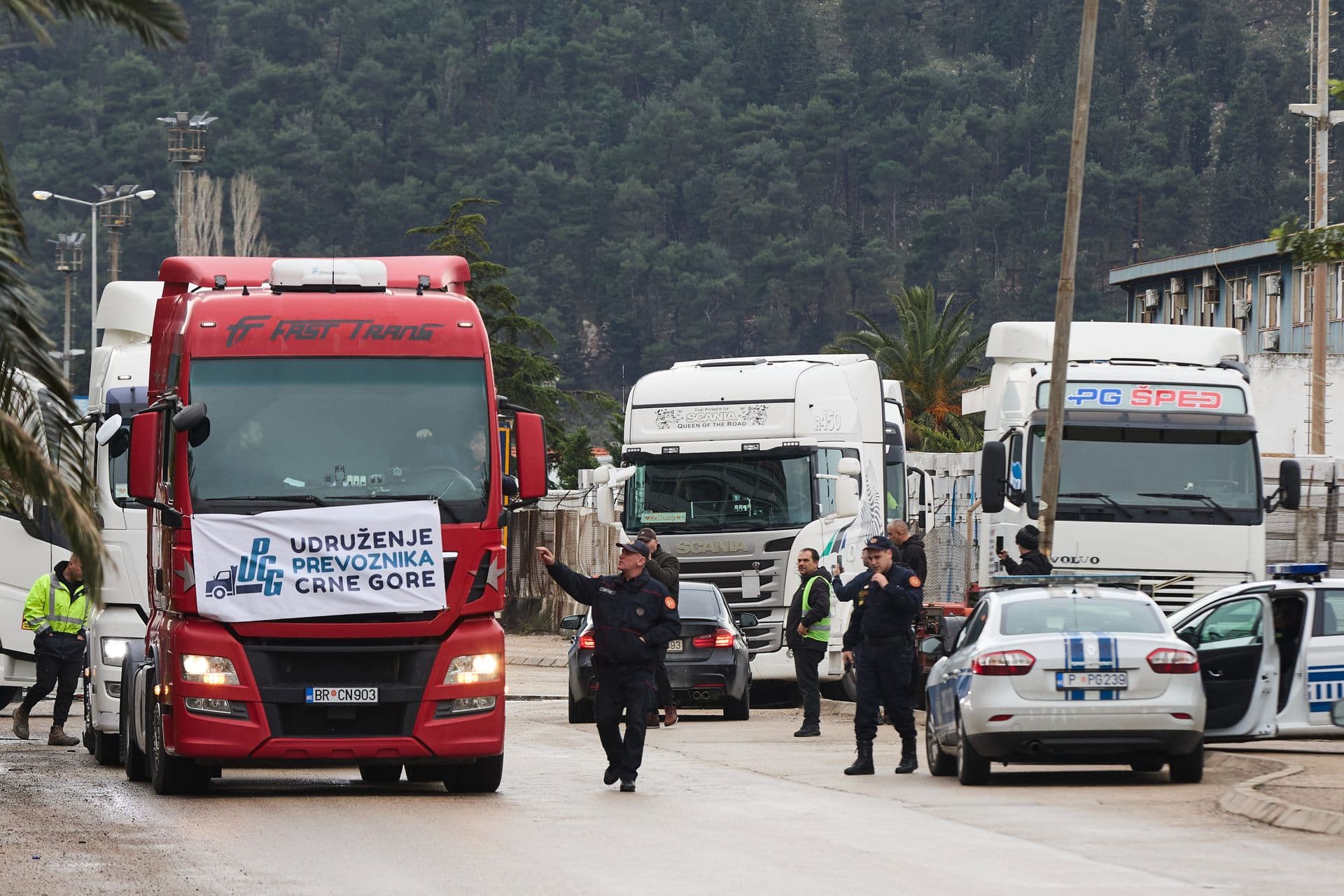
UPDATE: Truck drivers from Montenegro and the surrounding region are preparing for immediate blockades, as the European Commission has rejected their demands regarding the liberalization of residency regulations in the Schengen Area. Đorđije Lješnjak, a representative of the Montenegrin Transport Association, confirmed this alarming news just moments ago, stating that negotiations with regional colleagues are ongoing to coordinate their response.
Lješnjak warned, “A blockade will definitely happen very soon.” The urgency of this situation stems from the newly implemented electronic border controls, which are set to enforce stricter compliance with existing residency rules that limit drivers to a maximum of 90 days in the EU over a 180-day period. This regulation is not new, but the enforcement will be significantly more rigorous, leaving no room for exceptions.
The Montenegrin transporters have previously expressed grave concerns, citing that many drivers have already faced deportation due to these stringent checks. Lješnjak noted that starting from April 10, 2024, deportations will occur without exceptions.
Earlier this week, Maida Gorčević, Minister of European Affairs, acknowledged that there is no political consensus for amendments to Schengen rules or for any exceptions. While she mentioned the European Commission’s willingness to find solutions within existing frameworks, no satisfactory resolutions for the truckers have been forthcoming.
The issues facing truck drivers are severe. In late January, they organized significant blockades in response to these regulatory challenges, impacting the import and export of goods. Following discussions with high-ranking government officials, including Vice Prime Minister Niko Đeljošaj, truckers temporarily suspended their protests after receiving assurances regarding fuel tax refunds and VAT regulations. However, as Lješnjak stated, “No promises have been fulfilled. We will be forced to respond radically.”
The persistent problems stem from unmet commitments, including timely VAT refunds and the guarantee of a 72-hour customs transit period for goods. Lješnjak emphasized the growing frustration: “None of the government representatives have fulfilled their promises.”
The impact of these developments extends beyond Montenegro. Neđo Mandić, president of the International Transport Association of Serbia, revealed that the EU has dismissed all proposals from professional truck drivers in the Western Balkans. He shared that the EU’s response to their requests for transitional arrangements regarding residency in the 29 Schengen countries was overwhelmingly negative, with officials labeling their suggestions as “imaginative.”
Truck drivers have been ordered to adhere to existing regulations limiting their stay in the EU, which is now enforced electronically. Mandić reported ten drivers were turned back at the border crossing between Bosnia and Herzegovina and Croatia for exceeding their 90-day limit.
In light of this escalating crisis, associations from Montenegro, Serbia, North Macedonia, and Bosnia and Herzegovina are preparing to unite in their response and will soon announce when the next protest will take place.
The situation remains fluid, with potential ramifications for cross-border trade and the livelihoods of many drivers in the region. As tensions rise, the public and stakeholders are urged to stay tuned for updates on this developing story.