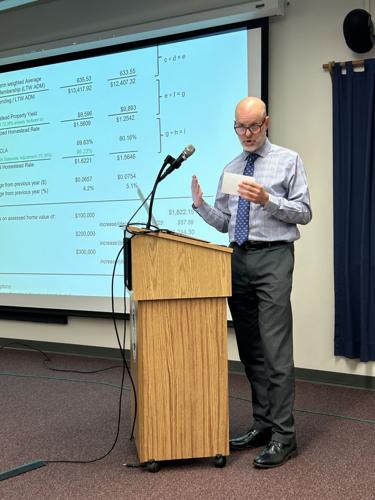
UPDATE: In a critical meeting on Monday, October 2, 2023, newly appointed school superintendent Tim Payne unveiled urgent insights into Vermont’s education funding process and the impending reforms that could reshape the system entirely. Speaking to the Select Board in Bennington, Payne outlined the current complexities of school funding and the potential impact of Act 73, a significant education reform initiative aimed at transforming public education in the state.
Payne emphasized that Vermont’s approach to school funding is “relatively unique,” involving a multi-step process where local budgets, community votes, and state formulas interact. He explained, “My purpose this evening is to talk a little bit about school funding. All of this could change under Act 73 as they move through the process.”
The superintendent detailed the intricate funding cycle: local school boards draft budgets, communities vote at Town Meetings, and the state calculates funding needs based on various weighted metrics. This process can lead to school taxes increasing disproportionately compared to local budgets, often frustrating taxpayers.
Payne highlighted a crucial point: “Last year, the governor made the decision to buy down property taxes. That is a relief for taxpayers, but it’s not a long-term strategy.” He warned that relying on state surpluses to alleviate tax burdens could jeopardize funding for other essential services.
With Act 73 now in effect, the state is on a path to significant educational transformation. The initiative requires the submission of three new school district maps by December 1, 2023, a foundational step that will lead to new tax districts and funding structures. “This is pretty ambitious,” Payne remarked, noting that the initiative spans five years and includes several milestones.
Looking ahead, multiple critical deadlines loom. In July 2026, minimum class sizes will be implemented; by January 2027, new school districts will be finalized; and by July 2028, a new funding formula will be established. “A formula is the state telling you that you will receive the following dollar amount for a student,” Payne explained.
The implications of these changes are profound. Local budgets may be replaced by a state-determined funding amount, leading to significant shifts in how education is financed and delivered across Vermont. Payne urged community members to engage with elected officials about the potential outcomes of Act 73, fostering discussions around its implications for financial equity and educational opportunities.
The superintendent concluded with a call to action, encouraging residents to stay informed and involved as these developments unfold. “It’s a political process,” he said, referencing the anticipated debates and negotiations ahead. “I would encourage folks to follow along, because that’s going to be a pretty different proposal than what we currently do.”
As Vermont navigates these urgent changes in its education funding landscape, the community is left to ponder the future of public education and the potential for both challenges and opportunities ahead.