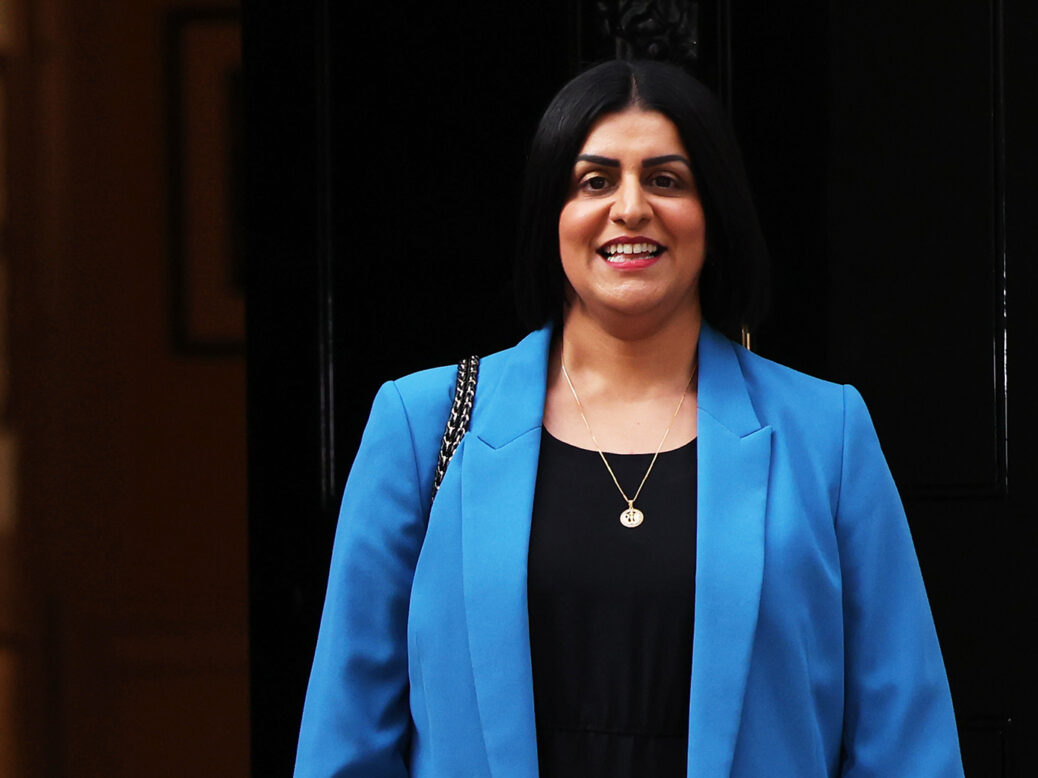
UPDATE: In a bold move, Shabana Mahmood, the UK’s Immigration Minister, has just announced sweeping asylum reforms that are shaking up Westminster. These changes, aimed at addressing the unprecedented surge in asylum claims, are causing a stir across political lines, with even some Labour backbenchers expressing unease over the hard-line approach.
Mahmood frames these reforms as a crucial moral mission, asserting that a country with insecure borders poses risks not just to newcomers but to its citizens as well. “A secure border is essential for the safety of all,” she stated during a press conference in Birmingham. This marks a significant ideological shift, as the UK grapples with a dramatic increase in asylum applications, with over 50,000 individuals granted refugee status in 2023 alone.
The scale of the crisis is staggering. In the early 1990s, during various global conflicts, the UK processed approximately 40,000 asylum claims over five years. In stark contrast, the current system is overwhelmed, with expectations that 40,000 claims in 2024 will come from individuals who previously held visas, further blurring the lines between humanitarian needs and economic aspirations.
The urgency for reform stems from the evolving nature of global mobility. No longer are asylum seekers predominantly from the world’s poorest regions. Today, many hail from the global lower-middle class, equipped with enough resources to traverse borders, purchase travel, and seek opportunities. Yet, this influx pressures local communities, straining housing availability, healthcare, and social cohesion.
This summer’s protests against migrant accommodations highlighted public frustrations about immigration and its community impacts. Mahmood’s proposals aim to introduce temporary protections, periodic reviews, and limit legal routes while enhancing enforcement measures. She emphasizes that this is not mere bureaucracy but a necessary moral project to restore trust and fairness in the asylum system.
“This is about protecting both the newcomers and the communities they join,” Mahmood explained, reflecting her Blue Labour roots, which prioritize social fabric over abstract ideals. Her personal background as a British Pakistani Muslim adds depth to her understanding of diversity and community needs.
Critics, particularly from the Green left, argue that these reforms neglect the ethical implications of creating “semi-permanent” refugees. Many may find themselves living in the UK for decades without long-term security, leading to stagnation in integration and potential social fragmentation.
The dilemma is stark: is it more harmful to establish a class of semi-permanent refugees or to maintain existing permanent settlement routes in a system overwhelmed by demand?
As the UK grapples with these pressing issues, Mahmood’s reforms signify a critical pivot towards addressing modern realities in asylum processing. The need for a sustainable system, grounded in moral seriousness rather than romanticism, is essential for the UK to adapt effectively to contemporary challenges.
What’s Next? Stakeholders are now watching closely as Mahmood’s proposals unfold, with discussions expected to intensify in Parliament. The outcome of these reforms will not only shape the future of UK immigration policy but will also affect the lives of thousands seeking refuge.
This is a developing story. Stay tuned for more updates as the situation evolves.