Protests in Iran have entered their second week, with escalating tensions as the government acknowledges the unrest while the nation remains largely isolated from the world. As communication lines are disrupted, the ability to gauge the extent and impact of these demonstrations has become increasingly challenging. According to the US-based Human Rights Activists News Agency, the death toll has risen to at least 65 people, with more than 2,300 individuals detained amid the protests.
The Iranian government, facing significant dissent, is taking steps to assert control. State media reports have highlighted casualties among security forces, while portraying a narrative of stability across the country. Supreme Leader Ayatollah Ali Khamenei has indicated an impending crackdown on dissent, despite warnings from the United States. Marco Rubio, the US Secretary of State, expressed support for the protestors, stating, “The United States supports the brave people of Iran.” The US State Department added a stern reminder regarding President Trump’s commitment to action.
As the work week begins in Iran, many educational institutions have opted for online classes, as reported by state television. Simultaneously, Iranian state media has been broadcasting a martial orchestral piece from the Epic of Khorramshahr, a song symbolizing resilience during the Iran-Iraq war. This music has been featured in videos showing women cutting their hair, a poignant act of protest in memory of Mahsa Amini, whose death in 2022 sparked widespread demonstrations.
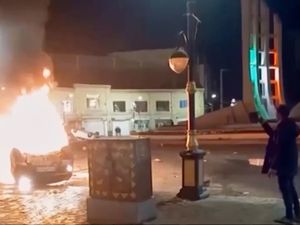
Contradicting state reports of calm, verified online footage has emerged showing large gatherings in northern Tehran’s Saadat Abad area. The Associated Press confirmed these demonstrations, which appeared to involve thousands of participants. Additionally, the semi-official Fars news agency, closely linked to Iran’s paramilitary Revolutionary Guard, released surveillance footage purportedly from Isfahan, depicting protestors engaging in violent confrontations including the use of firearms and petrol bombs against government facilities.
The Young Journalists’ Club, affiliated with state media, reported that three members of the Basij force were killed in clashes in Gachsaran. Other reports detailed incidents involving security officials, including a police officer fatally wounded in Bandar Abbas and another killed in Gilan, while a civilian was reported slain in Mashhad. Additionally, footage of a funeral attended by hundreds was broadcast from Qom, a city renowned for its Shia seminaries.
As protests continue to unfold across Iran, the situation remains fluid, with the potential for further violence and government crackdowns looming large. The international community watches closely, with the hope for a peaceful resolution in a region historically marked by conflict and dissent.