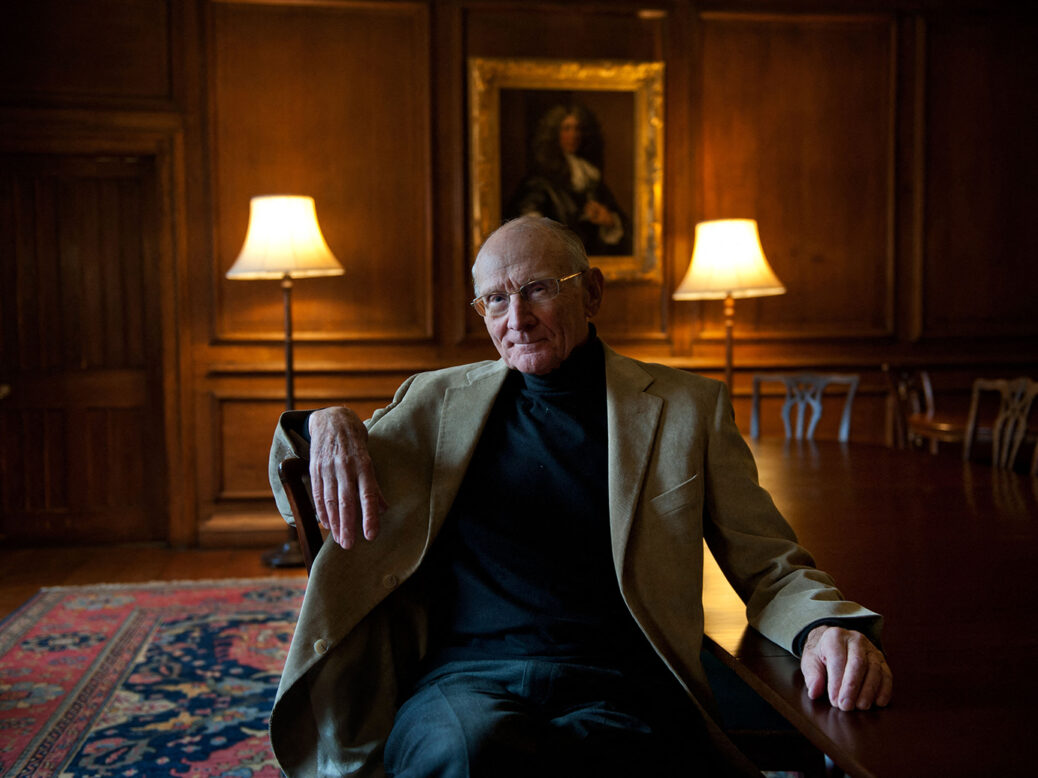
UPDATE: Renowned literary critic John Carey has passed away at the age of 91 on December 11, 2025, marking the end of an era for literary journalism. Carey’s contributions to literature and criticism have left an indelible mark on readers and writers alike.
Carey, an esteemed alumnus of Oxford, was best known for his role as the “people’s critic,” a title he embraced throughout his illustrious career. His sharp wit and accessible style resonated with audiences, as highlighted in a recent profile by the Sunday Times.
In 1987, Faber & Faber published “Original Copy: Selected Reviews and Journalism, 1969-1986,” a collection showcasing his critiques and insights. According to Geoff Dyer, who reviewed the book for the New Statesman, Carey was more than just a critic; he aimed to bridge the gap between complex literary discourse and ordinary readers.
Carey’s work often dissected the literary establishment, challenging the status quo and encouraging a wider readership. He believed one of the primary goals of book reviews was to engage “ordinary intelligent people.” His unique approach aimed to make literature accessible, often summarizing lengthy works into concise, digestible critiques.
Throughout his career, Carey displayed a particular affinity for literary biographies, providing readers with key insights while maintaining a light-hearted tone. His critiques often included sharp observations about the literary elite, as he questioned their relevance to everyday life.
In his writings, Carey did not shy away from addressing controversial societal issues. He offered astute commentary on the educational landscape, criticizing the transformation of grammar schools into comprehensives, which he argued would restore elitism to institutions like Oxford.
While Carey critiqued various authors and cultural figures, he was unyielding in his pursuit of authenticity. He often highlighted the disconnect between intellectuals and the “ordinary” citizens they claimed to represent. His reflections on the absurdities of modern life, such as his memorable quip about hospital patients being compared to “cabbages,” showcased his talent for humor combined with deep social commentary.
As the literary community mourns the loss of John Carey, his legacy as a critic who championed the voices of the everyday reader will endure. His ability to blend humor with incisive critique will be remembered as a cornerstone of modern literary journalism.
WHAT’S NEXT: Tributes are pouring in from across the literary world, as authors, critics, and readers alike reflect on Carey’s profound impact. Discussions regarding his work and contributions to literature are expected to dominate literary circles in the coming weeks. His writings will continue to inspire future generations of critics and readers seeking to understand the complexities of literature and its connection to society.