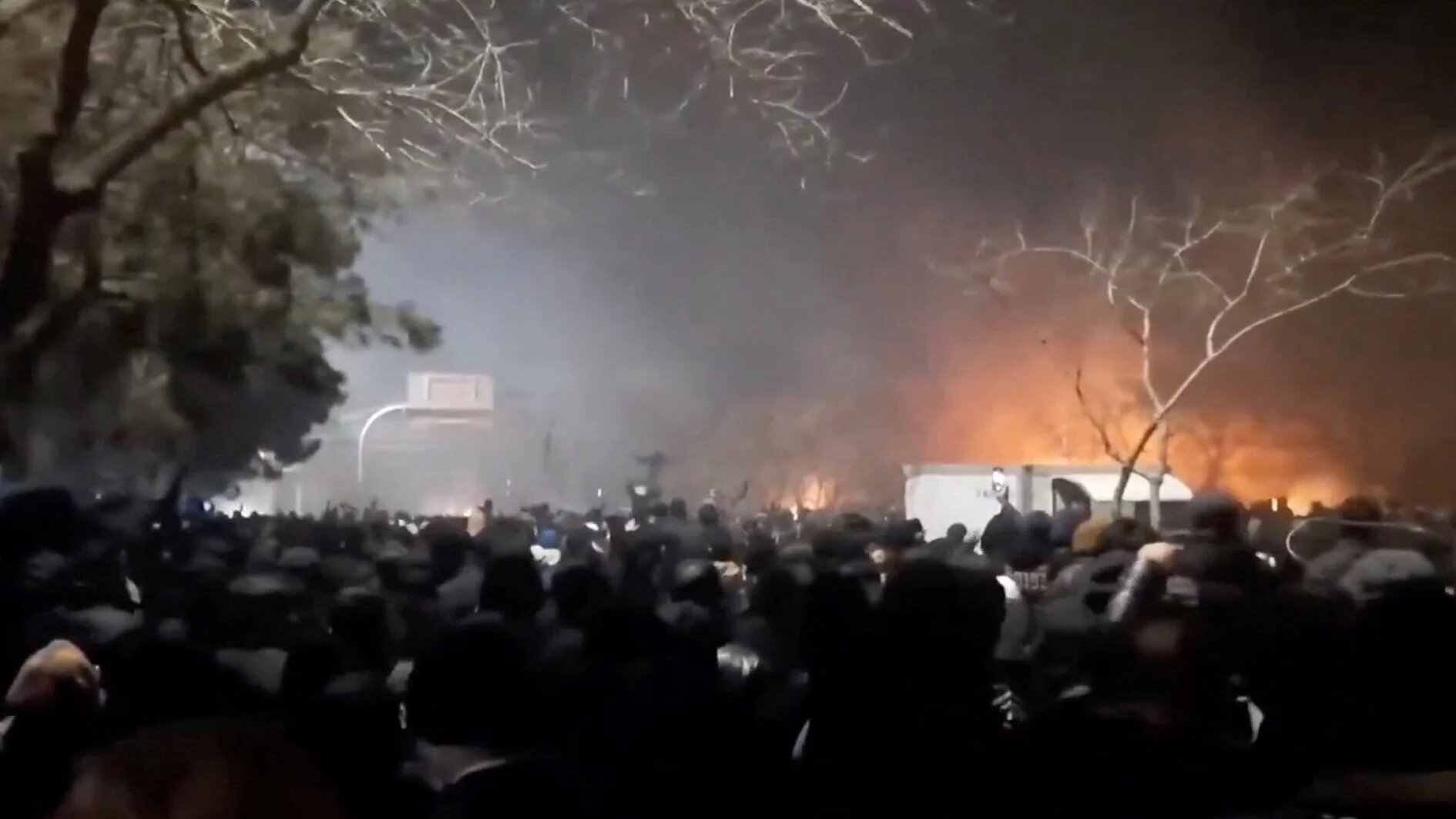
URGENT UPDATE: Israeli social media is ablaze with calls for the overthrow of Iran’s government as protests intensify across the Islamic Republic. Demonstrators are voicing their dissent against the regime amid a near-total internet blackout imposed by authorities, which aims to stifle mobilization.
The unrest, which has spread to multiple cities, began nearly two weeks ago over soaring prices of basic goods, but has evolved into broader demonstrations targeting Supreme Leader Ali Khamenei with chants of “death to the dictator.” The Iranian government has downplayed the scale of protests, branding participants as violent actors influenced by foreign powers.
Despite official warnings, former Israeli officials and activists are openly discussing the potential fall of the Iranian regime. Moshe Feiglin, a former far-right Knesset member, declared on social media that “sooner or later the regime in Iran will fall,” stating it is crucial to determine who will shape the post-Islamic Republic order.
Right-wing activist Yoseph Haddad shared images of himself with supporters of Iran’s former monarchy, expressing hope for a future where both the Israeli flag and the pre-1979 Iranian tricolor fly together in Tehran. “Our peoples will be able to live in true coexistence again when Iran’s Islamic regime is thrown into the dustbin of history,” he wrote.
Israeli commentators are framing the protests through an economic lens, emphasizing Iran’s vast reserves of energy and minerals. Some are suggesting that foreign intervention could be justified for access to these resources, with one popular account arguing for “a little military assistance” in exchange for future economic benefits. This sentiment echoes longstanding discussions about Iran’s strategic value, even as protesters insist their demands focus on political dignity and economic survival.
On the other hand, left-wing Israelis are voicing support for the protesters while cautioning against romanticizing authoritarian alternatives. Israeli journalist Orly Noy shared her emotional response to the unrest, reflecting on the hope of returning to her homeland. However, she warned about the growing support for Reza Pahlavi, Iran’s exiled former crown prince, among Israeli and diaspora audiences, criticizing the aggression of his online supporters.
As tensions escalate, Iranian authorities are utilizing the internet blackout—a tactic seen in previous uprisings—to limit organization among protesters. Khamenei dismissed the unrest as insignificant, accusing the United States of exploiting the situation, while Iranian Foreign Minister Abbas Araghchi claimed that the U.S. and Israel are attempting to destabilize the Islamic Republic.
The protests occur within a context of economic turmoil, with Iran’s economy suffering from severe sanctions, soaring inflation, and a rapidly depreciating currency, leaving many struggling to afford basic necessities. Former U.S. Secretary of State Mike Pompeo commented on social media, expressing solidarity with the Iranian protesters, which has further fueled discussions in Israel.
As the situation develops, eyes are on both the Iranian government and the Israeli response. With protests intensifying and calls for regime change growing louder, the implications for regional stability could be profound.
Stay tuned for further updates as this situation continues to unfold.