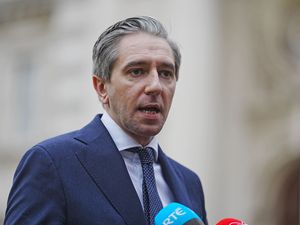
The security status in Ireland remains unchanged despite escalating tensions in the Gulf region, according to Tanaiste Simon Harris. Speaking to reporters on March 12, 2024, Harris emphasized that the government is actively monitoring global developments and their potential impacts on Europe.
Approximately 22,000 to 23,000 Irish citizens are currently in the Gulf area, with a “relatively low number” having already departed, as stated by Foreign Affairs Minister Helen McEntee. Harris assured the public that the government is considering “all options” to assist those who may require evacuation from the conflict zone.
Evacuation Options Under Review
During a Cabinet meeting, Harris outlined various strategies being evaluated for assisting Irish citizens. He noted that charter flights could be a viable option, although the resumption of commercial flights appears unlikely at this time. “There are a number of options,” Harris explained. “One, commercial flights could resume. At the moment, that doesn’t look particularly likely.” He also mentioned the potential for chartered flights to locations outside the immediate conflict areas, such as Oman.
McEntee is working on a detailed list of vulnerable individuals needing urgent support. This includes elderly citizens, pregnant women, and those with medical conditions. While airlines are prioritizing individuals stranded en route without accommodations, her department is establishing its own separate list to ensure that those most in need receive assistance.
“We want to make sure that if we have a chartered flight, we have a very clear list of who will be on those flights, focusing on those who are most vulnerable,” McEntee stated. This proactive approach aims to address the needs of specific groups, particularly those without residency or accommodation in the region.
Political Reactions and Calls for De-escalation
Taoiseach Micheal Martin expressed concern over US military actions in the region, highlighting that these strikes occurred without a UN mandate. He called for de-escalation and a return to diplomatic negotiations. Martin stressed the need for reform within the UN, stating, “The Security Council as it’s currently constituted is not fit for purpose because of its composition.” He attributed much of the instability in the Middle East to Iran’s actions, including its support for militant groups.
Martin acknowledged that the conflict has significant implications for global security, adding, “We will wait and see how this conflict evolves.” His comments reflect a broader concern about how international rules can effectively engage with repressive regimes like that of Iran.
When asked about her communications regarding the safety of Irish citizens, McEntee confirmed she had conveyed her concerns to US and Israeli officials. “I’ve made my concerns very clear,” she said. “This is a conflict that does not have congressional support and does not have a UN mandate.” McEntee reiterated the urgency of resolving the conflict swiftly.
As the situation develops, the Irish government remains committed to ensuring the safety and welfare of its citizens abroad while navigating the complex geopolitical landscape of the Gulf region.