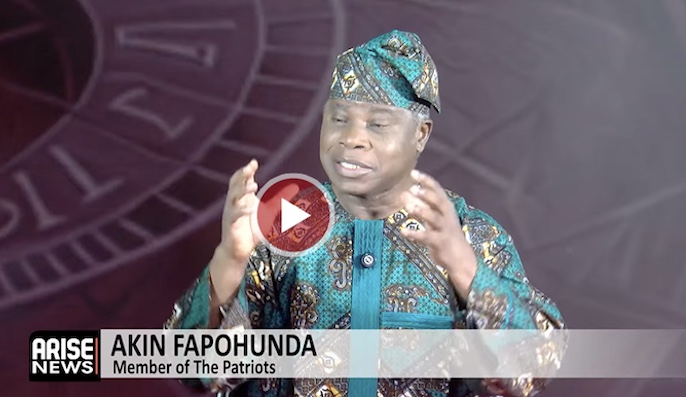
UPDATE: Akin Fapohunda, a leading voice in Nigerian governance reform, has urgently called for the decentralization of Nigeria. In a striking interview with ARISE NEWS on October 25, 2023, Fapohunda asserted that Nigeria cannot function effectively as a unified nation-state and must instead adopt a modular governance approach.
This appeal comes on the heels of a formal letter addressed to President Bola Ahmed Tinubu and other top officials, including Chief Justice Kudirat Kekere-Ekun. The letter, signed by a coalition of prominent leaders, advocates for significant structural reforms aimed at devolving powers from the federal government to regional authorities.
Fapohunda emphasized, “Each region needs to be managed in a modular manner. We are not a nation. A nation must be bound by culture and language.” He argued that Nigeria’s diverse cultures and languages render a centralized governance model ineffective.
The urgency of this issue cannot be overstated. Fapohunda pointed out that there is widespread agreement across Nigeria that the current centralized system, governed from Abuja, is inadequate. “Mr. President is trying, but one man cannot oversee 50 ministries,” he stated, highlighting the overwhelming challenges facing the federal government.
The proposed decentralization plan is not merely a call to action; it is envisioned as a gradual process. Fapohunda likened the transition to turning on a switch, stating, “Restructuring is not a switch you put on the wall. It’s a process.” He noted that discussions around the establishment of state police signify a critical first step toward this new governance model.
Fapohunda confirmed that the request for decentralization has been formally communicated to all three branches of the Nigerian government: the executive, legislature, and judiciary. “We want the three of them to act in concert,” he expressed, stressing the need for a cohesive approach to governance reform.
A crucial aspect of this initiative is the expectation of a response from the government within 45 days. Fapohunda asserted that the existing 1999 Constitution is no longer viable for the diverse needs of the Nigerian populace. “We cannot continue being managed this way,” he said, adding that their letter explicitly requested feedback within the stipulated time frame.
As Nigeria grapples with governance challenges, the implications of this decentralization proposal are profound. If adopted, it could transform the political landscape, empowering regional authorities and enhancing local governance.
Stay tuned for further updates on this developing story as the Nigerian government responds to these urgent calls for change. Follow us for the latest developments on this critical issue.