UPDATE: The UK government has just announced a significant funding boost for the Lower Thames Crossing, with an additional £891 million allocated as part of the recent Budget. Construction is set to commence in 2026, with the crossing expected to open in the early 2030s, as confirmed by Rachel Reeves, the Chancellor of the Exchequer.
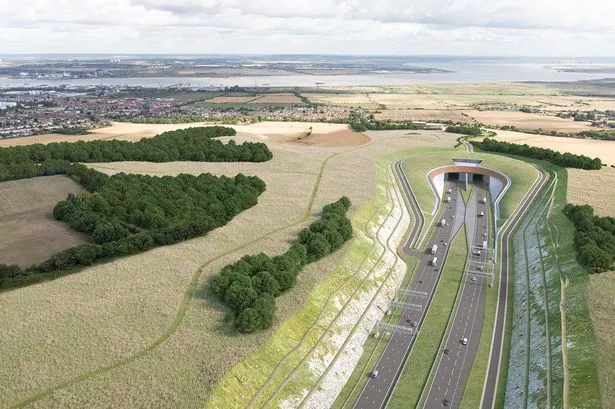
This project is poised to alleviate severe congestion at the notorious Dartford Crossing, providing a vital connection between the A2 and M2 in Kent and the A13 and M25 in Essex. The 14.5-mile motorway-style road will feature the UK’s longest road tunnel, a 2.6-mile route underground beneath the Thames, enhancing connectivity between the South East, the Midlands, and the North.
The latest funding will support crucial publicly-funded works from 2026 to 2029 as part of a phased approach. Following this, the private sector will take over construction and long-term operations. Reeves emphasized the importance of this investment, stating, “As we allocate investment for the infrastructure that is the backbone of economic growth across our country, today I will commit investment for the Lower Thames Crossing.”
The announcement has been met with enthusiasm from National Highways, with executive director Matt Palmer highlighting its significance. He described the crossing as “one of the UK’s most important infrastructure projects,” expected to generate local jobs and skills while addressing congestion and promoting economic growth.
The design aims to create the greenest road in Britain, with 80% of the route either in a tunnel or hidden behind landscaped embankments that integrate seamlessly into the countryside. The project will also introduce seven new green bridges, including one anticipated to be the widest in Europe, enhancing accessibility for wildlife and pedestrians.
Innovative construction methods are on the table, such as pre-fabricated bridges to limit disruption, low-carbon footbridges built without concrete, and sleek gantries designed to minimize visual impact. This groundbreaking approach positions the Lower Thames Crossing as a model for future low-carbon infrastructure projects.
As the project moves forward, the focus will be on sustaining the environmental integrity of the region while addressing the pressing need for improved transportation. This initiative is more than just a road; it’s a transformative step towards sustainable infrastructure that benefits both the economy and the environment.
Stay tuned for more updates on this developing story and how it will impact the future of transportation in the UK. Share this news to keep others informed about this monumental infrastructure project!