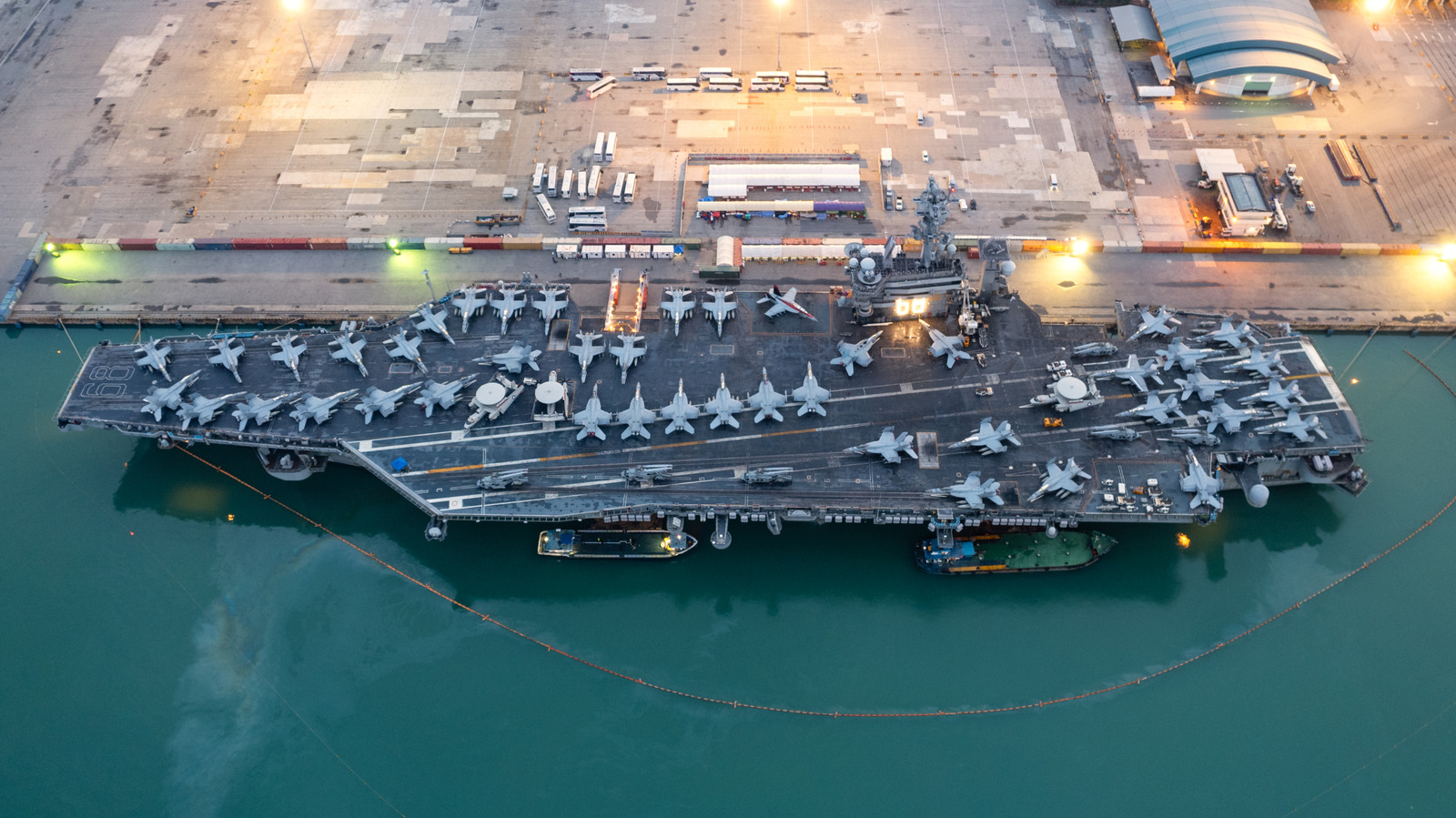
In December 2025, California mandated that Tesla cease labeling its vehicles as ‘self-driving,’ emphasizing that human supervision remains essential. This principle extends to aviation, where even advanced military aircraft equipped with autonomous systems require skilled pilots. The U.S. Navy has embraced technology to enhance landing procedures on aircraft carriers, but pilots retain crucial control during these complex operations.
Autonomous systems in aviation, such as autopilot, assist but do not replace human oversight. The Federal Aviation Administration (FAA) maintains regulations requiring at least one crew member alongside the pilot in the cockpit. Though these rules primarily apply to commercial aviation, the U.S. military employs similar guidelines, recognizing that the unpredictable nature of military missions demands human expertise.
Landing on an aircraft carrier presents unique challenges. Unlike commercial airliners, Navy jets frequently execute landings on moving vessels amid changing weather and operational conditions. The intricacies of these landings can be daunting, pushing even the most experienced pilots to their limits.
Despite advancements in technology, U.S. Navy pilots do not rely on autopilot systems to land jets autonomously. Instead, they utilize supportive systems like the Precision Landing Mode (PLM) to facilitate safe landings. This software, originally known as “Magic Carpet” (Maritime Augmented Guidance with Integrated Controls for Carrier Approach and Recovery Precision Enabling Technologies), was developed to minimize pilot workload during critical landing phases.
The project began in 2015, and while it became operational in 2017, early iterations faced challenges in various scenarios. Following significant software updates, PLM has improved and is now integrated into training for newly qualified pilots. The system is embedded in aircraft like the F/A-18E-F Super Hornet, showcasing its specialized functionality for naval operations.
Ensign Zachary Bell, writing for the U.S. Naval Institute’s “Proceedings,” explains the intricacies of carrier landings. A pilot may need to make approximately 300 adjustments to controls during the final moments of landing. PLM significantly reduces this number, allowing for a more manageable less than 10 adjustments. For instance, the system can maintain the aircraft’s nose level, simplifying lift management and ensuring the tailhook engages correctly with the arresting gear wire.
The arresting wires on the carrier deck are critical for stopping aircraft, given the limited landing space. A successful landing requires precision, as any miscalculation could necessitate a dangerous go-around. This is where PLM becomes invaluable, enhancing safety and efficiency during carrier operations.
In 2021, with PLM newly approved for training, Capt. Dan Catlin observed significant improvements in pilot performance during carrier landings. He noted that the recent training yielded “by far the smoothest evolution, best performance we’ve seen from our students ever.” The system has matured to the point where only a few scenarios could potentially compromise its functionality, yet manual landings remain a vital skill for aviators.
Catlin emphasized the importance of maintaining proficiency in manual landings, stating, “even the experienced aviators, myself included … had to get what’s called a manual pass or an automatic pass at some point just to maintain that proficiency.” This approach ensures that pilots are prepared for situations where PLM may not be operable.
As the technology advances, PLM is also being implemented on the F-35 Lightning II. This integration marks a significant step toward establishing a new safety standard for Naval aviators, reinforcing the balance between technological assistance and human expertise in complex military operations. The continued evolution of such systems reflects the Navy’s commitment to enhancing pilot capability while prioritizing safety during critical landing maneuvers on the high seas.