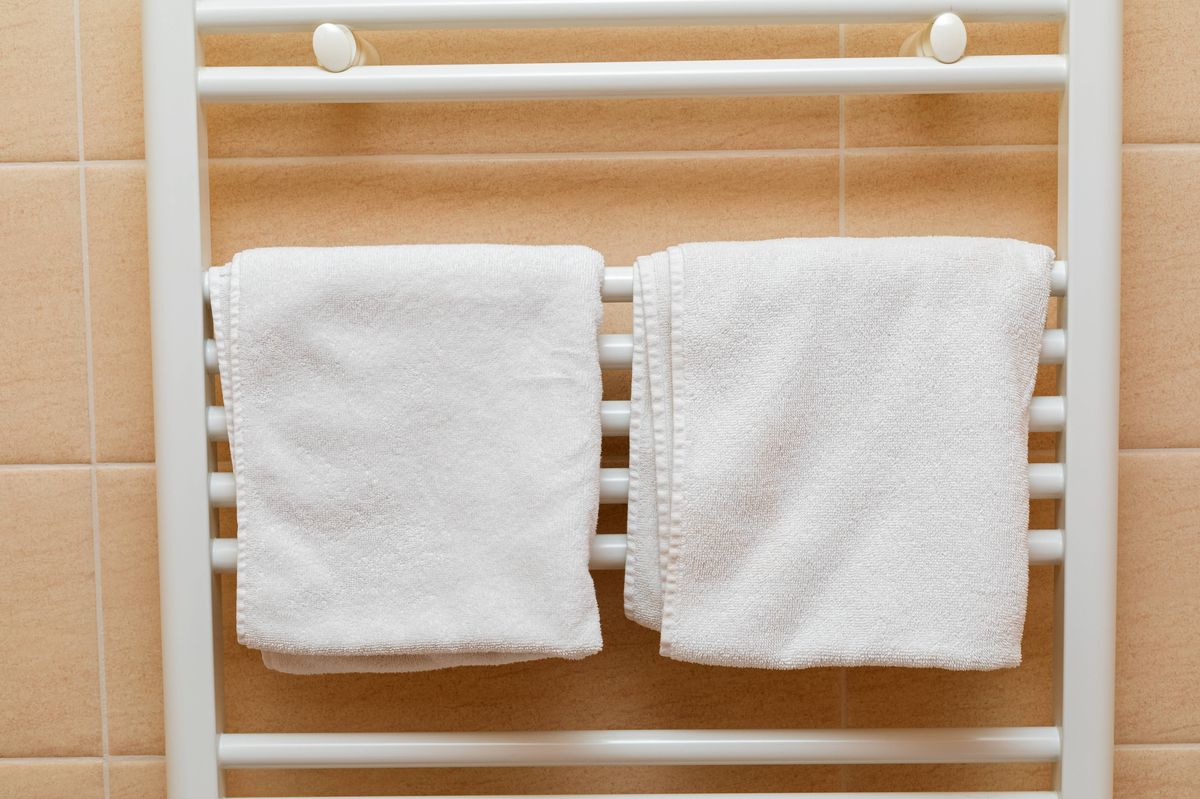
Heated towel rails are essential in modern bathrooms, providing comfort with warm, dry towels at any time. Yet, many users experience issues, such as cold spots that can disrupt this convenience. A recent article by Mia O’Hare highlights a straightforward DIY solution to restore warmth to these fixtures in a matter of minutes.
If your towel rail feels colder at the top than at the bottom, it may be time to address this common issue. Cold spots typically indicate that air has become trapped within the system, preventing hot water from circulating effectively. This phenomenon is akin to what occurs in standard radiators, which require periodic maintenance to ensure optimal performance.
Instead of calling a plumber, O’Hare opted for a simple method known as “bleeding” the towel rail. This procedure involves releasing the trapped air that hinders heat distribution. All that is needed for this task is a cup, an old cloth, and a radiator bleed key, which can be purchased for as little as £0.97 from retailers like Screwfix.
Steps to Bleed a Towel Rail
To efficiently bleed your towel rail, follow these steps:
1. Begin by turning off your heating system and allowing the rail to cool down.
2. Locate the valve on your towel rail; often, this is found at the top.
3. Using the radiator bleed key or a flat screwdriver, carefully loosen the valve until you hear a hissing sound, indicating that air is escaping.
4. As air exits, the towel rail will begin to fill with water. Once you see water emerging from the valve, promptly tighten it to prevent any leaks.
5. Utilize your cup to catch any escaping water and your cloth to clean any spills.
After completing this process, turn your heating back on. You should notice a significant improvement in the heat distribution across the rail, restoring warmth to the previously cold spots.
Experts recommend performing this maintenance task at least once a year. It is particularly advisable to do so at the end of summer if the towel rail has not been in use during the warmer months. Regular bleeding can prevent issues such as inefficient heating, increased energy bills, and potential noise from the pipes.
Ignoring the need to bleed your towel rail can lead to ongoing inefficiencies. By ensuring that air is expelled from the system, you can enjoy the full benefits of your heated towel rail, making every use a pleasant experience.
In conclusion, with just a few basic tools and a little bit of time, anyone can tackle this task. Following the steps outlined by O’Hare can lead to immediate results, transforming your towel rail back to its optimal heating capacity.