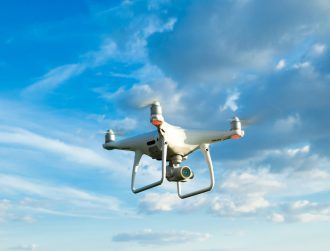
On December 1, 2023, multiple drones reportedly approached the flight path of Ukrainian President Volodymyr Zelensky as he traveled over the Irish Sea. Although Zelensky and his wife arrived safely in Dublin, the incident raised significant concerns regarding the ability of nations to deter, detect, and respond to coordinated drone threats. In light of this event, Professors Barry O’Sullivan and V S Subrahmanian advocate for a human-AI drone defence system that combines artificial intelligence with human judgement to enhance national security.
The discussion surrounding the drone incident has shifted towards accountability, with An Taoiseach Micheál Martin rejecting Russian claims of non-involvement. This incident not only highlights diplomatic tensions but also underscores the pressing technical challenges in airspace security. The first critical challenge is the detection of drones in real-time. Existing methods such as radar, radio-frequency scanning, and optical imaging each have limitations. Often, by the time a drone is identified, it may already pose an imminent threat.
Once a drone is detected, the next challenge is determining its level of threat. Reports from the December incident varied widely regarding the number and types of drones involved. If there were as many as 30 drones in the area, identifying which posed a danger is vital. Furthermore, understanding the nature of the threat requires assessing the behaviour of the drones. Were they acting in coordination? Were they potentially armed?
Time is a critical factor in addressing such threats. Had the drones intended to attack Zelensky’s plane, security forces would have needed to act swiftly. Questions remain about the response time of security officials during this incident. How quickly were the drones identified as threats? Could timely decisions have been made to mitigate the danger?
To address these challenges, the proposed solution is a multi-tiered defence system that integrates artificial intelligence with human oversight. AI can process data from diverse detection methods—such as radar analysis and acoustic monitoring—at speeds that human operators cannot match. These AI systems can predict the likelihood of a drone’s trajectory posing a threat, thereby enabling rapid responses.
Reports indicate that the drones involved in the December 1 incident violated a no-fly zone and approached a high-value asset. Such alerts should automatically trigger responses, including jamming communications between drones and their handlers, or deploying drone swarms from nearby naval vessels to intercept potential threats. This proactive approach could redirect drones away from civilian aircraft, minimizing the risk of harm.
Should these automated measures fail, an online dashboard could allow trained security officials to assess the threat status of detected drones. This system would enable them to authorise interception measures quickly and responsibly, thus preventing potential attacks without compromising public safety.
At this stage, details regarding the specific defences employed by the Irish military during the incident remain unclear, as does the rationale behind their operational decisions. It is crucial to acknowledge that hybrid threats like these often serve to test a nation’s response capabilities and provoke reactions that could escalate tensions further.
While the immediate details of the December incident may remain ambiguous, it is apparent that combining human expertise with AI technology can lead to more effective decision-making in real-time. As nations grapple with the evolving threat landscape of drone technology, the integration of human judgement and AI may prove essential for ensuring national security.
Professors Barry O’Sullivan and V S Subrahmanian call for a collaborative approach that leverages the strengths of both human and artificial intelligence to safeguard against future threats. As the landscape of aerial security becomes increasingly complex, developing robust defence systems will be vital for countries like Ireland.