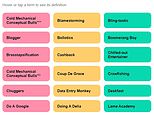
A recent exploration by language learning app Preply has unveiled a nostalgic glossary of slang from 2002, showcasing the most popular terms from the early 2000s. This glossary, produced by the BBC, includes both enduring phrases and those that have faded from common use. Among the lasting terms are “blogger,” “lifestyle guru,” and “minging,” while others, such as “bling-tastic” and “do a Google,” now seem outdated.
Anna Pyshna, a spokesperson for Preply, remarked on the evolution of language, stating, “As we have seen time and time again through history, the usage of slang ebbs and flows, contributing to quickly evolving language.” She emphasized that societal changes, influenced by technology and culture, play a significant role in shaping language.
A closer look at the glossary reveals three slang terms that have remained relevant nearly 24 years later. The term “blogger,” referring to someone who writes a blog, experienced a remarkable increase in usage of 1,245 percent from 2002 to 2022. Pyshna explained that the term’s longevity is closely tied to technological advancements, making it a staple in everyday vocabulary. Similarly, “babe,” a common term of endearment, has seen a 245 percent rise, while “buzzing,” which conveys excitement, has increased by 209 percent.
While some slang terms have persisted, others have evolved over the years. “Bling-tastic,” once used to describe something extravagant, has transitioned to the term “extra.” Pyshna noted that this shift reflects a broader cultural movement toward exaggerated self-expression rather than material displays of wealth.
“Today, ‘extra’ encapsulates a more diverse approach to identity, moving away from visible luxury,” she said. The term “minging,” meaning unattractive or disgusting, has been replaced by “ick,” a change attributed to the influence of social media and reality television.
The evolution of language continues with terms like “baller,” which has been supplanted by “boss.” Pyshna highlighted that this change suggests a societal shift from a focus on money to themes of empowerment and personal achievement.
While the glossary serves as a humorous reminder of past slang, it also reflects how language is continuously shaped by the cultural landscape. As new terms emerge, outdated phrases often resurface, creating a rich tapestry of linguistic evolution that connects generations.
In a related study, researchers from Binghamton University in New York have found that the use of emoji and informal abbreviations in text messages can convey essential meaning. This highlights the adaptability of language in digital communication, where traditional cues such as tone of voice and facial expressions are absent.
The exploration of slang from 2002 not only evokes nostalgia but also demonstrates the dynamic nature of language as it evolves alongside societal changes. As new generations adopt and adapt language, the conversation around slang remains as vibrant as ever.