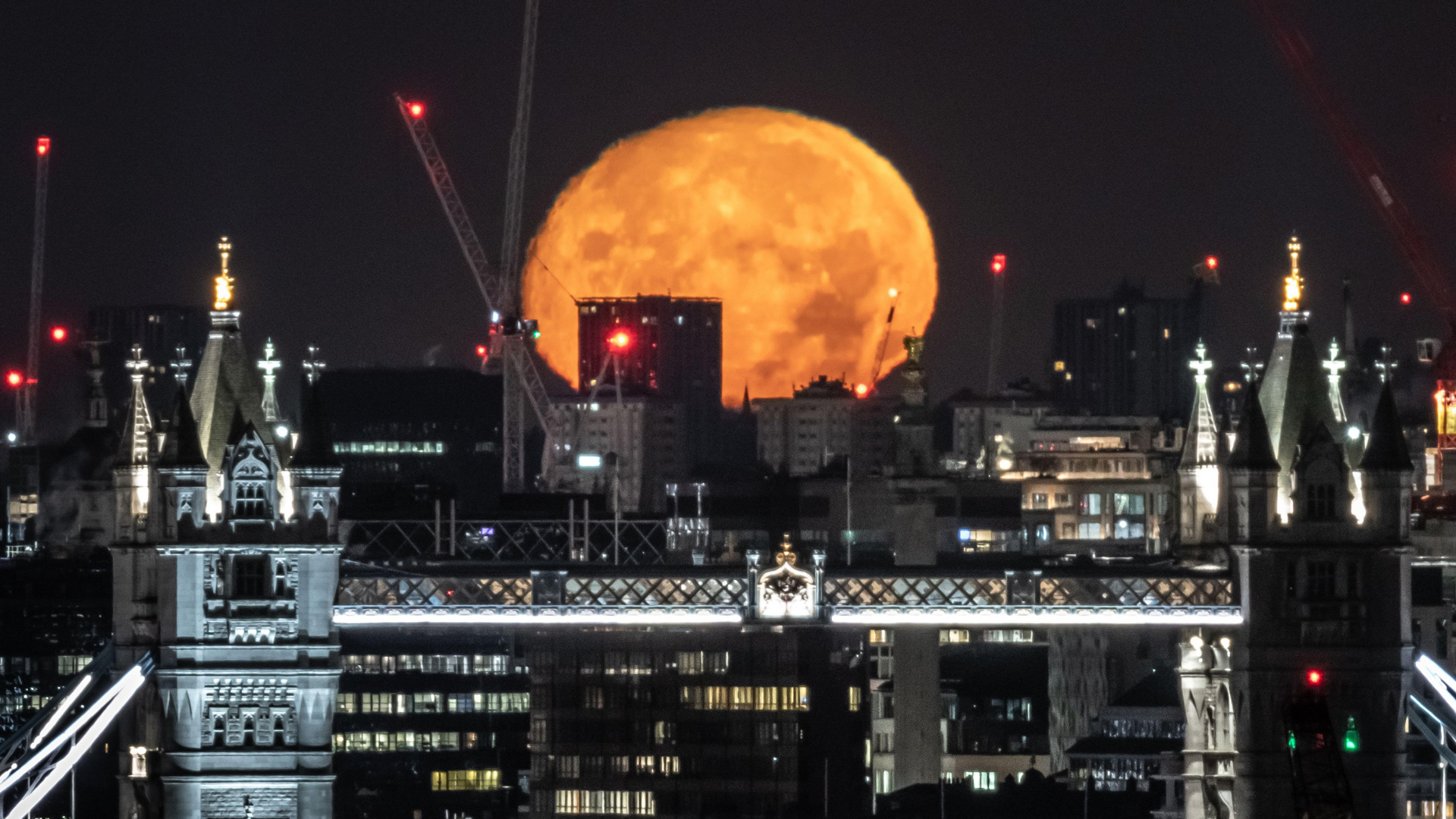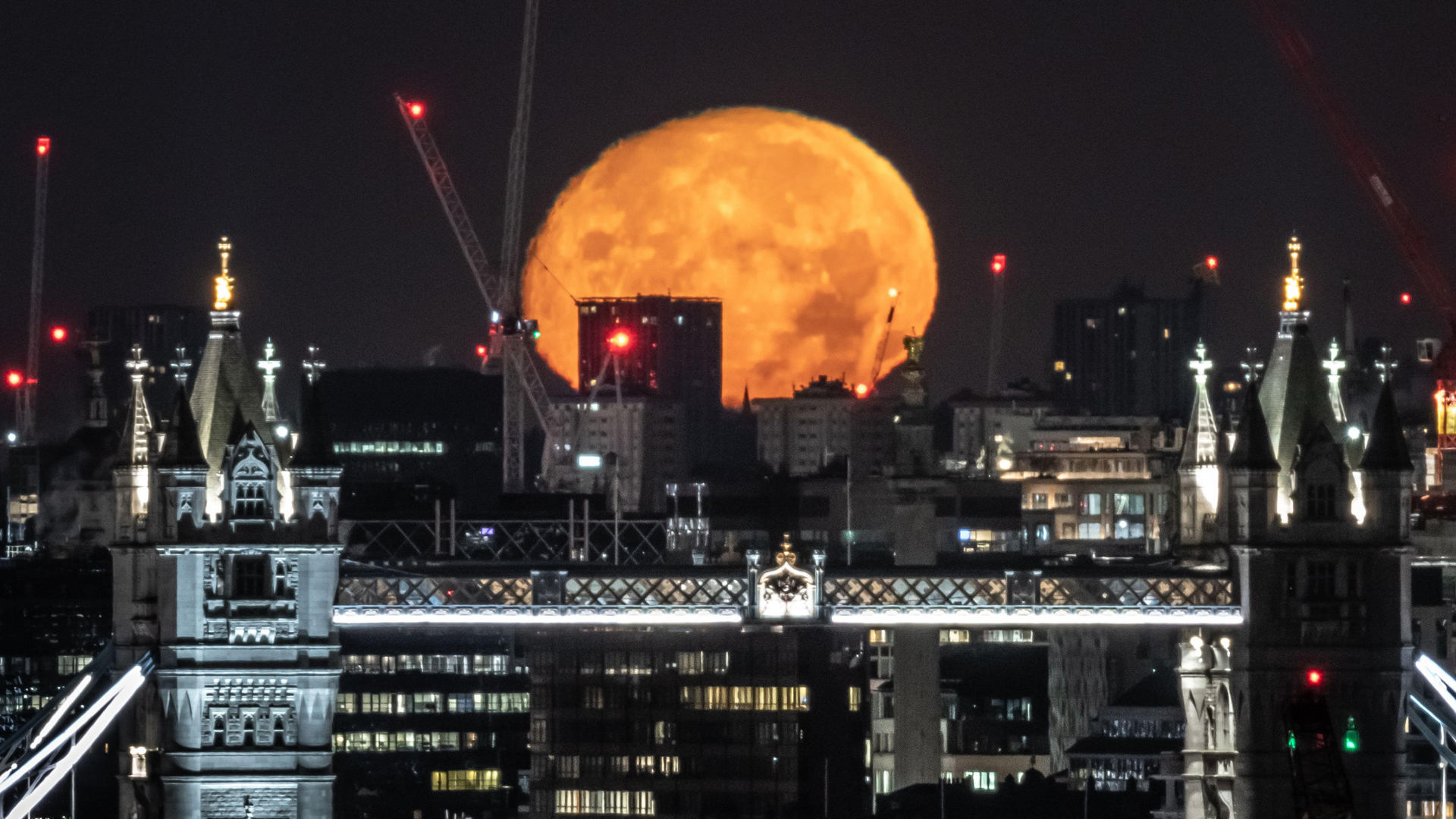
A spectacular supermoon will illuminate the night sky tonight, marking the first of three such events in 2026. This full moon, occurring on January 3, 2026, will appear larger and brighter than usual, offering a fantastic opportunity for stargazers around the world.
Understanding the Supermoon Phenomenon
A supermoon is defined as a full moon that occurs when the Moon is at its closest point to Earth, known as lunar perigee. According to the Royal Greenwich Observatory, the Moon’s orbit is elliptical rather than circular, causing its distance from Earth to fluctuate. When this perigee coincides with a full moon, it creates a striking visual effect, making the Moon seem especially large in the sky.
In contrast, a moon that appears smaller is referred to as a micromoon. While the supermoon offers a captivating sight, the micromoon is less impressive visually. Nevertheless, supermoons provide an excellent chance for photography and a closer look at our celestial neighbor.
Upcoming Supermoons in 2026
This year, astronomers anticipate three supermoons, with the following dates:
– January 3, 2026
– November 24, 2026
– December 24, 2026
The December supermoon will be particularly noteworthy, as it will be approximately 221,000 miles from Earth, compared to the average distance of 238,000 miles.
The January full moon is often referred to as the Wolf Moon, a name popularized by The Old Farmer’s Almanac. This title is associated with the long winter nights when wolves were known to howl, reflecting the harsh conditions of the season.
Tips for Viewing and Photographing the Supermoon
Watching a supermoon is straightforward, as it will dominate the night sky. However, specific strategies can enhance the experience, especially for those hoping to capture photographs.
Firstly, check local weather forecasts for clear skies. Light pollution from urban areas can significantly diminish the viewing experience. Opt for locations with minimal artificial light, such as rural areas or elevated spots.
To improve photography results, consider using a tripod to stabilize your camera or smartphone. This will help prevent blurriness caused by hand movements when zooming in on the Moon. If you own an iPhone, using a tripod can activate a “night mode,” enabling longer exposure times for better images.
For a truly stunning experience, view the Moon during moonrise shortly after sunset or moonset just before sunrise. The Royal Greenwich Observatory notes that during these moments, the Moon appears larger due to an optical illusion created by our brain’s perception of objects on the horizon.
As you prepare to enjoy this celestial event, remember to dress warmly, as January nights can be quite cold.
This evening’s supermoon promises to be a breathtaking sight, perfect for both casual viewers and avid photographers alike.