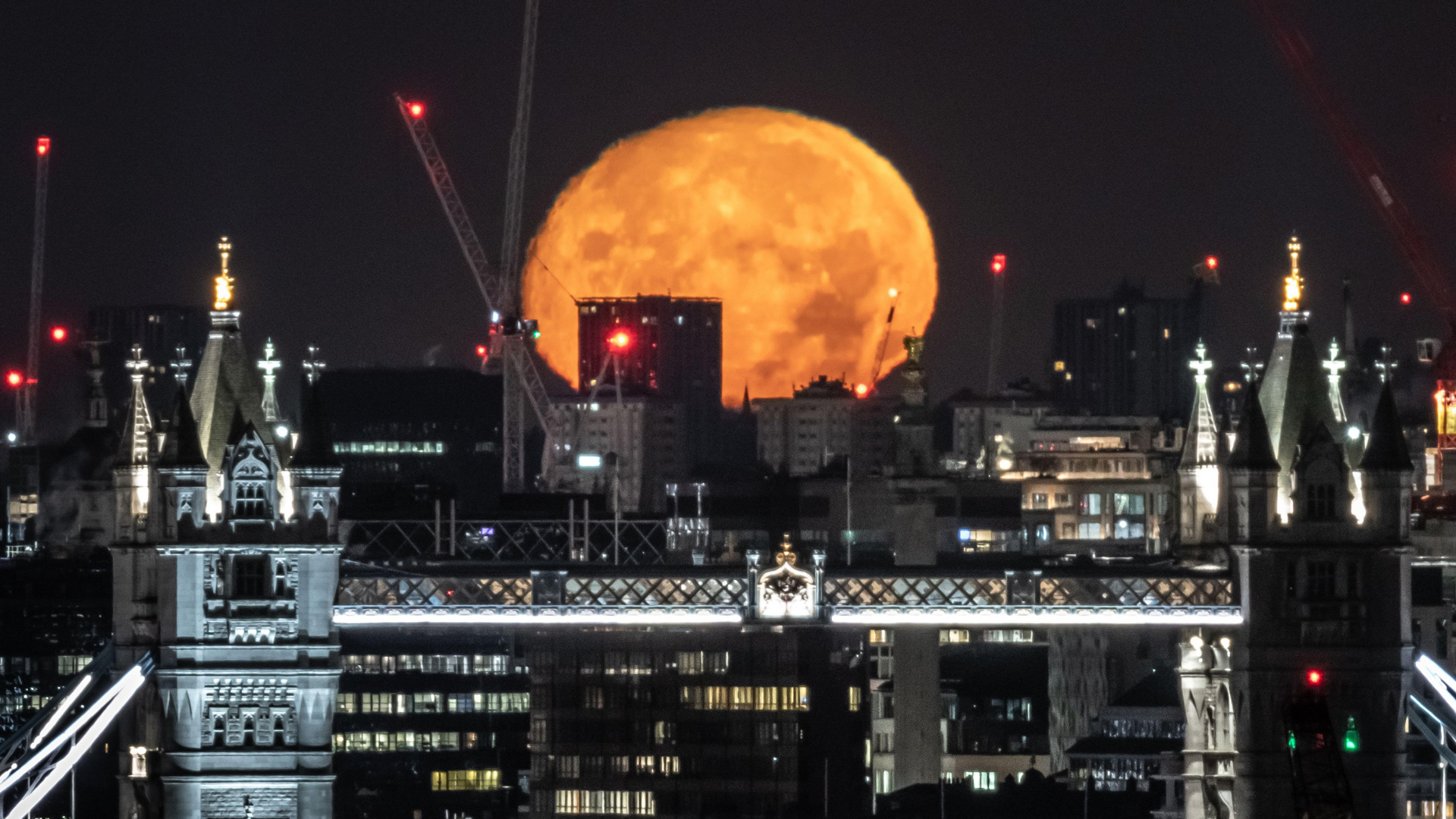
A spectacular celestial event unfolds tonight as the first supermoon of 2026 lights up the night sky. This full moon, occurring on January 3, 2026, is the first of three supermoons this year, a phenomenon where the Moon appears larger and brighter due to its proximity to Earth.
Understanding the nature of a supermoon is essential to appreciate this astronomical event. The Royal Greenwich Observatory explains that a supermoon occurs when the Moon is at its closest point to Earth, known as lunar perigee. Given that the Moon’s orbit is elliptical, its distance from Earth varies. The full moon coinciding with this close approach results in a stunning visual experience. Conversely, when the Moon is at its furthest point, it is referred to as a micromoon, which offers a less impressive sight.
Upcoming Supermoons and Their Names
In 2026, astronomy enthusiasts can look forward to two additional supermoons. The dates are November 24, 2026 and December 24, 2026. The December supermoon will be particularly noteworthy, as it will be approximately 221,000 miles from Earth—significantly closer than the average distance of 238,000 miles.
The supermoon in January is often referred to as the Wolf Moon. This name, popularized by The Old Farmer’s Almanac, reflects historical associations with hungry wolves howling during cold winter nights. The full moons of 2026 will also include the following names: Snow Moon in February, Worm Moon in March, Pink Moon in April, Flower Moon in May, Strawberry Moon in June, Buck Moon in July, Sturgeon Moon in August, Corn Moon in September, Hunter’s Moon in October, Beaver Moon in November, and Cold Moon in December.
Tips for Viewing and Photographing the Supermoon
Observing a supermoon is straightforward, as it typically stands out as the most prominent object in the night sky. For those keen on photography, several tips can enhance the experience. Checking the local weather forecast is essential; clear skies will provide the best views, so aim for locations with minimal light pollution.
Ideal spots for viewing include high vantage points, such as hills, or open, flat areas, particularly in regions like East Anglia. To improve photographic quality, consider using a tripod, which stabilizes the camera and mitigates blurriness caused by hand movements. Smartphone users may benefit from the night mode feature, which allows for longer exposure times, enhancing image clarity.
Another fascinating aspect of moon observation is timing. Witnessing the moonrise just after sunset or moonset just before sunrise creates an optical illusion that can make the Moon appear significantly larger against the landscape. As the Royal Greenwich Observatory notes, this visual effect occurs because the brain interprets objects near the horizon as larger than they are when viewed in the open sky.
As you prepare for this stunning lunar event, remember to dress warmly, as January nights can be quite chilly. Whether you’re an amateur astronomer or simply someone who enjoys the beauty of the night sky, tonight’s supermoon promises to be a memorable sight.