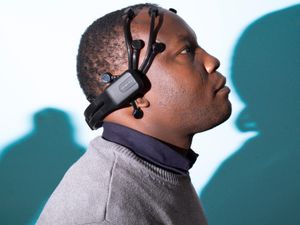
A groundbreaking AI-powered headset designed to predict epileptic seizures has been developed by researchers at Glasgow Caledonian University. This innovative device offers the potential to transform the management of epilepsy by providing users with advance warnings of seizures, allowing them to take necessary precautions. Currently, individuals living with epilepsy lack accessible technology that can alert them before seizures occur.
The headset operates by analyzing brainwaves and heart functions, detecting patterns that indicate an impending seizure. This capability could significantly enhance the quality of life for the hundreds of thousands of people with epilepsy in the UK and millions worldwide. Professor Hadi Larijani, who leads the research team, emphasized the life-changing potential of even a few minutes’ warning. He stated, “Our goal is to empower patients and families with time to act to stay safe and live more independently.”
Functionality and Design of the Headset
The research team has engineered the headset to be user-friendly and discreet. They envision a wearable design akin to a cap that is wireless and lightweight, features absent in current seizure management tools. The project has utilized thousands of hours of historical recordings from both electroencephalography and electrocardiography. To further enhance the accuracy, the team employed a custom-made “phantom head” equipped with electrodes to simulate real user conditions.
The AI technology developed for this headset boasts an accuracy rate of up to 95% in predicting seizures. The algorithm not only identifies the subtle electrical and physiological signals preceding a seizure but can also communicate its confidence level regarding the likelihood of an imminent event. Professor Larijani noted, “For families affected by epilepsy, even a brief warning means they can prevent injuries and reduce fear. That is the true measure of success for us.”
Future Prospects and Regulatory Challenges
While the initial prototypes have utilized third-party hardware, the researchers are now focused on developing their own models that will cater to children as well. The team is actively refining the design to ensure it meets the needs of younger users. However, the path to market is not without challenges. Due to the stringent regulations surrounding medical devices, it will likely take several years before the headset becomes widely available.
Professor Larijani expressed optimism about the project’s future, explaining, “The most regulated things are medical devices. It takes time to get through the hurdles. But I think we’ve done the initial feasibility testing both on the software and the hardware characteristics.” The team has recently received new funding from UK Research and Innovation through its £9 million Proof of Concept programme, which will support further development of the headset.
As the research continues, the implications of this technology for individuals living with epilepsy could be profound, potentially providing them with a sense of security and independence that has long been elusive.