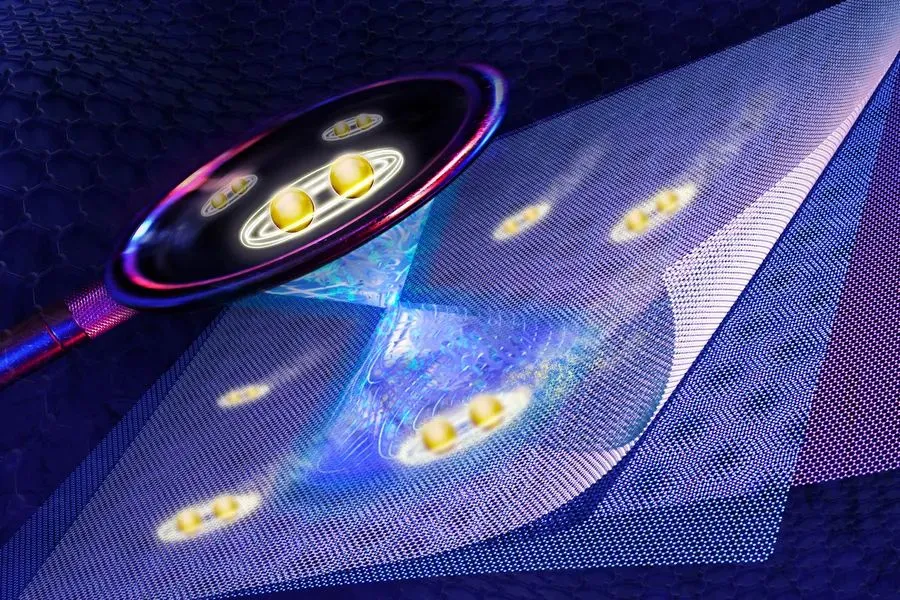
Researchers at Science Tokyo have introduced a groundbreaking framework to better understand the complex temperature dependence and sign reversal of the chirality-related anomalous Hall effect in highly conductive metals. This new approach sheds light on the unusual behaviors seen in chirality-driven transport phenomena, offering a foundation for the innovative design of future spintronic devices and magnetic quantum materials.
New Insights into Chirality and Temperature Effects
The anomalous Hall effect, which is crucial for the operation of advanced electronic devices, exhibits nonmonotonic temperature dependence in certain materials. This means that the effect does not consistently increase or decrease with temperature but instead shows unexpected behavior at different points. The research team at Science Tokyo aimed to clarify these complexities through a theoretical framework based on scattering theory.
By applying this framework, the scientists were able to explain the temperature trends that have perplexed researchers for years. The study provides a detailed understanding of how chirality influences electron scattering in conductive metals, leading to the observed sign reversal in the Hall effect under varying temperatures.
The findings, published in a recent issue of a leading scientific journal, promise to enhance the performance of spintronic devices, which rely on the spin of electrons in addition to their charge. These devices have potential applications in data storage and quantum computing, making the understanding of the anomalous Hall effect particularly relevant in the current technological landscape.
Implications for Future Technology
The research highlights the importance of chirality in determining the electronic properties of materials. As the team at Science Tokyo notes, this new framework not only clarifies existing phenomena but also paves the way for the rational design of new materials with tailored properties. By understanding the underlying mechanisms of the anomalous Hall effect, scientists can better engineer materials that are optimized for specific applications in the field of spintronics.
The implications of this research extend beyond theoretical physics. Industries focused on the development of next-generation electronic devices can leverage these insights to create more efficient and powerful technologies. As the demand for advanced materials grows, the ability to manipulate chirality could lead to significant advancements in areas such as quantum computing, where the control of electron spin is essential.
As scientists continue to explore the intricacies of chirality and its impact on electronic behavior, the framework developed by the team at Science Tokyo stands as a pivotal contribution to the field. This work not only enhances our understanding of fundamental physics but also opens new avenues for innovation in technology.
In summary, the new framework for understanding the chirality-driven anomalous Hall effect represents a significant step forward in materials science, promising to influence the future of spintronic devices and beyond.