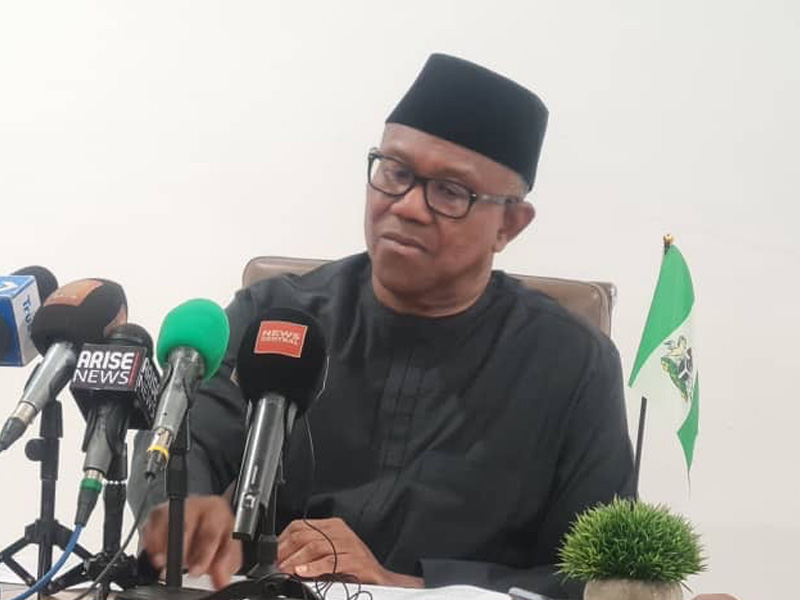
Former Nigerian presidential candidate, Peter Obi, has urged the government to pause the implementation of recently amended tax laws, citing serious inconsistencies that could negatively impact citizens. In a statement released on March 5, 2024, via his official Twitter account, Obi highlighted that even a respected firm like KPMG identified 31 critical problem areas within the legislation, ranging from drafting errors to significant policy contradictions.
Obi expressed deep concern over the lack of transparency in the review process. He emphasized that it was troubling that these major issues only came to light during private meetings between the National Revenue Service and KPMG. “If experts require closed-door discussions to navigate the complexities of our tax laws, what hope does the average Nigerian have of comprehending the obligations being imposed on them?” he questioned.
Framing taxation as a vital social contract, Obi remarked, “Taxation transcends mere fiscal policy; it represents a social contract between the government and its citizens. You cannot enforce a social contract that isn’t understood or trusted.” He criticized the new law for focusing primarily on revenue collection rather than delivering tangible benefits to the populace. “Globally, tax policies are justified by providing clear benefits such as improved healthcare, education, job opportunities, and infrastructure development.”
Obi pointed out that in Nigeria, the current narrative appears to center around government extraction rather than offering something in return. “A tax system devoid of clear public benefits isn’t reform; it is, quite frankly, extortion,” he stated.
The former presidential candidate also raised the issue of public consultation, which he described as lacking in the legislative process. “Typically, months, if not years, are dedicated to consulting with businesses, workers, and civil society before tax drafts are presented for public discussion,” he explained. He emphasized the importance of informing citizens about their financial contributions and the corresponding benefits.
Criticizing the government’s haste to implement new measures, Obi said, “We have hastily pursued collection without securing a consensus and imposed enforcement without providing adequate explanations.” He noted that even after the removal of subsidies, Nigerians find themselves waiting for tangible benefits, while facing rising food prices, increased transport costs, and declining purchasing power.
Warning that the new tax regime could exacerbate public frustration, Obi stated, “Before we have even begun to address these issues, we are being thrust into an expansive new tax regime, riddled with inconsistencies and producing 31 alarming red flags from a leading global accounting firm.” He underlined that responsible governance requires trust, clarity, and evident public value, adding, “Without these elements, taxation feels like punishment.”
Concluding his remarks, Obi called for a consultative approach to tax reform. “Nigeria cannot afford to place further burdens on its already struggling citizens. What we need is a government that listens, communicates effectively, and prioritizes building national consensus,” he stated. He asserted that this is the only viable path toward genuine reform, unity, growth, and shared prosperity, insisting that “A New Nigeria is not just a possibility; it is an imperative.”