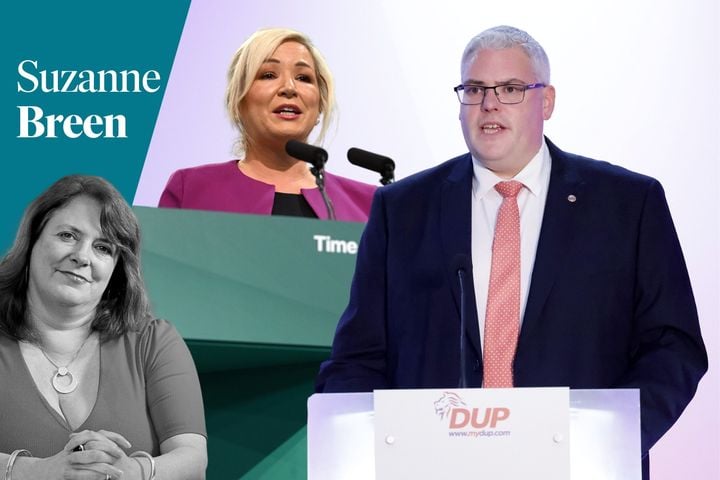
As Northern Ireland’s political parties prepare for the upcoming elections in 2026, they face significant challenges in a landscape that has shifted dramatically since 2025. Sinn Féin, led by First Minister Michelle O’Neill, and the Democratic Unionist Party (DUP), headed by Gavin Robinson, are set to navigate a complex power-sharing arrangement while addressing the needs of their respective constituencies.
The DUP’s strategy in 2026 is expected to reflect a hardline approach as it seeks to regain support that has been eroded by the Traditional Unionist Voice (TUV). This shift marks a departure from Robinson’s previous reputation as a moderate within the party. His leadership has brought new dynamics to the DUP, which will likely intensify its negotiations and tactics in the power-sharing framework established by the Good Friday Agreement.
Challenges Ahead for Sinn Féin and DUP
For Sinn Féin, the task at hand is to secure victories that resonate with grassroots supporters. The party must demonstrate its commitment to tackling pressing issues such as the cost of living crisis, healthcare, and education reform. O’Neill’s administration has focused on these areas, but the challenge will be to translate policy initiatives into tangible results that can energize their voter base.
On the other hand, the DUP will need a robust strategy to counteract the influence of the TUV, which has attracted a segment of traditional unionist voters dissatisfied with the DUP’s handling of various issues. The DUP’s hardball tactics may appeal to some, but they risk alienating moderate voters who prefer a more collaborative approach to governance.
The political environment in Northern Ireland has become increasingly polarized, with both parties needing to balance their strategies to appeal to a diverse electorate. The electorate’s expectations have evolved, and there is a growing demand for transparency and accountability in governance.
Implications for Power-Sharing
The upcoming elections will not only determine the future leadership of Northern Ireland but also the viability of the power-sharing arrangement that has been a hallmark of its political landscape since the late 1990s. As parties prepare for the electoral battle, the focus will be on how they plan to work together in the Assembly despite their differences.
As the political landscape continues to evolve, the relationship between Sinn Féin and the DUP will be closely scrutinized. In previous years, collaboration has been essential for addressing major issues affecting the region, including economic growth and social stability. Both parties must find common ground while advocating for their distinct political agendas.
The 2026 elections in Northern Ireland will serve as a critical juncture for its political future. With both Sinn Féin and the DUP poised to make significant moves, the outcome will have lasting implications for governance and the everyday lives of citizens. As they gear up for the electoral contest, the focus will be on their ability to engage with voters and respond to the pressing issues that matter most to the people of Northern Ireland.