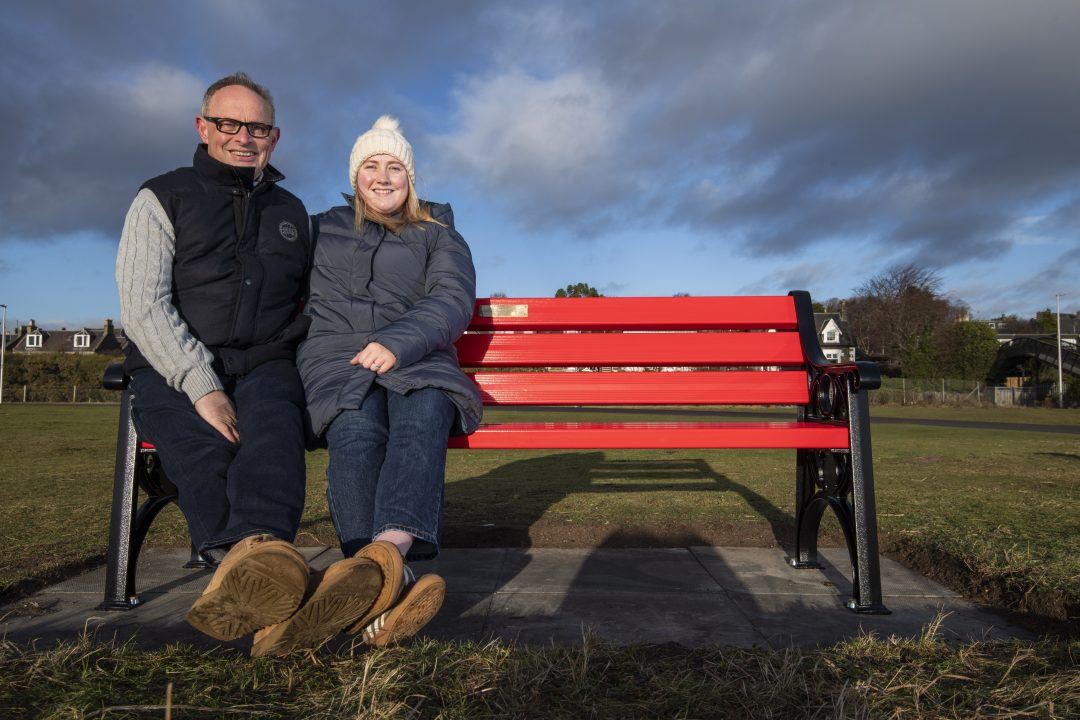
A grandfather has been honoured with a memorial bench after walking his daughter down the aisle just hours after being discharged from hospital following a heart attack. John Smith, 57, from Monifieth, survived two heart attacks in 2023, the second occurring just days before his daughter Lauren‘s wedding. Remarkably, he left the hospital at 1:30 PM the day before the ceremony, allowing him to fulfill his role as the father of the bride.
The bench, located on the banks of the River Tay in Angus, serves as a testament to resilience and hope. John expressed his desire for the bench to symbolize the potential for joy and connection even after serious health challenges. “It’s a message that even after devastating health events, there can be joy, connection, and meaningful experiences ahead,” he stated. John, who became a grandfather to Rory last May, hopes to one day sit on the bench and share packed lunches with his grandson.
John’s journey reflects the broader challenges faced by individuals living with cardiovascular disease. He is among many who have shared personal stories as part of a new campaign by the British Heart Foundation (BHF). To mark its 65th anniversary, the charity is installing 65 red benches across the UK, each representing a real-life story of those affected by cardiovascular conditions. In Scotland alone, more than 730,000 individuals are impacted by these diseases.
According to a recent survey commissioned by the BHF, which included responses from 2,000 adults living with cardiovascular disease, over half reported feeling judged or embarrassed by their condition. One-third of respondents encountered instances where people believed their condition to be self-inflicted. The emotional toll of living with such a diagnosis can be profound, with 48% of participants noting challenges in personal relationships and 65% indicating struggles with mental health.
John, who works as a quantity surveyor, found the emotional aftermath of his heart attacks more difficult than the physical recovery. “I wouldn’t have been there had it not been for scientific research,” he reflected, recalling the emotional weight of walking Lauren down the aisle. While he appeared healthy following treatment, which included the insertion of stents, he faced an internal battle, grappling with the loss of his former identity as a triathlete and athlete.
He described feeling isolated, as even his family struggled to comprehend his emotional state. “There was a recognisable shift in my mood, behaviour and overall demeanour which led to a downward spiral where I began to feel even more depressed,” he shared.
Support from counselling and reading testimonials on the BHF website proved beneficial for John. He found inspiration in stories of others who had experienced heart attacks despite leading active lives. “I realised I didn’t have to be defined by this,” he noted.
Historically, the survival rates for heart attacks have improved dramatically. In 1961, only three in ten patients survived a heart attack due to limited treatment options. Thanks to decades of research funded by the BHF, survival rates have risen significantly, with seven in ten patients now surviving such events. This progress includes the establishment of coronary care units, which began with funding from the BHF to Professor Desmond Julian, who opened the UK’s first unit focused on heart patients.
David McColgan, head of British Heart Foundation Scotland, praised John’s courage in sharing his story. “John’s story shows the true reality of living with cardiovascular disease,” he stated. McColgan highlighted the need for greater understanding of cardiovascular conditions, noting that many still face stigma and judgment.
The installation of these red benches is part of a broader effort to encourage open conversations about cardiovascular disease and to dispel misconceptions. By sharing personal experiences, the BHF hopes to raise awareness and foster understanding of this critical health issue, which remains a leading cause of death in the UK.
Through John’s story and the campaign’s initiatives, the British Heart Foundation aims to create a supportive community for those affected by cardiovascular disease and inspire others to share their experiences, ultimately contributing to a greater awareness and prevention of these conditions.