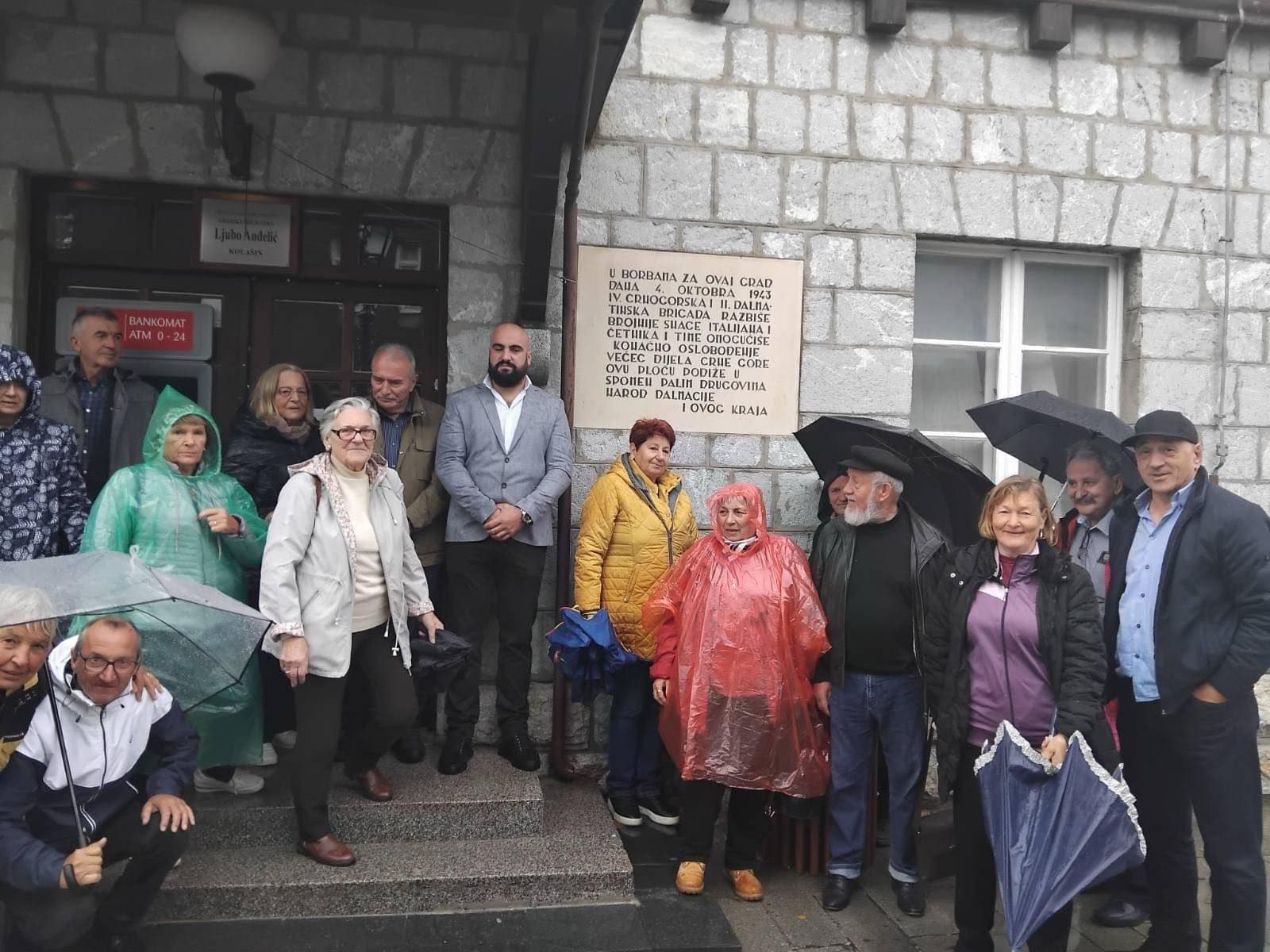
On October 4, 1943, the Second Dalmatian Brigade played a crucial role in the liberation of a significant portion of Montenegro, defeating larger forces of Italian troops and local collaborators. This historic event was commemorated recently in Kolasin, where a plaque honoring the fallen soldiers was unveiled. The gathering drew descendants of those who fought for freedom during World War II, highlighting the enduring legacy of their sacrifices.
The plaque, dedicated to the heroes of the Second Dalmatian Brigade, has stood in Kolasin for nearly seven decades, symbolizing the town’s identity as a wartime capital of Montenegro. The community once thrived around the Cultural Center, which hosted various events including film screenings, concerts, and literary promotions. Today, the plaque serves as a reminder of the past and a meeting point for generations of Kolasinians.
A delegation from the Association of Anti-Fascists of the Split-Dalmatia County visited Kolasin as part of a commemorative initiative. Led by local leaders, including Nikola Lakicevic, president of SUBNOR Montenegro, the group reflected on the historical significance of the Second Dalmatian Brigade. Formed on October 3, 1942, near Bosanski Grahovo, this brigade consisted of four battalions and had over 800 fighters at its inception.
The Second Dalmatian Brigade’s courage was evident in various battles throughout World War II, including the pivotal engagements at Livno, Tomislav, and the crossings of the Neretva and Drina rivers. It played an essential role in the battle of Sutjeska, contributing significantly to the liberation efforts across Montenegro and Herzegovina. In total, the brigade comprised 5,548 fighters, with 1,829 losing their lives, and 23 being awarded the title of People’s Hero.
The delegation also paid tribute to two brigade members, Milan Kurtic and Jurij Pasalic, who died in the line of duty. Dragan Mitov Đurovic, Secretary General of SUBNOR Montenegro, emphasized the brigade’s enduring legacy and its memorials across Montenegro, including Kotor, Risan, and Herceg Novi.
During their visit, the group acknowledged the bravery and solidarity exhibited by the Second Dalmatian Brigade members towards the local population. Their commitment to helping civilians during times of conflict fostered a deep bond between the Dalmatians and Montenegrins.
The delegation’s activities included a gathering in Cetinje, where local hosts organized a meeting at the Grand Hotel. They also toured various coastal towns, stopping at sites marked with the name of the Second Dalmatian Brigade, reinforcing the shared history of courage and freedom between the two regions.
As the event concluded, participants felt a renewed sense of connection, recognizing that both the Montenegrin and Dalmatian communities share fundamental values of bravery and a commitment to freedom, which continue to resonate today.