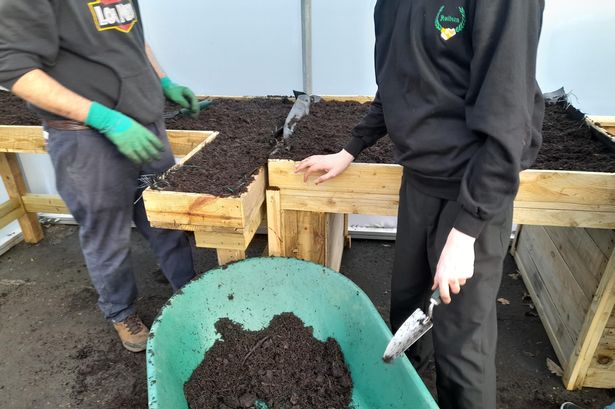
Innovative unpaid work projects in North Lanarkshire are providing schoolchildren with hands-on experiences in farming life. Local students have visited allotment sites where they engage in practical activities, supported by individuals serving Community Payback Orders. These orders are part of a restorative justice initiative aimed at benefiting both offenders and the community.
The initiative is managed by the Restorative Justice Team, which oversees the operational aspects of unpaid work to ensure that communities gain from these efforts. Recently, a group of pupils returned to the Clydeside Project to see the results of their earlier labor. They harvested tomatoes, potatoes, garlic, and green beans using tote bags crafted by the unpaid workers. During a Halloween-themed visit, students participated in activities such as picking pumpkins and creating spooky crafts.
These visits also allow the children to interact with a flock of 32 chickens, rescued by the Wing and a Prayer charity. These hens, cared for by the unpaid workers, have been rehabilitated and now provide fresh eggs to the local community. The work squads undertake various tasks to support the Clydeside Project, including building maintenance, livestock care, fencing repairs, and landscaping. They also play a significant role in preparing for open days and educational visits.
While squad members do not attend school events directly, they contribute to the planning and preparation stages. They receive updates on how the events went and collaborate to generate ideas for future community activities. Siobhan Hughes, Senior Education and Families Manager for Justice Services in North Lanarkshire, emphasized the importance of the project:
“The Clydeside Project delivers clear community benefits. The unpaid work activities at this project allow individuals to give back to their communities while gaining new skills. Their efforts directly enhance educational visits and open days, creating rewarding experiences for everyone.”
The Clydeside Project is just one of many unpaid work initiatives in North Lanarkshire. According to Hughes, the Restorative Justice Team ensures that each project focuses on reparation to benefit local communities. Individuals sentenced to unpaid work under Community Payback Orders are mandated to complete a specific number of hours designed to provide tangible community benefits while also addressing the underlying causes of their offenses.
Since their implementation in 2011, more than 11.6 million hours of unpaid work have been completed throughout Scotland, demonstrating the significant impact these programs have on local communities. Management and supervision of these programs fall under the jurisdiction of local authority justice social work departments.
Gemma Fraser, Head of Insights and Intelligence at Community Justice Scotland, highlighted the effectiveness of these initiatives:
“Unpaid work as part of a Community Payback Order is a much more person-focused approach to give back to the community where offending has happened compared to other sentencing options. Most of the people will deliver the unpaid work in the community they live in, across a wide range of projects identified by the communities themselves.”
These projects not only provide essential services but also facilitate skill development among participants. With the continued commitment to enhancing community ties through such initiatives, North Lanarkshire looks forward to expanding these rewarding experiences for both the young participants and the community at large.