On a rainy weekend afternoon, plans fell through, leaving many people at a loose end and prompting a moment of unexpected reflection on the value of idleness. Initially met with panic, the opportunity to do nothing led to surprising insights about rest and creativity. This phenomenon highlights a growing trend: the struggle to embrace inactivity in a world constantly pushing for productivity.
Research indicates that many individuals underestimate the enjoyment derived from inactivity. A study conducted by psychologists at Harvard University revealed that participants often opted to receive an electric shock rather than sit alone with their thoughts for just six to fifteen minutes. This aversion to solitude raises questions about societal norms that prioritize busyness over rest.
Gabrielle Treanor, author of *The 1% Wellness Experiment*, suggests that the modern landscape rarely allows for true idleness. “Nowadays there is always something to occupy us. We are connected to everything all the time,” she states. This constant connectivity creates an illusion of endless possibilities, compelling individuals to fill their schedules with activities, leaving little room for downtime.
The stigma surrounding idleness can also contribute to this struggle. Many people associate being busy with status and moral superiority. “A lot of us are all too aware of the extra things we feel we ought to be doing,” says Treanor. This pressure to meet various societal expectations can make it difficult to justify moments of doing nothing, even when they may be beneficial.
Interestingly, the concept of idleness varies significantly among individuals. For some, a quiet afternoon could mean napping in a secluded corner, while others may consider a weekend filled with social events as “doing nothing.” This discrepancy underscores the subjective nature of rest and activity.
Psychologist Sandi Mann from the University of Lancashire argues that boredom should not be viewed negatively. Her research suggests that boredom can stimulate creativity. In one experiment, participants who engaged in a tedious task performed better in brainstorming sessions than those who completed less demanding assignments. “When we are bored, our brain is frantically searching for neural stimulation,” Mann explains. This internal search may lead to daydreaming and mind-wandering, both of which are linked to enhanced creative thinking.
Mann further notes the importance of allowing the brain to enter a semi-conscious state, where it can make connections that might otherwise be overlooked. “If you’re daydreaming, you haven’t got that inhibition, that voice in your head saying, ‘Don’t be silly, that’s a ridiculous idea!’” This freedom can foster innovative ideas and solutions to problems.
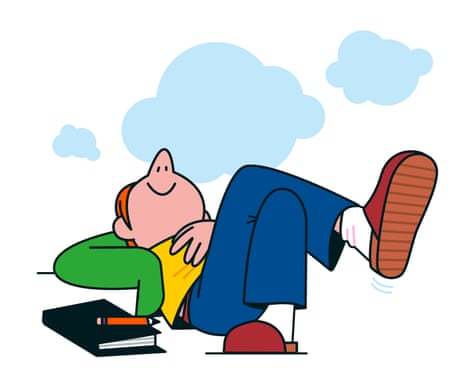
To incorporate productive idleness into daily life, Mann suggests scheduling activities that require minimal cognitive load, such as aimless walks or simply lying down and watching the clouds. These practices can create space for the mind to wander while still engaging in light physical activity.
However, the workplace presents a unique challenge regarding idleness. Karoline Schubert from Friedrich Schiller University Jena highlights the negative impact of corporate idleness. Research indicates that the average worker is idle for more than one-fifth of the workday, often waiting for tasks to materialize. This downtime can lead to feelings of fatigue and reduced well-being. Schubert’s study emphasizes the importance of understanding the difference between anticipated and unexpected downtime and suggests that those who expect idle time may find ways to utilize it productively.
To cultivate the ability to be productively unproductive, Treanor advocates for a lighthearted approach. Individuals who feel anxious about downtime can start small, such as taking a walk without distractions or observing their surroundings. “You are more likely to notice your thoughts even though you are still doing something,” she advises.
For those willing to take a more daring approach, Treanor encourages trying two minutes of complete inactivity. “Be proud of yourself for having a go. Acknowledge that it’s really hard and uncomfortable,” she says. This simple exercise can help individuals acclimate to the discomfort of idleness and gradually extend the time spent in quiet contemplation.
As society continues to grapple with the pressures of constant activity, understanding the benefits of idleness may lead to healthier lifestyles and enhanced creativity. In a world where doing nothing is often viewed as a luxury, the push for productive idleness could become a vital part of personal and professional growth.