On February 28, 2025, the United States launched missile strikes that targeted the Islamic Revolutionary Guard Corps headquarters in Iran, effectively ending a prolonged nuclear stalemate. The strikes not only resulted in the confirmed death of Supreme Leader Ali Khamenei, but also shifted the focus of the conflict toward Iran’s extensive resource base, which has significant implications for global power dynamics. As Washington grapples with the aftermath, it is discovering that the “Resistance Economy” Khamenei championed is not solely an oil-centric initiative; rather, it represents a strategic integration into a resource axis designed to withstand Western sanctions.
At the heart of this integration is China, which has established a silent yet vital partnership with Iran through a $400 billion, 25-year strategic cooperation agreement. This deal ensures that 80% of Iran’s oil exports are directed to Chinese “teapot” refiners. More crucially, it provides China access to a diverse mineral base developed with its technical assistance. As the U.S. has demonstrated its military capability to dismantle regimes, it must now contend with the industrial repercussions from a country that plays a critical role in sustaining Iran’s energy infrastructure.
Geological Riches and Strategic Implications
The Tehran Chamber of Commerce estimates Iran’s resource base to be worth approximately $27.3 trillion. This staggering figure underscores the strategic stakes involved in the region, particularly given Iran’s geological position along the Alpine-Himalayan orogenic belt. According to the U.S. Geological Survey, Iran ranked second globally in the production of direct reduced iron and strontium in 2022, while also being a top-ten producer of barite, feldspar, and molybdenum.
The potential for rare earth minerals in Central Iran, especially in Yazd Province, further amplifies the significance of Iran in global supply chains. In April 2025, Iran inaugurated a domestically engineered monazite processing plant, a pivotal development in its plans to link itself to a Eurasian supply chain involving China and Russia, effectively circumventing Western sanctions. Furthermore, in 2023, Tehran announced the discovery of 8.5 million tons of lithium-rich hectorite clay in Hamadan province. If verified, this deposit could rival the famous “Lithium Triangle” in South America, positioning Iran as a crucial player in the future battery supply chain.
China’s Strategic Maneuvers and U.S. Challenges
The U.S. military action against Iran poses a direct threat to this emerging resource axis. China has cultivated its dominance in critical materials over the past decade through significant investments, totaling $679 billion across 150 countries. Iran has been a central piece in this strategy, providing essential resources that Beijing has strategically secured through clandestine networks.
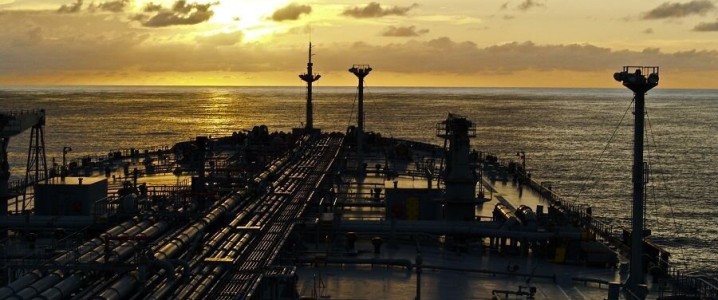
Most of Iran’s oil and industrial output is transported via “shadow tankers,” which conceal their locations to evade U.S. sanctions. These vessels account for 18% of global tanker capacity and serve as the financial backbone of the Iranian regime. Since December 2025, the U.S. Navy’s “Operation Southern Spear” has successfully seized ten of these tankers but has not significantly curtailed Iran’s oil flow. Currently, an estimated 300 million barrels of oil remain unsold on these tankers at sea, creating a significant buffer against market volatility.
If the U.S. escalates its naval blockade, the potential for a spike in oil prices could create political challenges for the administration, particularly with mid-term elections approaching. As China capitalizes on this situation, it has reportedly been amassing substantial quantities of Iranian and Russian crude oil, with estimates suggesting it has been sending at least 1 million barrels per day to storage over the past year. This strategic accumulation positions China to weather the economic fallout from the U.S. actions in the Middle East.
China’s influence is further magnified by its control over rare earth elements, essential for modern military applications. The U.S. military relies on these materials in various systems, including Tomahawk missiles, F-35 fighter jets, and Aegis missile defense systems. With China controlling over 90% of global refined rare earth output, a halt in exports could pose a significant risk to U.S. defense capabilities.
The U.S. faces a pressing need to rebuild its domestic supply chain for these critical materials, particularly in metallization and alloying processes. The Center for Strategic and International Studies emphasizes that rare-earth metallization is a complex capability that cannot be easily replicated outside China and is essential for producing military-grade magnets.
In an effort to address this gap, North American facilities are emerging as crucial players in the rare earth processing sector. The Saskatchewan Research Council, for instance, has developed North America’s first integrated minerals-to-metals plant, leveraging advanced industrial AI systems to manage the complex separation processes required to produce high-performance metals.
The partnership with REAlloys, which operates the only facility in North America converting heavy rare earths into defense-grade metals, is especially significant. This collaboration is set to fulfill U.S. Department of Defense contracts, providing key materials required for defense systems while ensuring compliance with upcoming regulations prohibiting the use of Chinese-sourced rare earths by 2027.
The geopolitical landscape is evolving rapidly as the U.S. moves to establish its own supply chains, while China maintains significant leverage over critical resources. President Trump is scheduled to visit Beijing in April 2026, following the upheaval in Iranian leadership, believing this provides an opportunity to negotiate a new trade agreement. However, China’s potential response to the fall of the Iranian regime could involve a complete ban on the export of permanent magnets and critical components, effectively paralyzing the U.S. military-industrial complex.
As the U.S. grapples with the implications of its actions in Iran, the true challenge lies in securing a stable and independent supply chain for essential materials. The conflict over resources is far from resolved, and the dynamics between the two nations will continue to shape the geopolitical landscape in the years to come.