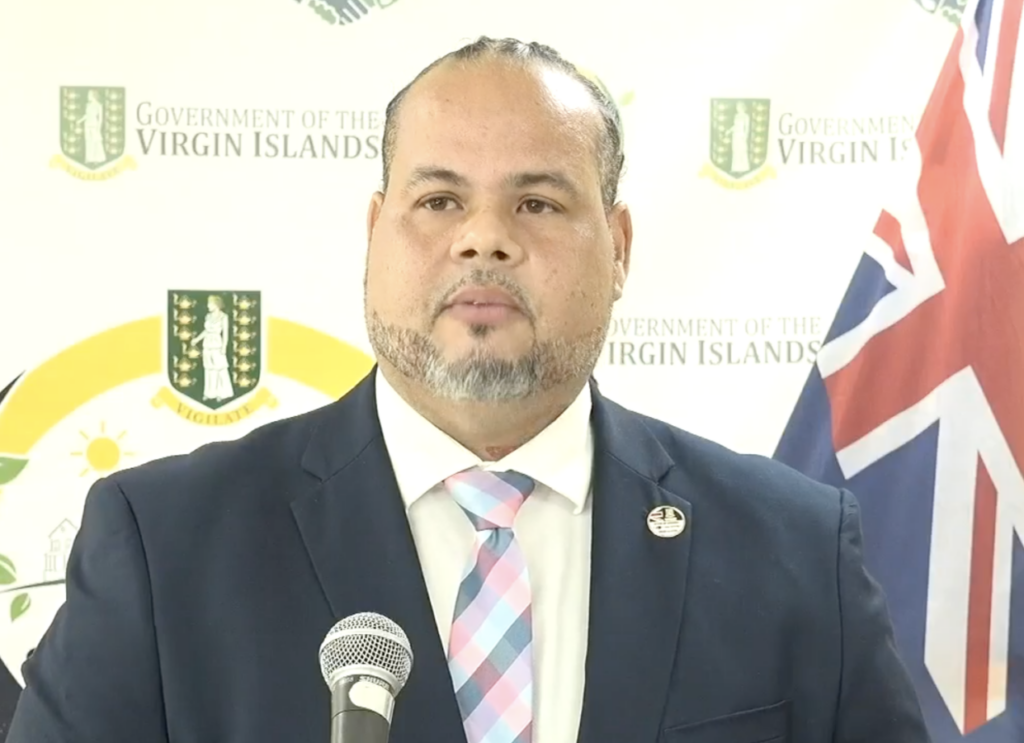
A proposal to introduce a fee for expatriate government employees in the British Virgin Islands (BVI) emerged as a significant topic during the recent budget debate. Territorial At-Large Representative Stacy Mather highlighted this potential revenue-generating measure while discussing the 2026 budget estimates in the House of Assembly.
During his address, Mather pointed out that there are currently over 500 government employees working under permits in the territory. He emphasized the necessity for the BVI government to reconsider its approach to these employment arrangements, especially as fiscal pressures continue to rise.
Rethinking Revenue Sources
Mather argued that the introduction of a fee for expatriate workers is a viable option for bolstering government revenue. He clarified that he is not advocating for an annual fee but suggested that this proposal should be part of a broader review of the territory’s financial strategies.
“I think it’s time for them… I think they should pay a fee. I think we should collect something,” Mather stated, reinforcing the need for additional income streams. He expressed concern that the government must address its fiscal management while facing ongoing criticisms.
Stressing that the proposed fee should not be punitive, Mather explained, “I’m not saying every year. I’m not saying that. I’m saying I think they should pay something because we need revenue.” His comments reflect an urgent call for the government to explore all possible avenues for financial sustainability.
Long-standing Practices Under Review
Mather’s proposal is just one of several suggestions aimed at enhancing accountability and improving revenue collection. He urged legislators to look beyond traditional practices that may not be sustainable in the current economic climate. “We can’t always give away the Virgin Islands for free and still take the criticisms we are taking,” he noted, calling for practical measures that yield tangible results.
While Mather did not provide specific details on how the fee would be structured or which categories of employees might be exempt, he framed the idea as a critical option among others that should be evaluated by the government.
The debate reflects growing concerns about financial management in the BVI, where the government seeks to balance its budget while maintaining services. As Mather transitions from opposition to government support, his advocacy for the expatriate fee highlights a shift towards more proactive fiscal policies.
Ultimately, as discussions continue in the House of Assembly, the emphasis remains on finding effective solutions to address fiscal challenges, ensuring that the BVI can sustain its economic health in the years to come.