The maritime industry relies heavily on powerful diesel engines to propel some of the largest vehicles on Earth: ships. These engines are essential for ensuring operational efficiency and reliability, making them a backbone of international shipping. Among the most notable diesel engines are those produced by manufacturers such as Wärtsilä-Sulzer and MAN Energy Solutions, which have pushed the boundaries of design and power output.
Leading Diesel Engines in Maritime Shipping
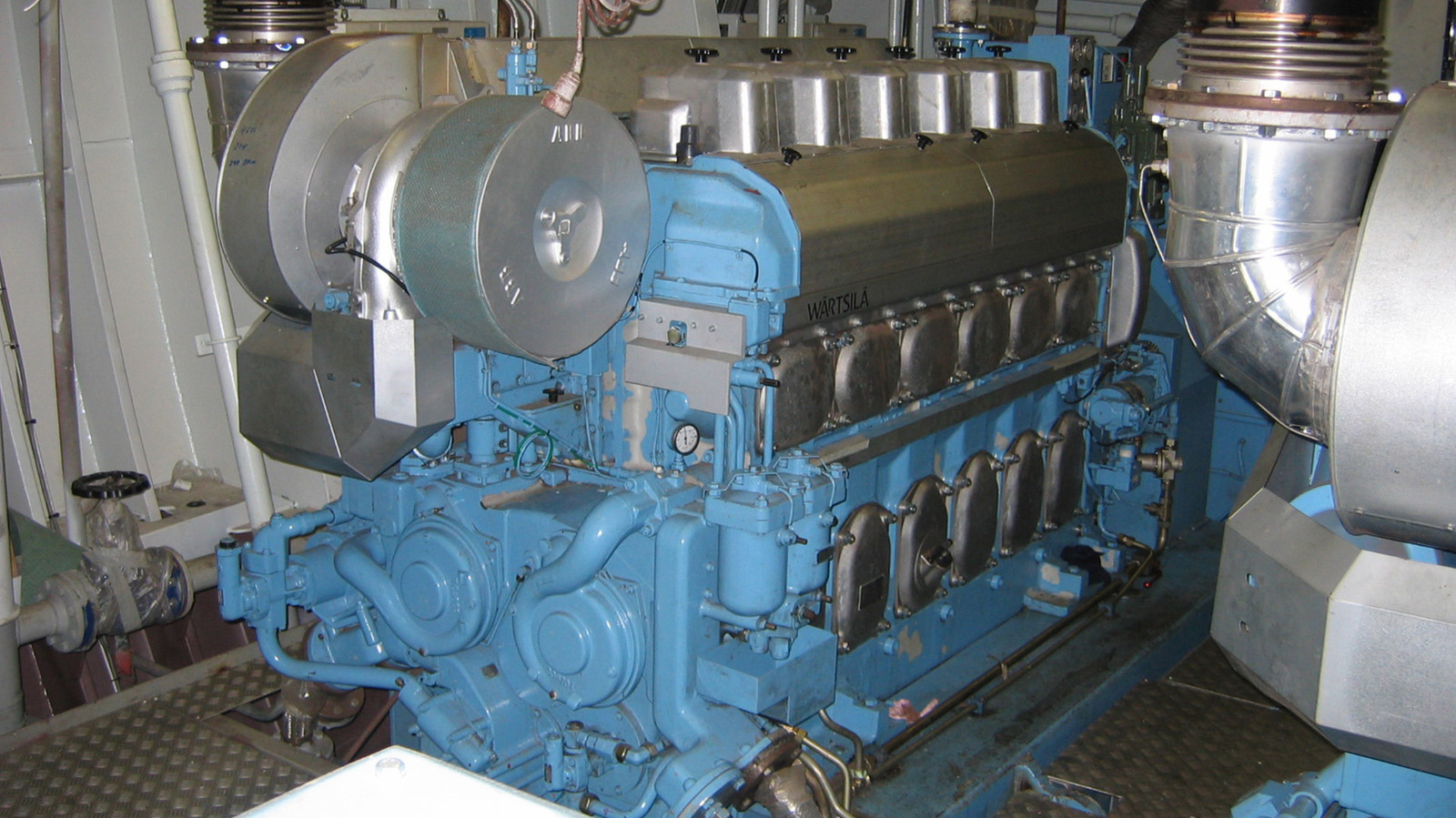
Among the engines that have made a significant impact on maritime transport is the Wärtsilä-Sulzer RTA84C, first introduced in 1988. Despite being considered outdated by modern standards, it was a groundbreaking engine at its launch, generating approximately 70,000 horsepower at a low 102 RPM. Its design emphasized durability, which is a hallmark of diesel engines, allowing it to remain in use on numerous container ships around the world. Estimates suggest that over 155 vessels are equipped with this engine, highlighting its lasting influence.
The MAN B&W 11G95ME-C engine, unveiled in 2015, represents another milestone in diesel engine technology. This engine has undergone several iterations, with its most powerful variant capable of producing around 103,000 horsepower. Weighing 2,230 tons and standing 59 feet tall, it is designed for container ships, playing a pivotal role in powering vessels like the HMM Algeciras, which launched in 2020 and is currently among the largest container ships in service.
Record-Breaking Power and Innovation
The Wärtsilä-Sulzer RTA96-C is often cited as a landmark achievement in marine engineering. Released in 1994, it was recognized as the most powerful ship engine of its time, producing an astonishing 107,390 horsepower and delivering torque of 7,603,850 Nm. This engine, a two-stroke, 14-cylinder design, has been integral to the operation of some of the largest container ships, cementing its legacy in the industry.
Building on this heritage, the RT-flex96C, launched in 2006, took the title of the largest diesel engine in the world. With a power output of 108,920 horsepower, it has been utilized in vessels such as the Emma Maersk, which was the largest container ship upon its completion. Its innovative turbocharging system captures exhaust heat to generate steam, enhancing overall efficiency.
Additionally, the MAN B&W 12G95ME-C10.5-LGIM engine is the latest entrant in this field, announced in May 2025. While primarily designed to run on methanol, it retains the flexibility to use conventional diesel fuel. This engine can achieve around 110,000 horsepower, making it one of the most powerful options available today, further showcasing the advancements in maritime diesel technology.
The evolution of these engines reflects not only engineering prowess but also the growing demands of global shipping. As vessels become larger and more complex, the engines that power them must also adapt, ensuring reliable performance across vast distances. With manufacturers like MAN Energy Solutions and Wärtsilä-Sulzer leading the charge, the future of maritime diesel engines promises to be as powerful and innovative as the ships they drive.