The aviation landscape between Europe and the Middle East is bustling this December, with a staggering **42,650 flights** planned, according to data from aviation analytics firm **Cirium**. This surge in air traffic reflects the strong demand for travel in this corridor, offering a total of **10,171,306 seats** and more than **23.7 billion available seat miles**.
Qatar Airways Leads the Pack
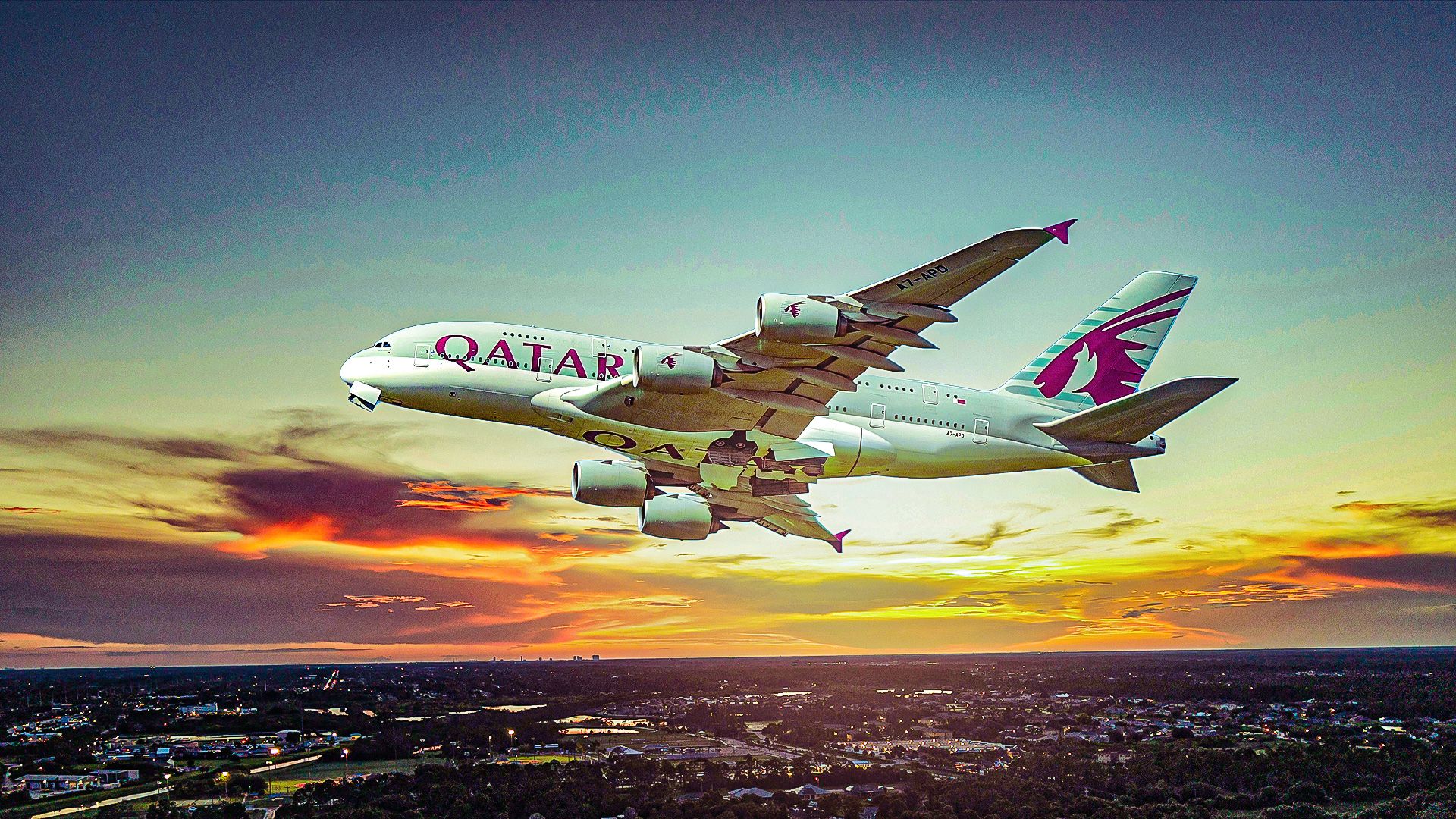
Among the airlines operating in this lucrative market, **Qatar Airways** emerges as the clear leader, with **292 planned flights** each way between **Doha (DOH)** and **London Heathrow Airport (LHR)**. This impressive frequency translates to an average of about **9.4 flights per day**. The airline utilizes a mix of aircraft, primarily the Boeing 777-300ER, along with the Airbus A350-900, A350-1000, A380, and Boeing 777-200LR. Earlier this year, Qatar Airways announced an increase in service on this route from eight to a maximum of ten daily return flights, further enhancing its connectivity during the winter months.
Thierry Antinori, Chief Commercial Officer of Qatar Airways, stated, “The latest increase in flight frequency is a testament to our continual and unmatched enhancements of experiences for our passengers travelling through the Best Airport in the Middle East – Hamad International Airport.”
Other Key Players in the Region
In addition to Qatar Airways, other airlines are also making significant contributions to the Europe-Middle East air travel market. **flydubai** ranks second this December, with **217 round trips** planned between **Dubai International Airport (DXB)** and **Moscow Vnukovo (VKO)**. This results in an average of seven flights daily, utilizing the Boeing 737-800 and 737 MAX 8.
**Emirates**, another major airline based in Dubai, operates a comparable frequency on its route to London Heathrow, with **213 flights** scheduled in each direction. Most of these flights are serviced by the Airbus A380, complemented by the Boeing 777-300ER on occasion. In addition to its Heathrow services, Emirates also connects to **Gatwick (LGW)** and **Stansted (STN)**, further solidifying its presence in the London market.
**Turkish Airlines** is another vital player, operating the fourth, fifth, and sixth-most frequent routes from its hub at the new **Istanbul Airport (IST)**. Its routes to **Jeddah (JED)**, **Tehran (IKA)**, and **Beirut (BEY)** feature monthly frequencies of **169**, **138**, and **132 flights**, respectively. The airline has reported a nearly **20% increase** in passenger traffic in October, indicating a robust recovery in demand.
While frequency is a key metric for assessing route popularity, it does not provide the complete picture. For instance, although flydubai and Emirates have similar flight numbers to Moscow and London, Emirates’ London route boasts almost three times as many seats, with **101,821** available compared to **36,650** on the Moscow route.
Emirates’ Dubai-Heathrow route is second only to Qatar Airways’ Doha-Heathrow service, which has **102,457 outbound seats** scheduled. Despite operating only three daily rotations, Emirates’ routes to **London Gatwick** and **Manchester (MAN)** rank third and fourth in terms of seat capacity, with **54,031** and **52,746 seats**, respectively.
**Etihad Airways**, the national airline of the UAE, rounds out the top five for seat capacity with its route from **Abu Dhabi International (AUH)** to London Heathrow, offering **50,820 seats** each way by operating four daily rotations. The capacity on this route is divided between the Airbus A380 and Boeing 787-9.
As the aviation sector continues to recover, these airlines are poised to capitalize on the strong demand for travel between Europe and the Middle East, showcasing the importance of this corridor on the global stage.