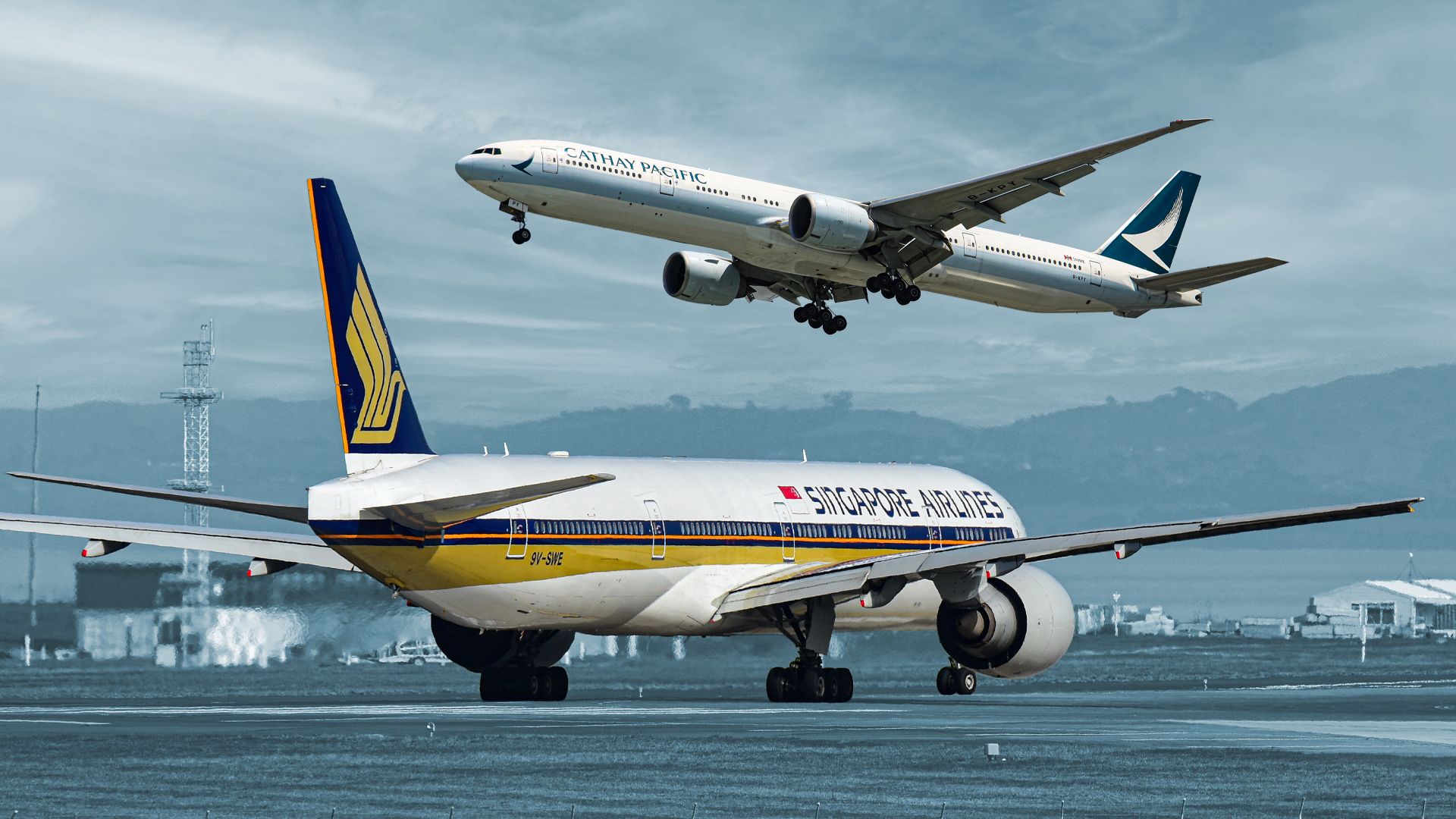
BREAKING: New reports confirm that despite carrying 26.5 million passengers in fiscal year 2024, Singapore Airlines still lags behind Cathay Pacific in the widebody aircraft category. As of now, Cathay Pacific boasts a fleet of 136 widebody aircraft, compared to Singapore Airlines’ 116, highlighting a critical shift in the competitive landscape of Asia’s premier airlines.
As both airlines navigate the post-pandemic air travel recovery, this development carries significant implications for travelers and industry stakeholders. The fierce competition between these two flagship carriers shapes the connectivity between Asia, Europe, North America, and Australia, making it essential to understand their fleet dynamics.
Singapore Airlines, recognized for its premium service and long-haul focus, operates primarily from Singapore Changi Airport (SIN). Meanwhile, Cathay Pacific, based at Hong Kong International Airport (HKG), serves as a pivotal transit hub, facilitating travel across the globe. Both airlines heavily rely on widebody aircraft, a key factor in their long-haul operations.
A closer look at their widebody fleets reveals that Cathay Pacific’s lineup includes a mix of A330s, A350s, and Boeing 777s, while Singapore Airlines relies predominantly on the A350 family, supplemented by a notable A380 fleet. The shift towards fuel-efficient aircraft has been pivotal for both airlines, with Cathay Pacific also set to receive 30 A330-900neos, while Singapore Airlines has 31 Boeing 777X aircraft on order.
In the world of cargo operations, Cathay Pacific leads with a robust fleet of 20 freighters, while Singapore Airlines operates just 5 dedicated cargo aircraft. This cargo capability is crucial, especially as air freight demand surges globally. The introduction of next-generation cargo aircraft, like the Airbus A350F, will further enhance operational efficiency for both airlines.
Both Singapore Airlines and Cathay Pacific maintain a limited narrowbody fleet, focusing primarily on widebody operations. Cathay Pacific operates the Airbus A321neo, while Singapore Airlines utilizes the Boeing 737 MAX 8, serving regional routes that support their extensive long-haul networks.
The competitive dynamics between these two airlines are not just about numbers; they reflect the evolving landscape of international air travel. With both carriers gearing up for future investments in fleet modernization, the race for supremacy in widebody operations is heating up.
Frequent routes for both airlines underline their regional strength. Cathay Pacific’s busiest route is the Hong Kong-Taipei corridor, with over 4,292 round-trip flights scheduled in 2025, while Singapore Airlines highlights its Jakarta-Singapore route with 3,172 flights.
As we look toward the future, industry watchers will be keen to see how these developments influence market strategies and customer choices. With both airlines actively expanding and modernizing, the competition is set to intensify, reshaping the travel experience for millions.
Stay tuned for more updates on this evolving story, as both Singapore Airlines and Cathay Pacific are positioned to stay competitive in the global aviation landscape.