The National Aeronautics and Space Administration (NASA) has officially classified the interstellar object 3I/ATLAS as a comet, citing spectral data that supports typical glacial and dust activity. This classification is being challenged by Harvard physicist Avi Loeb, who argues that the object’s trajectory aligns with Jupiter in a way that seems statistically improbable for a natural celestial body.
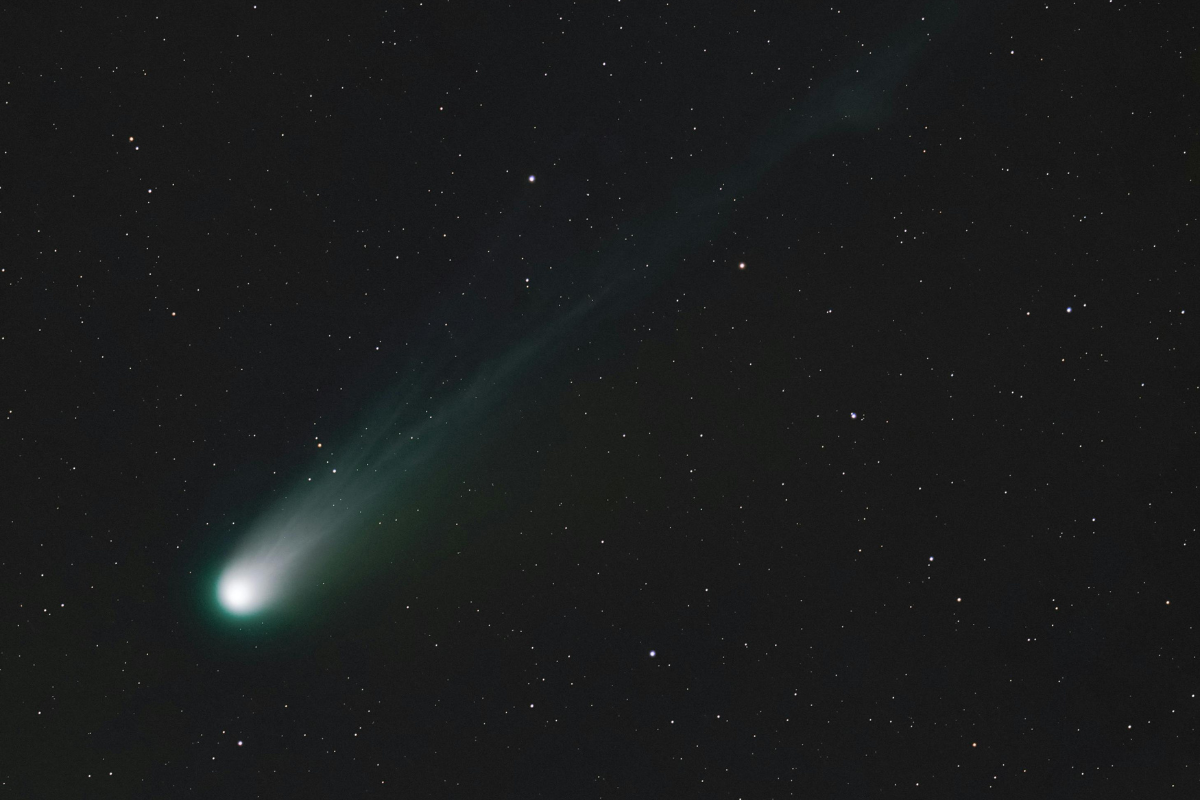
NASA’s assessment identifies classic comet characteristics, including a visible coma and a gas-emitting tail. The agency reports that spectral data indicates water activity, reinforcing the conclusion that 3I/ATLAS is consistent with natural cometary formations. Observations from multiple observatories have bolstered the consensus surrounding the object, which appears enveloped by dust and gas typical of cometary behavior. NASA emphasizes that while 3I/ATLAS is unusual, it remains well within the parameters of natural celestial bodies.
Despite this official classification, Loeb maintains that 3I/ATLAS displays anomalies that suggest it could be engineered rather than naturally formed. In his latest post on Medium, he introduced a significant thirteenth anomaly, which he believes cannot be explained by natural phenomena. This includes the object’s precise trajectory and unexpected non-gravitational acceleration, as well as jet activity that deviates from typical comet outgassing.
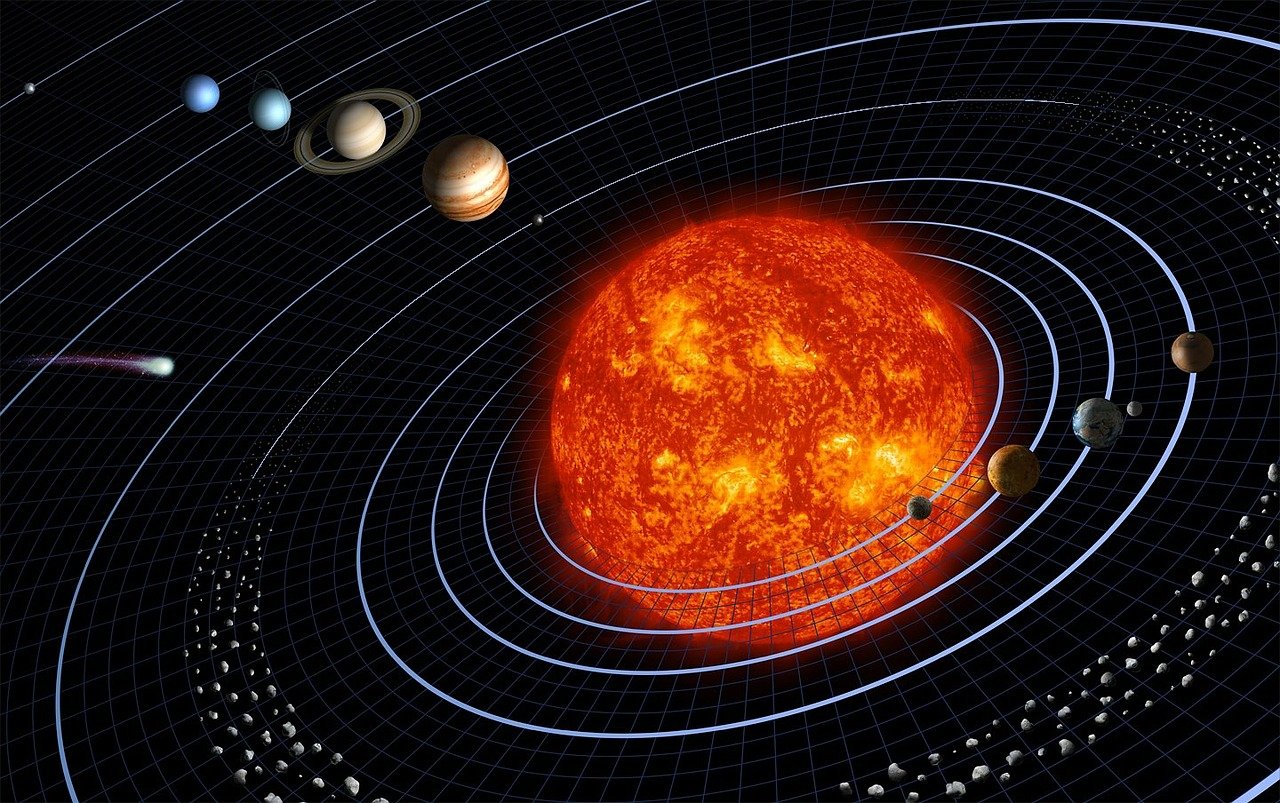
Loeb’s analysis indicates that 3I/ATLAS is set to pass nearly along the edge of Jupiter’s Hill sphere, the region where Jupiter’s gravity becomes dominant over that of the Sun. He noted that the object’s closest approach, approximately 53.445 million kilometers from Jupiter, aligns with remarkable precision—within 0.06 million kilometers. Loeb argues that this level of accuracy is statistically unlikely if the object were merely a random natural occurrence.
He further speculates that if 3I/ATLAS utilized small jets to adjust its trajectory, it may have purposefully targeted this close flyby. Loeb posits that the object could be designed to release smaller craft into stable orbits around Jupiter’s Lagrange points, ideal locations for prolonged observation. He remarked, “If 3I/ATLAS is technological in origin, it might have fine-tuned its trajectory with the help of thrusters to arrive at Jupiter’s Hill radius.”
In his assessment, Loeb indicates that if 3I/ATLAS were to deposit devices within Jupiter’s Hill sphere on March 16, 2026, these devices would need to fire their engines to counter the high speed of 3I/ATLAS, which is traveling at approximately 65.9 kilometers per second relative to Jupiter. This hypothesis raises the possibility of an interstellar “mothership” designed to deploy technological devices around Jupiter.
Loeb identifies Jupiter’s L1 and L2 Lagrange points as the most suitable locations for such devices, as they are stable regions where satellites require minimal fuel for maintenance. While he does not assert that 3I/ATLAS is definitively of alien origin, he believes the unusual data should prompt an open-minded investigation rather than being dismissed in favor of more conventional explanations.
He concluded, “If we find technological satellites of Jupiter that we did not send, it would imply that Jupiter is of interest to an extraterrestrial civilization.” Conversely, he suggested that the absence of similar technologies near Earth could be disappointing, indicating that our interstellar visitor may not be interested in our planet.
As the debate continues, the scientific community is watching closely to see how further observations of 3I/ATLAS will unfold and whether they will provide more clarity on the nature of this intriguing interstellar object.