The Scottish government is facing increasing pressure to reform its education system, with calls to learn from the successes of English schools. During a recent discussion, Maree Todd, the Scottish Minister for Sport, expressed admiration for the impact of the England women’s football team, the Lionesses, on the sport in Scotland. This moment of shared pride highlights a broader cultural shift, as the Scottish National Party (SNP) grapples with its stance on English policies.
Todd noted that the women’s game fosters a sense of camaraderie that contrasts sharply with the often tribal nature of men’s football. Her remark, “sisterhood is stronger than nationhood,” reflects a growing recognition of the interconnectedness between the nations of the United Kingdom, even as political divisions deepen. Support for Scottish independence hovers around 50 percent, and the political landscape is becoming increasingly complex, with a potential English nationalist prime minister and various parties in power across the UK.
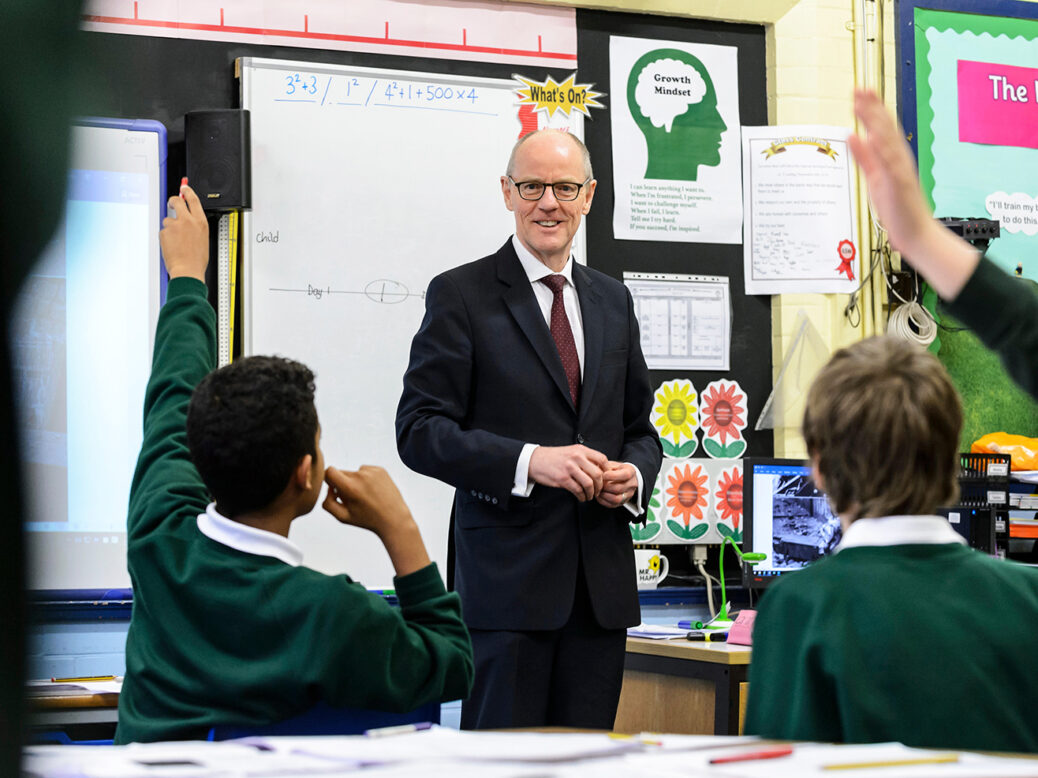
A significant area where Scotland is lagging is education. The recent performance of the English education system has garnered attention, particularly under the leadership of Nick Gibb, who served as Minister for Schools from the early 2010s until 2022. Gibb’s tenure saw the implementation of reforms that propelled English schools up international rankings, a stark contrast to Scotland’s declining standings.
Gibb recently visited Enlighten, a think tank focused on educational reform, to discuss his new book, Reforming Lessons: Why English Schools Have Improved Since 2010 and How This Was Achieved. His approach included expanding the academy programme, which allowed successful school leaders to take charge of underperforming institutions. This flexibility contributed to significant improvements in standards, accountability, and teaching methodologies.
The reforms emphasized phonics and East Asian strategies for teaching mathematics, resulting in rapid enhancements in student performance. Despite facing opposition from some educational establishments, Gibb maintained constructive relationships with critics and sought consensus where possible. His pragmatic approach exemplifies a philosophy of gradual reform, which he articulated through the metaphor of consuming an elephant “one bite at a time.”
Scotland’s education system currently faces numerous challenges, with many schools struggling to deliver adequate education. The prevailing political climate has not seen a concerted effort from leaders, including the SNP, to tackle these issues head-on. With the next election approaching, there are questions about whether political manifestos will reflect innovative strategies or simply adhere to established norms that have failed to yield positive outcomes.
Gibb’s insights underscore the importance of focusing on effective public policy rather than ideological debates. He is not particularly aligned with any political ideology but prioritizes what works best for students. His legacy in English education prompts a reconsideration of Scotland’s own educational strategies.
Recent reports indicate that Jenny Gilruth, Scotland’s Education Secretary, has requested a meeting with Gibb. This presents an opportunity for meaningful dialogue. If Gilruth approaches the meeting with an open mind, she may uncover valuable lessons that could reshape Scotland’s education landscape.
As the focus shifts to the future, it remains essential for Scotland to prioritize educational reforms. With children’s futures at stake, embracing successful practices from across the border could be a critical step towards building a stronger educational foundation. In a time when unity and cooperation may be more vital than ever, Scotland has much to gain from considering the successes of its English counterparts.