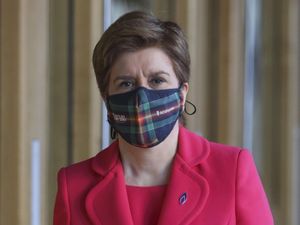
URGENT UPDATE: The UK Covid-19 Inquiry has just revealed that former First Minister Nicola Sturgeon held “gold command” meetings that significantly reduced transparency during the pandemic. The report, released today, highlights how decisions made in these smaller, informal gatherings bypassed the Scottish Cabinet, impacting accountability and public trust.
The inquiry found that during the pandemic, Ms. Sturgeon met with select ministers and advisers outside formal Cabinet sessions. This led to critical decisions being made without proper documentation or broader input, diminishing the effectiveness of the Scottish Cabinet as a decision-making body. The report states, “The use of the informal gold command meeting structure diminished the role of the Scottish Cabinet and reduced the transparency of the Scottish Government’s decision-making during the pandemic.”
According to the findings, the Cabinet often acted merely as a ratifying body rather than a central decision-maker. The inquiry specifically noted that important measures, such as the closure of schools, were decided by Ms. Sturgeon and Deputy First Minister John Swinney without Cabinet involvement. On March 17, 2020, after the Cabinet agreed to consider school closures, Sturgeon and Swinney swiftly decided to announce the closures, sidelining the full Cabinet in a crucial moment.
The report emphasizes the need for greater Cabinet engagement in future decision-making processes to ensure transparency and accountability. It pointedly criticizes the lack of documentation from these meetings, making it “difficult to understand the nature and extent of the discussions.”
In response to the inquiry, Deputy First Minister Kate Forbes addressed Members of the Scottish Parliament (MSPs), expressing her commitment to learning from the pandemic’s challenges. “As this report publishes, my thoughts turn to the many families across Scotland who lost loved ones during the pandemic,” Forbes stated. She acknowledged the need to adapt and improve future responses to health crises, emphasizing that past decisions were made under immense pressure.
The inquiry’s findings raise serious questions about governance during a critical time, underscoring the importance of involving a wider range of voices in disaster response. With the lessons from Covid-19 still fresh, stakeholders are urged to ensure that future pandemic responses are informed by the comprehensive review of past actions.
WHAT’S NEXT: As the Scottish Government pledges to learn from these findings, public scrutiny will increase regarding how future health crises are managed. The implications of this inquiry may shape not only how Scotland responds to emergencies but also influence the broader UK approach to governance and accountability in times of crisis.