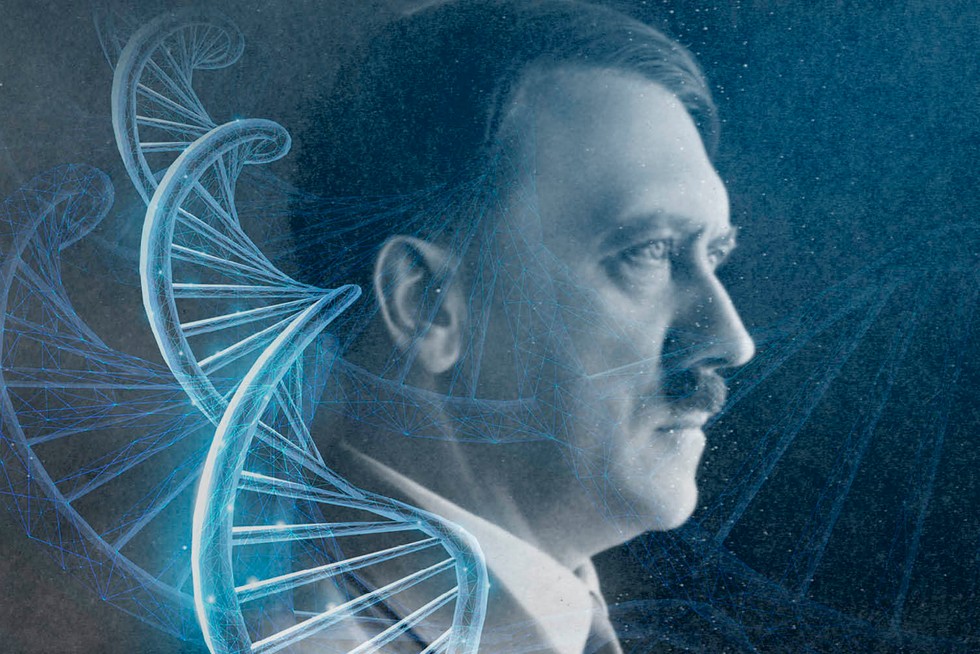
A new documentary titled Hitler’s DNA: Blueprint of a Dictator has unveiled groundbreaking findings from a world-first analysis of a DNA sample taken from a piece of fabric linked to Adolf Hitler. This analysis, conducted by a team of historians and geneticists, confirms the identity of the blood on the fabric and explores significant aspects of Hitler’s life, including his ancestry and potential health issues.
The fabric in question was cut from a sofa in Hitler’s Berlin bunker, where he died by suicide on April 30, 1945. The sample was preserved by Lieutenant Colonel Roswell P Rosengren, who took it as a souvenir after the fall of Berlin. After passing through generations, it was acquired by the Gettysburg Museum of History and offered for DNA testing. The documentary, produced by Blink Films and airing on Channel 4, features insights from geneticist Turi King and historian Alex J Kay, who played pivotal roles in the investigation.
The initial step in the analysis involved confirming the blood sample’s authenticity. To establish a genetic link to Hitler, the team sought DNA from a distant male-line relative, as Hitler had no direct descendants. Previous research by journalist Jean-Paul Mulders and genealogist Marc Vermeeren had identified male-line relatives of Hitler, enabling the team to compare the Y-chromosome type from the blood sample with that of these relatives. The results indicated a match, revealing a rare Y-chromosome type unique to Hitler.
The discovery held significant implications, particularly regarding longstanding rumors of Hitler’s Jewish ancestry. The rigorous scientific testing dispelled the myth, confirming what historians had suspected for decades. With the DNA match established, the researchers proceeded to sequence Hitler’s entire genome, adding him to a growing list of historical figures whose genetic information has been analyzed.
The findings also revealed health-related insights. The research uncovered a deletion in a gene associated with Kallmann syndrome, a condition that can lead to reproductive issues and hormonal imbalances. This revelation may provide context for Hitler’s troubled personal life, as historical accounts often describe his lack of interest in intimate relationships. Notably, historical records indicate that Hitler had a right-sided cryptorchidism, or undescended testicle, which could explain his sexual reticence.
The analysis extended beyond physical health to explore potential psychological conditions. Genetic testing indicated that Hitler scored in the top 1 percent for predisposition to schizophrenia, autism, and bipolar disorder. While high polygenic scores do not diagnose conditions, the unique combination of results is noteworthy. It suggests a complexity to Hitler’s psychological profile that has intrigued historians and psychologists alike.
Despite these revelations, it is essential to recognize that genetics alone cannot explain Hitler’s actions. His upbringing in a tumultuous environment, marked by personal loss and trauma, significantly influenced his character and decisions. The interplay of genetic predispositions and environmental factors creates a multifaceted portrait of an individual whose actions led to unprecedented historical consequences.
The documentary’s findings provide a new layer of understanding about Hitler, often described as “the embodiment of modern political evil.” As historian Ian Kershaw noted, Hitler’s singular impact on history cannot be overstated. The DNA analysis adds to the extensive body of research surrounding his life, revealing insights while emphasizing the importance of a comprehensive approach that considers both genetic and historical contexts.
This investigation into Hitler’s DNA not only sheds light on his ancestry and health but also serves as a reminder of the complexities of human behavior. The documentary invites viewers to reflect on the interplay of genetics, environment, and individual choice in shaping one of history’s most infamous figures.