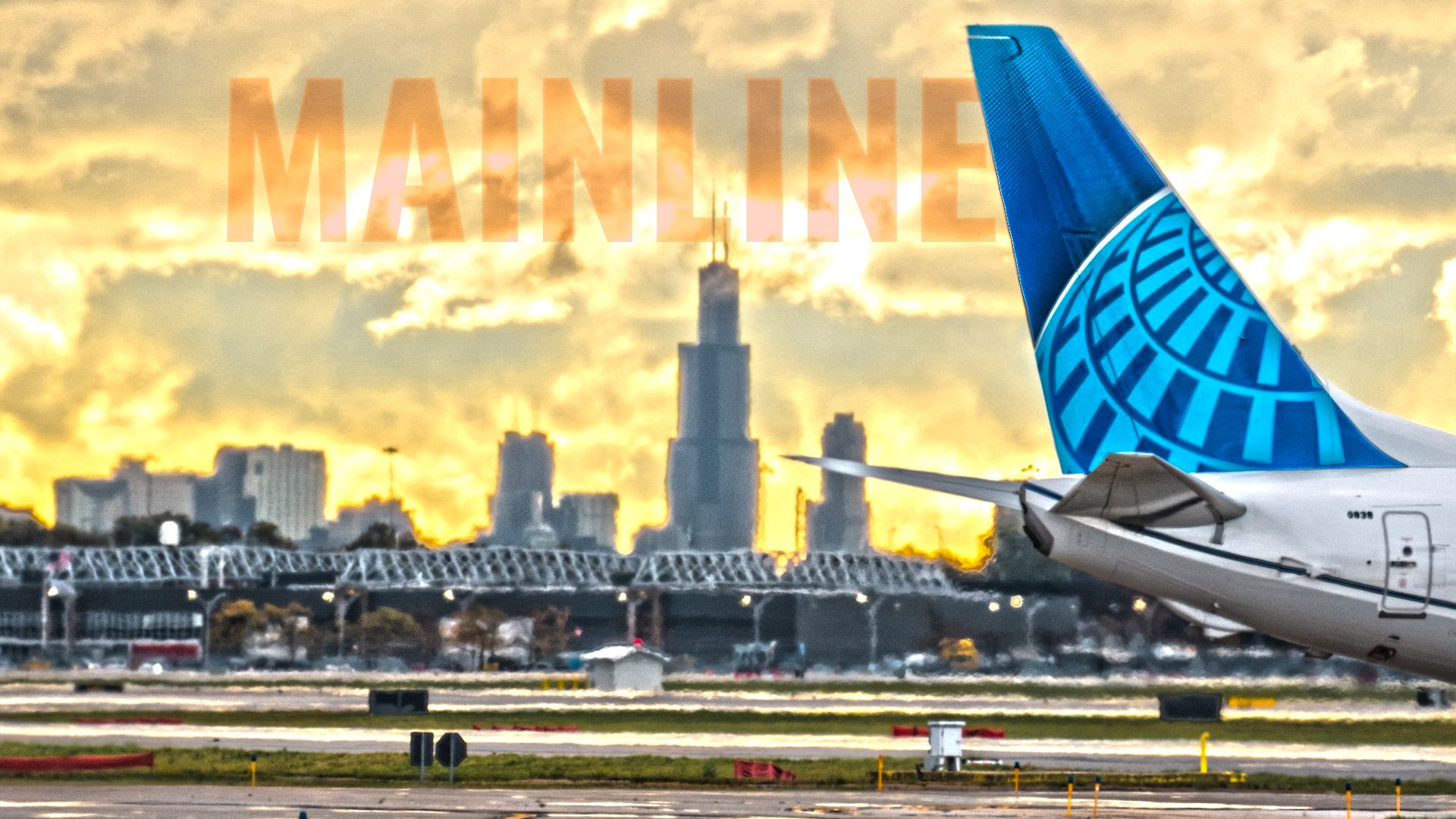
Current data from ch-aviation reveals that United Airlines holds the title for the largest mainline fleet in 2025, boasting an impressive total of 1,056 aircraft. The term ‘mainline’ refers specifically to the planes operated directly by the airline, excluding those operated by alliance partners or regional subsidiaries. This article explores the composition of United’s extensive fleet, along with details about its closest competitors, American Airlines and Delta Air Lines, which rank second and third respectively.
United Airlines’ Fleet Overview
United Airlines leads the industry in mainline fleet size, featuring over 250,000 seats across its aircraft. The backbone of its widebody fleet consists of the Boeing 777-200ER, with 55 units in operation. Furthermore, United has a significant number of narrowbody jets, particularly various models of the Boeing 737, including the 737-800, 737-900ER, and the MAX 8 and 9, each exceeding 100 examples.
The following table illustrates the top five widebody and narrowbody aircraft within United Airlines’ fleet:
| Variant | In Fleet | Average Age (Years) | Total Capacity |
|---|---|---|---|
| Boeing 777-200ER | 55 | 25.7 | 15,524 |
| Boeing 787-9 | 47 | 6.6 | 11,822 |
| Boeing 767-300ER | 37 | 29.7 | 6,680 |
| Boeing 787-10 | 21 | 5.4 | 6,678 |
| Boeing 777-300ER | 22 | 7.9 | 7,700 |
| Boeing 737-800 | 141 | 21.7 | 23,406 |
| Boeing 737-900ER | 136 | 12.9 | 24,344 |
| Boeing 737 MAX 8 | 123 | 2.8 | 20,418 |
| Boeing 737 MAX 9 | 113 | 3.1 | 20,277 |
| Airbus A319-100 | 81 | 24 | 10,206 |
Overall, United’s fleet averages 16.9 years in age, indicating a need for modernization. The airline has retired numerous older aircraft, including 101 Boeing 737-300s and 44 Boeing 747-400s, while planning to replace them with newer models, such as the 737 MAX 10, of which 167 units are on order.
Delta Air Lines and American Airlines Close Behind
Following United, Delta Air Lines operates the second-largest mainline fleet, comprising 1,010 aircraft. Similar to United, Delta’s fleet includes a significant number of narrowbody jets, with 158 Boeing 737-900ERs and 211 Airbus A321s. Its widebody fleet is comparatively smaller, featuring 39 Airbus A330-900s and 39 Boeing 767-300ERs.
The table below highlights Delta’s major aircraft:
| Variant | In Fleet | Average Age (Years) | Total Capacity |
|---|---|---|---|
| Airbus A330-900 | 39 | 3 | 10,959 |
| Boeing 767-300ER | 39 | 29.1 | 8,404 |
| Airbus A350-900 | 38 | 5.3 | 12,811 |
| Airbus A330-300 | 31 | 16.8 | 8,742 |
| Boeing 767-400ER | 21 | 24.8 | 4,998 |
| Boeing 737-900ER | 163 | 9.8 | 29,193 |
| Airbus A321-200 | 127 | 6.9 | 24,257 |
| Boeing 757-200 | 96 | 28.6 | 17,181 |
| Airbus A321neo | 84 | 1.9 | 30,070 |
| Boeing 737-800 | 77 | 24.2 | 12,320 |
Delta’s fleet also reflects a trend towards modernization, with 267 firm commitments for new aircraft, including 100 Boeing 737 MAX 10s and additional widebody aircraft.
American Airlines ranks third with a total of 1,001 aircraft. Its mainline fleet is entirely composed of Boeing jets for widebodies, which include 67 Boeing 777s and a mix of Boeing 787 Dreamliners. American’s narrowbody fleet features a dominant presence of 303 Boeing 737-800s and 218 Airbus A321-200s.
The following table outlines American Airlines’ key aircraft:
| Variant | In Fleet | Average Age (Years) | Total Capacity |
|---|---|---|---|
| Boeing 777-200ER | 47 | 24.9 | 12,831 |
| Boeing 787-8 | 37 | 7.5 | 8,658 |
| Boeing 787-9 | 30 | 6.1 | 13,590 |
| Boeing 777-300ER | 20 | 11.7 | 6,080 |
| Boeing 737-800 | 303 | 16.0 | 52,116 |
| Airbus A321-200 | 218 | 13.2 | 40,012 |
| Airbus A319-100 | 132 | 21.6 | 16,896 |
| Boeing 737 MAX 8 | 81 | 4.2 | 17,200 |
| Airbus A321neo | 76 | 4.3 | 33,320 |
American Airlines is also investing in its future, with 300 commitments for new aircraft, including 115 Boeing 737 MAX 10 jets and substantial orders for new Airbus models.
Future Outlook for United Airlines
Looking ahead, United Airlines is poised to maintain its position as the largest airline by mainline fleet size. The airline has an extensive order book, with 666 jets awaiting delivery. This indicates a proactive approach towards modernizing its fleet, which currently averages 16.9 years in age.
The order sheet reveals a significant commitment to the 737 MAX 10, which is still pending certification. According to Andrew Nocella, Chief Commercial Officer of United Airlines, the airline is prioritizing the MAX 9 to mitigate any potential capacity issues during this transitional period.
As United Airlines expands its fleet, it has opted not to include the Boeing 777X, as it does not align with the carrier’s business model. This strategic decision reflects a shift away from high-capacity jets, which can incur higher operating costs.
In 2024, United Airlines is expected to operate 1.6 million flights, serving 944 routes in May alone. The airline’s extensive network includes both domestic and international destinations, highlighting its critical role in air travel in the United States and beyond.