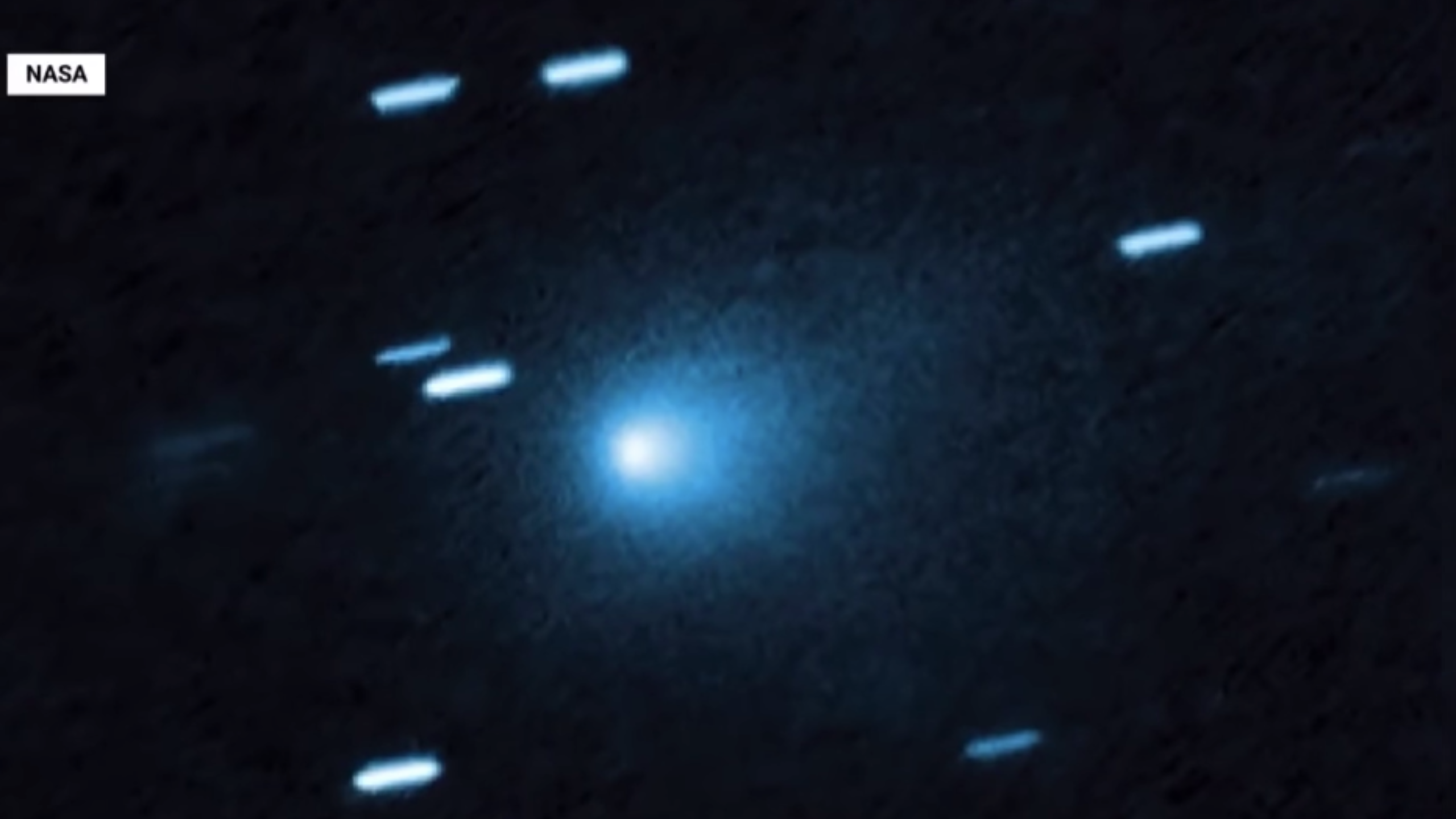
The interstellar comet 3I/ATLAS has ignited discussions among scientists, space enthusiasts, and religious groups, particularly within the evangelical community. Following the detection of radio signals from the comet, some have speculated about the potential for extraterrestrial life onboard. This has prompted concerns from Evangelical Christians who view such theories as distractions from spiritual beliefs.
The magazine Charisma has raised questions regarding the implications of potential alien life associated with 3I/ATLAS. The publication suggests that believers should refer to biblical texts for insights into the phenomenon. It argues that the increasing fascination with aliens and space is a diversion from acknowledging “the true Creator of the universe.” The article goes further to characterize what many describe as “visitors” from space as “manifestations of deception,” warning against narratives that encourage looking to the stars for salvation instead of to the divine.
Echoing these sentiments, evangelical leaders encourage a spiritual interpretation of celestial events while dismissing what they term “counterfeit narratives.” They assert that not every astronomical occurrence signifies the existence of extraterrestrial beings but rather reflects the “Divine Majesty.”
Scientific Perspectives on 3I/ATLAS
The scientific community has not shied away from the speculation surrounding 3I/ATLAS. Theoretical physicist Michio Kaku recently commented on the ongoing theories about the comet during an interview with NewsNation on November 8, 2023. Kaku noted that the comet, estimated to be around seven billion years old, has likely accumulated what he termed celestial “garbage” over its extensive journey through space.
He explained that the comet’s composition, which contains significant levels of nickel and iron, suggests it has traversed various celestial environments. This contrasts with comets found within our own Solar System, which Kaku stated are typically between three to four billion years old. Observations indicated that 3I/ATLAS appeared to have lost its tail after passing near the Sun, fueling speculation about its nature. Kaku indicated that this could simply be a sign of the comet’s age rather than evidence of alien activity.
Other prominent scientists, including Neil DeGrasse Tyson and Avi Loeb, have expressed their views on the possibility of alien life aboard the comet. Loeb, in particular, has criticized the NASA for allegedly withholding information regarding 3I/ATLAS. He attributed the delays in releasing new images and data to the recent federal government shutdown.
Kaku also expressed frustration over NASA’s lack of communication regarding the comet. While he acknowledged the slim possibility of alien life existing on 3I/ATLAS, he maintained that such speculation should be approached with caution.
The intersection of scientific inquiry and religious interpretation surrounding 3I/ATLAS highlights the diverse perspectives on what this astronomical phenomenon may signify. As interest in the comet continues to grow, both the scientific community and religious groups will likely remain engaged in this ongoing dialogue, each seeking to understand the implications of such a remarkable celestial visitor.