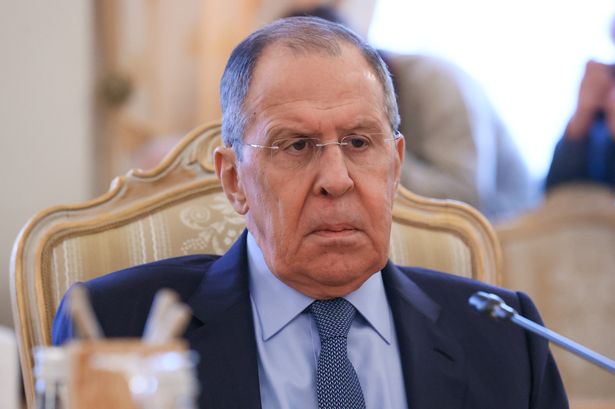
Russian Foreign Minister Sergei Lavrov has launched a pointed critique of the United Kingdom, characterizing its military capabilities as “weak.” His comments come in the context of increasing tensions between Russia and the West, particularly surrounding the ongoing conflict in Ukraine. Lavrov, who recently re-emerged in the public eye after a period of absence, directed his remarks at the UK, which he views as a primary adversary for its support of Ukraine.
Lavrov’s Condemnation of UK Military
During his recent statements, Lavrov emphasized the decline of the UK’s global influence, stating, “There was an empire, an empire that ruled practically the whole world. Now that empire no longer exists. Nor does the good old England they used to boast about, and they no longer have any economic power.” He further asserted that the UK’s military strength, including its nuclear arsenal, is not as formidable as it once was, suggesting that it lacks full control over its capabilities.
Lavrov’s criticism extended to the UK’s strategic maneuvers, describing them as attempts to “compensate” for their diminished status by engaging in divisive actions on the global stage. He remarked, “They compensate with this traditional English desire to, well, divide and rule everywhere,” indicating a belief that the UK is resorting to historical tactics in its foreign policy.
In an unusual twist, Lavrov referenced claims from the Russian Federal Security Service (FSB) alleging a conspiracy involving British intelligence and Ukrainian operatives aimed at orchestrating the defection of a Russian MiG-31 warplane crew. He described these accusations as indicative of the UK’s role in fomenting conflicts, particularly in relation to recent tensions in the region.
Ukraine’s Defense Strategy and International Support
As these developments unfold, Ukrainian President Volodymyr Zelenskyy has expressed his intent to procure 25 Patriot air defense systems from the United States. This request highlights Ukraine’s urgent need for advanced military technology to counter ongoing Russian aerial assaults, which have led to significant disruptions, including rolling blackouts across the country.
Zelenskyy acknowledged the financial implications of such a request, noting that the systems are costly and could take years to produce. He proposed that European nations could temporarily transfer their own Patriot systems to Ukraine while awaiting replacements, emphasizing the urgency of the situation: “We would not like to wait.”
The backdrop of Lavrov’s remarks and Zelenskyy’s appeal illustrates the heightened stakes of military readiness as winter approaches. The ongoing conflict continues to impact civilians, with many in Ukraine facing challenges due to infrastructure damage and energy shortages.
As both nations navigate the complexities of international diplomacy and military strategy, the statements from Lavrov serve to underscore the confrontational rhetoric that has characterized relations between Russia and the West in recent years. The situation remains fluid, with potential implications for global security dynamics as the conflict in Ukraine continues to evolve.