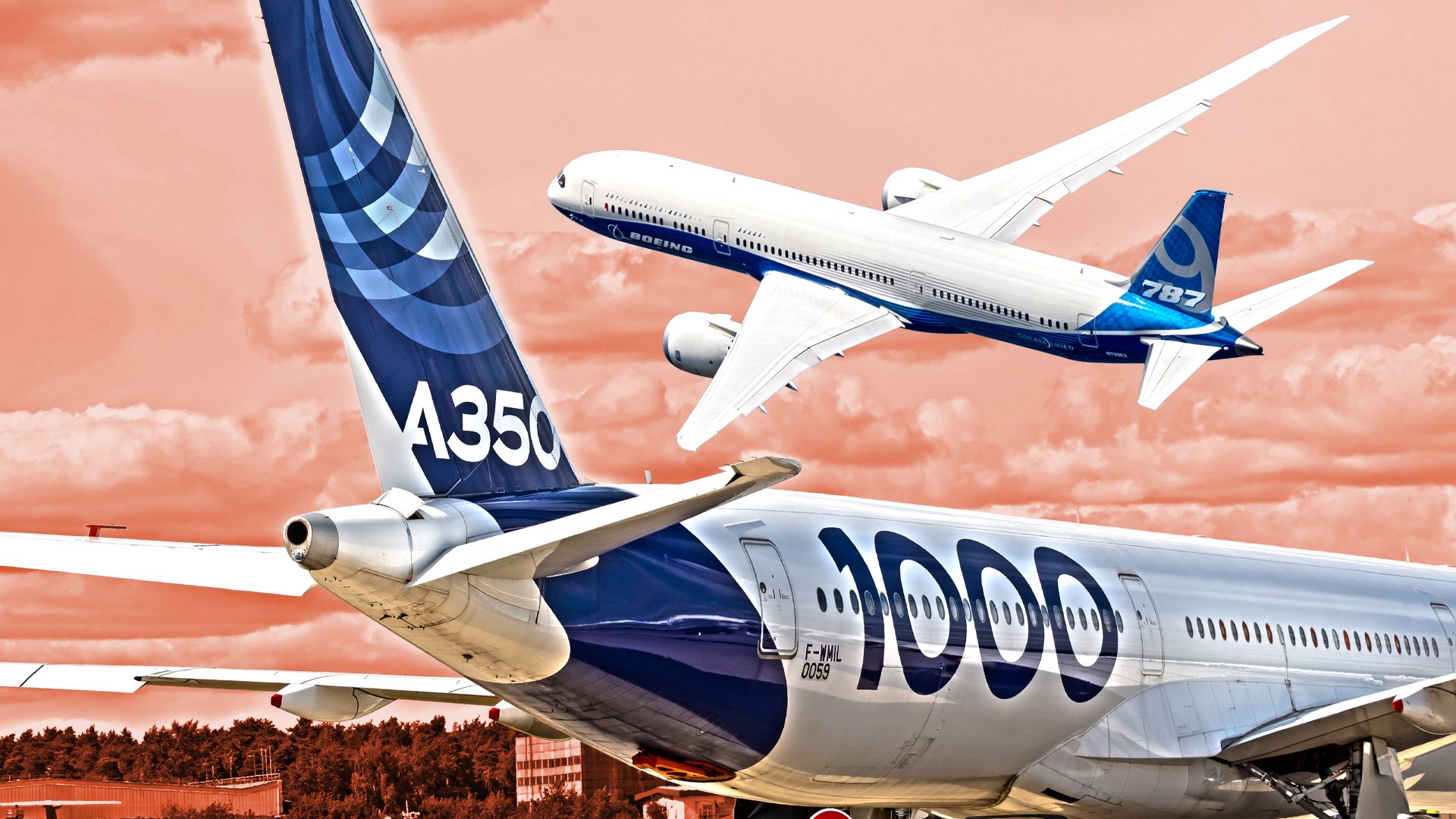
UPDATE: Boeing has just confirmed a significant lead over Airbus in widebody aircraft orders and deliveries for 2025, even as both manufacturers face mounting challenges. Boeing’s widebody fleet is making headlines with a surge in orders, while Airbus grapples with safety incidents and production delays.
In a year marked by fierce competition, Boeing has secured 725 gross orders by the end of August 2025, compared to Airbus’ 434 orders. Boeing’s widebody deliveries have also outpaced Airbus, with 64 aircraft delivered to date, compared to Airbus’ 32. This latest data highlights Boeing’s recovery from previous production issues, as the company aims to capitalize on the ongoing demand for its 787 Dreamliner and 777X models.
The stakes are high, especially for Boeing’s 777X, which has faced severe delays. Originally scheduled for delivery in 2020, the aircraft’s first delivery has now been pushed to 2027, costing Boeing an estimated 15 billion USD. This extensive delay has sparked frustration among major customers like Emirates, who have over 200 orders pending. Emirates President Tim Clark expressed his discontent, stating, “There was never any hint that they would make an official pronouncement that 2027 was to be the delivery year.”
Meanwhile, Airbus continues to face challenges with safety incidents. In 2025, Boeing’s widebody fleet has experienced several serious safety issues, including the tragic crash of Air India Flight 171 on June 12, resulting in 241 fatalities. This incident involved a Boeing 787, although investigations suggest that the cause was related to airline operational failures rather than aircraft defects. Airbus, on the other hand, reported no major safety incidents among its widebody fleet this year.
Despite the challenges, the competition remains fierce as Boeing and Airbus redefine the future of widebody aviation. The A350 and 787 remain at the forefront, with Airbus boasting a larger capacity and longer range. The A350-1000 can carry over 400 passengers in a two-class configuration, compared to the 336 seats in the Boeing 787-10. However, many airlines operating shorter routes under seven hours prefer the 787 for its operational efficiency.
As both manufacturers navigate this turbulent landscape, the focus now shifts to the upcoming deliveries and the long-term impact of the 777X delays. Analysts suggest that if Boeing can overcome its challenges and deliver on its backlog, it stands to profit significantly in the coming years.
In the battle of the jumbos, the Airbus A380 continues to fly while Boeing’s 747 fleet is rapidly declining. The A380’s popularity persists among airlines, with operators like Emirates planning to keep them in service until 2040. In contrast, only four airlines still operate the Boeing 747, which is being phased out at an alarming rate.
The competition between Boeing and Airbus is not just about numbers; it’s about the future of aviation. With the industry poised for a potential recovery, all eyes are on how these two giants will respond to the evolving demands of global air travel.
Stay tuned for further updates as this story develops, and watch for the next moves from both Boeing and Airbus in the widebody aircraft market.