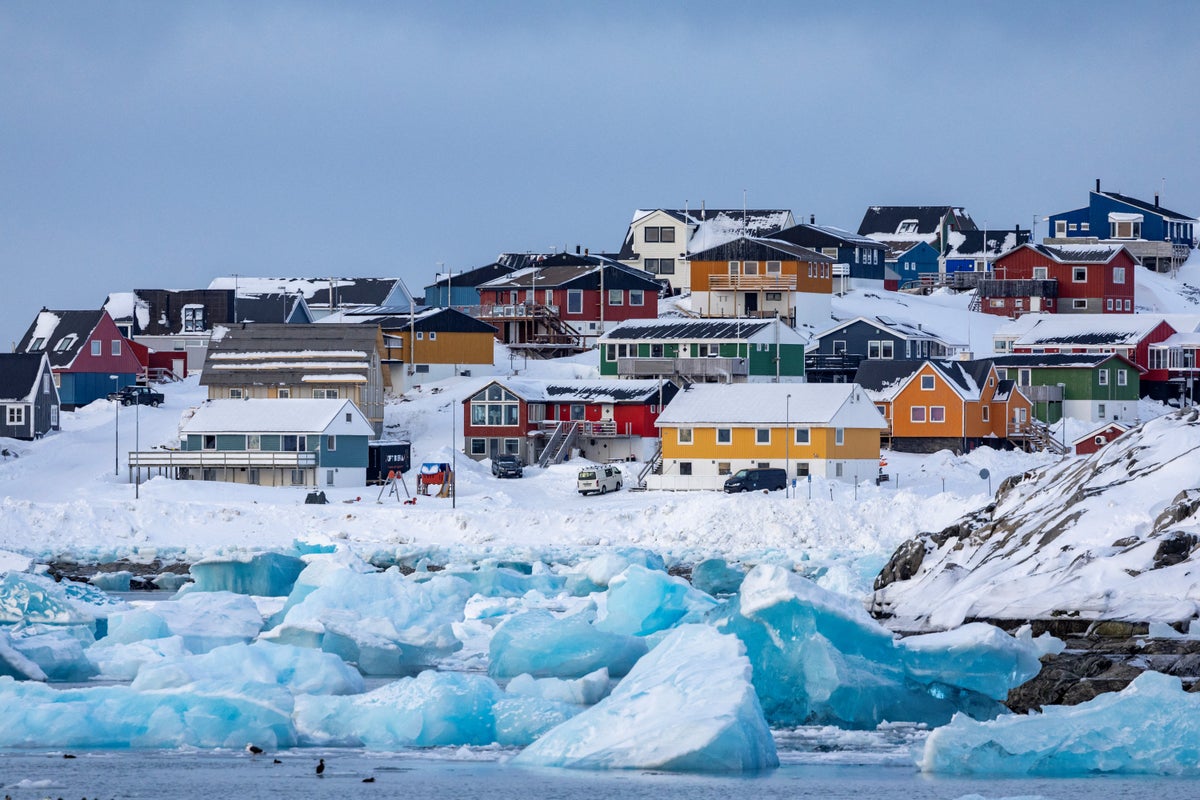
Efforts to establish rare earth mining operations in Greenland continue to face significant obstacles. The island’s harsh environment, lack of developed infrastructure, and complex geology have stymied attempts to tap into the estimated 1.5 million tonnes of rare earth elements crucial for various high-tech applications. Despite heightened interest, particularly from the United States, these challenges are unlikely to diminish in the near future.
Former US President Donald Trump emphasized the strategic importance of Greenland during his administration. He aimed to reduce China’s dominance in the global rare earth supply chain, especially after Beijing restricted exports following US tariffs in early 2023. The Trump administration allocated hundreds of millions of dollars and acquired stakes in several companies to bolster domestic rare earth production. Recently, Trump reiterated that securing Greenland could address this critical supply issue, stating, “We are going to do something on Greenland whether they like it or not.”
Yet, the reality of mining in Greenland remains complex. While some companies have initiated exploratory efforts, the path to production is fraught with uncertainty. According to Tracy Hughes, founder and executive director of the Critical Minerals Institute, the focus on Greenland often leans more toward geopolitical strategy than tangible solutions for the tech sector. “The hype far outstrips the hard science and economics behind these critical minerals,” Hughes noted.
Geological and logistical challenges further complicate mining initiatives. Diogo Rosa, an economic geology researcher at the Geological Survey of Denmark and Greenland, highlighted the remoteness of potential sites. “Even in southern Greenland, where populations reside, there are few roads and no railways. Mining operations would require significant infrastructure development.”
Environmental concerns also loom large over potential mining activities. Patrick Schröder, a senior fellow at Chatham House, pointed out that the toxic chemicals necessary for mineral extraction might pose risks to Greenland’s fragile ecosystem, especially as the region seeks to grow its tourism sector. Additionally, rare earths in Greenland are often found alongside radioactive materials, presenting another layer of complication.
The geological makeup of Greenland adds another hurdle. Rare earth elements there are typically encased in eudialyte, a complex rock formation that has yet to yield a profitable extraction process. In contrast, these elements are more commonly found in carbonatites elsewhere, where proven extraction methods exist. “If we’re in a race for resources, we should prioritize those that can be brought to market most efficiently,” said David Abraham, a rare earths expert and author.
Despite the challenges, some companies remain optimistic. This week, Critical Metals saw its stock price more than double after announcing plans to build a pilot plant in Greenland. However, they and other companies exploring the island are still far from establishing operational mines and would need to secure substantial funding, potentially in the hundreds of millions of dollars.
Profitability remains a critical concern. The rare earth market is heavily influenced by Chinese production, which has historically involved practices like price dumping to eliminate competition. Currently, over 90 percent of the world’s rare earths are processed in China, making it difficult for new entrants to gain traction. The US is actively seeking to enhance its rare earth supplies in light of a temporary reprieve from stricter regulations that Trump claimed Xi Jinping agreed to in October 2023.
Experts suggest that rather than focusing on Greenland, the US should support existing companies that are already making strides in rare earth production. For instance, the government has invested in MP Materials, the only operating rare earth mine in the US, as well as in lithium and battery recycling firms. Scott Dunn, CEO of Noveon Magnetics, emphasized the importance of leveraging established companies to reduce dependence on China. “There are very few folks that can rely on a track record for delivering anything in each of these instances,” he remarked.
As the global demand for rare earth elements continues to rise, the challenges associated with mining in Greenland serve as a reminder of the complexities involved in resource extraction. While the geopolitical interest in Greenland remains high, the realities of its mining potential paint a cautious picture for the future.