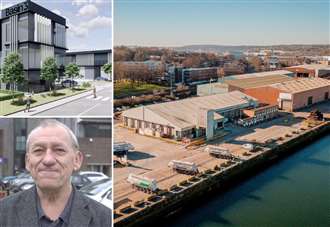
The High Court has dismissed an attempt to overturn plans for the redevelopment of Chatham Docks into a significant business park known as Basin3. This decision comes after Medway Council granted approval for Peel Waters’ project, which aims to create a new 31,000 square meter waterfront campus. The ruling is a pivotal moment for the local economy, as it promises to transform the area into a hub for businesses in growth sectors.
ArcelorMittal Kent Wire, a steel manufacturer currently operating at the docks, opposed the redevelopment. The company argued that the demolition of existing warehouses could have “seismic adverse consequences” for British industry. In its correspondence with the local authority, ArcelorMittal cited legal advice suggesting that the council’s approval of the application might be unlawful, warning it could lead to job losses.
The approval process has faced delays, with a formal decision postponed until November 2024 due to an unfulfilled request for a call-in by the Secretary of State. Subsequently, ArcelorMittal initiated a judicial review, which was heard in October and concluded recently.
High Court Ruling Details
Judge Sir Michael Chamberlain presided over the case and acknowledged the contentious nature of the redevelopment. He noted the “competing views” within the community regarding the project’s benefits, particularly given that the council’s initial decision passed by a narrow margin of eight votes to seven. However, he clarified that the ruling centered not on the merits of the redevelopment but on the legality of Medway Council’s actions.
The court examined three key grounds for the judicial review. The first contended that the council had granted permission for an application that had not been requested by Peel, specifically regarding the use of the site for office space. Council representative Jenny Wigley KC countered that the decision notice clearly outlined the permissions that had been sought, which did not specifically mention office use. This argument was ultimately rejected by the court.
The second ground alleged that Medway Council’s planning officers had “materially misled” the planning committee regarding the ability to designate parts of the site for general industrial use. Rupert Warren KC, representing ArcelorMittal, claimed that the chief planning officer’s assurances created a misleading expectation among committee members. Judge Chamberlain dismissed this assertion, emphasizing the need for evidence that officers had misled members. He remarked that the committee should be expected to critically evaluate applications and advice.
The final ground argued that the redevelopment violated Medway Council’s 2003 Local Plan, which prohibits non-industrial permissions. Judge Chamberlain ruled that the application broadly complied with the policy, which had been clearly outlined by officers during discussions.
Future Prospects and Community Impact
The court rejected all grounds for the judicial review, allowing Peel Waters to proceed with its plans for Basin3. The redevelopment is anticipated to provide space for businesses in sectors such as creative industries, manufacturing, and technology, as well as facilities for start-ups and independent enterprises.
An essential aspect of the project is its commitment to enhancing public access to the waterfront, with plans for a new tree-lined promenade extending over half a kilometer. This development aims to connect Chatham Waters with the wider community, promoting walking and cycling routes.
Peel Waters has already invested over £200 million in regenerating the area, which now features more than 600 new homes. Leigh Thomas, the development director at Peel Waters, expressed enthusiasm about the court’s ruling, stating that it allows for the transformation of underutilized brownfield land into a modern employment campus. He noted the project’s potential to triple local job numbers and attract businesses aligned with Medway’s growth sectors.
Cllr Simon Curry, the portfolio holder for planning at Medway Council, also welcomed the decision, affirming the council’s commitment to maintaining employment use in the area. He highlighted the economic growth and job creation the project could facilitate while improving public access through planned cycling and walking paths.
The decision has drawn mixed reactions, particularly from those opposed to the redevelopment. Kelly Tolhurst, a former MP and supporter of the Save Chatham Docks campaign, expressed disappointment, claiming the council prioritized a developer over local industrial interests. She voiced concern that shutting down the industrial site would have detrimental effects on workers and the local economy.
As the plans for Basin3 move forward, the focus will shift to the implementation of the development, which is expected to reshape the economic landscape of the Medway area significantly.