President Donald Trump has announced the suspension of talks with Iranian officials as protests in Iran escalate, leading to a reported death toll of over 2,000 individuals. This decision comes amid a significant crackdown on demonstrators by Iranian authorities. While specifics on U.S. assistance for the protesters remain unclear, Trump has indicated a willingness to consider various options, including military action.
In a statement on his Truth Social platform, Trump urged Iranian citizens to “KEEP PROTESTING – TAKE OVER YOUR INSTITUTIONS!” He emphasized the need to document the actions of those responsible for violence against protesters. “I have cancelled all meetings with Iranian officials until the senseless killing of protesters STOPS. HELP IS ON ITS WAY,” he wrote.
Options on the Table
White House Press Secretary Karoline Leavitt reiterated that while diplomacy remains the priority, military force is also a potential avenue. “Airstrikes would be one of the many, many options that are on the table,” she stated, highlighting Trump’s readiness to act if deemed necessary. The administration is exploring various methods to support the Iranian protest movement, including amplifying anti-government voices online, launching cyber operations against Iranian infrastructure, and imposing additional sanctions on the regime.
According to reports from The Wall Street Journal, the U.S. could respond with military strikes targeting key installations, such as nuclear sites or government buildings, to weaken the Iranian regime’s capabilities. Matt Gertken, chief geopolitical strategist at BCA Research, noted that if the U.S. needs to protect its personnel or interests, it has a range of options, from cyber attacks to missile strikes.
Trump addressed reporters on Sunday while returning from Florida, stating, “We’re looking at it very seriously. The military is looking at it, and we’re looking at some very strong options. We’ll make a determination.” Non-kinetic responses, such as covert operations, are also being evaluated, though it appears unlikely that American troops will be deployed in Iran.
Protests and Humanitarian Concerns
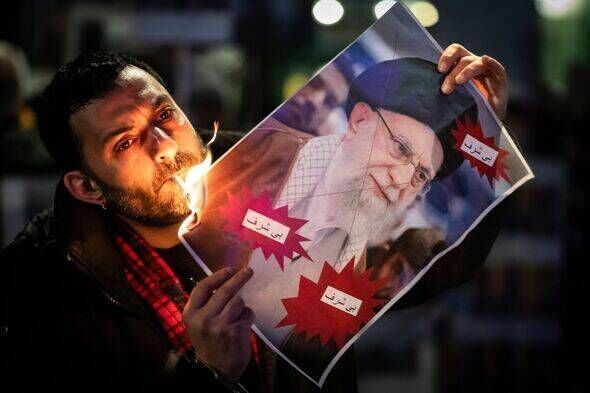
The unrest in Iran began in late December 2022, triggered by a sharp decline in the value of the rial against the U.S. dollar. Demonstrations have since spread across 187 cities and towns, fueled by demands for political reform and an end to government repression. Protesters have actively denounced the Supreme Leader, Ayatollah Ali Khamenei, as calls for change resonate throughout the nation.
The Human Rights Activist News Agency (HRANA), a U.S.-based Iranian organization, has reported that at least 512 protesters and 134 security personnel have been confirmed killed since the protests began, with an additional 579 fatalities awaiting verification. The situation has raised serious humanitarian concerns, prompting discussions in Washington regarding potential measures to restore internet access in Iran, a move that could facilitate communication among protesters.
“I may speak to Elon Musk. I’m going to call him as soon as I’m finished with you,” Trump mentioned, referencing Musk’s Starlink service, which Tehran has reportedly blocked during the ongoing demonstrations.
As the situation develops, the U.S. government continues to assess its response options, balancing the desire for diplomatic engagement against the pressing need to support those advocating for change in Iran.