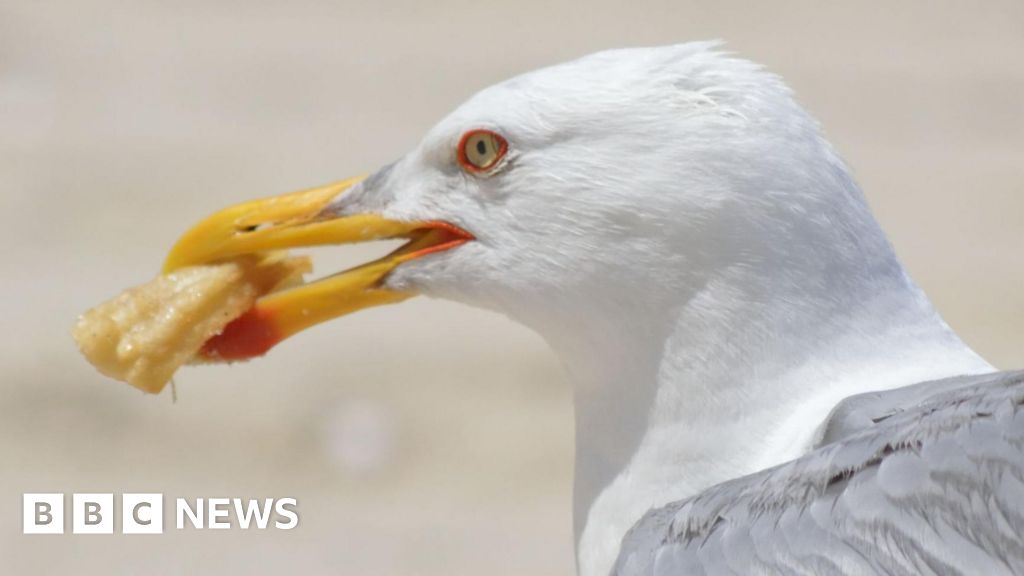
UPDATE: Scotland is set to introduce its first-ever council by-law aimed at banning the feeding of gulls, following a surge in aggressive encounters involving residents and children in Eyemouth and surrounding coastal villages. This urgent move is in direct response to alarming reports of seven children attacked in just one month during the summer of 2024.
Community leaders, empowered by discussions with NatureScot, are advocating for this critical legislation as gull populations increasingly invade urban areas due to the lack of natural food sources and safe nesting options. Berwickshire Councillor James Anderson emphasized the need for action, stating, “This is a proportionate, lawful, and evidence-based step,” and confirmed that the public will have the opportunity to participate in a formal consultation.
The number of gulls in built-up areas has risen despite an overall decline of more than 40% in herring gull populations across Scotland over the last two decades. Notably, the increase in attacks has been linked to gulls taking advantage of discarded human food in towns. Anderson noted, “Residents and businesses along the coast know how serious the gull problem has become,” urging the need for a targeted by-law to discourage feeding.
The proposed by-law aims to equip local authorities with enforcement powers that have been lacking. Currently, there are no measures in place to prevent people from intentionally feeding gulls, which exacerbates the issue. By targeting the source of the food, officials believe that gull populations can be redirected back to their natural cliff habitats.
Similar by-laws have been implemented in regions like East Devon, North Yorkshire, and Suffolk, demonstrating a growing trend in the UK to manage gull populations more effectively. While prior attempts at similar legislation in Dumfries were halted over cost concerns, the community’s response now reflects a pressing need for change.
In addition to the proposed ban, NatureScot is preparing to launch a nationwide public awareness campaign aimed at discouraging gull feeding. A spokesperson stated, “Feeding gulls is a significant issue in Eyemouth and anything that can be done to tackle that is helpful.” They also support local initiatives to improve waste management in order to reduce food sources for the birds.
The Scottish Borders Council has faced criticism for halting previous pest-control measures, such as the oiling of gull eggs, before the Covid-19 pandemic. The council will now evaluate the new proposals alongside other initiatives suggested by NatureScot. A spokesperson confirmed, “We welcome the input of NatureScot and the local community on this issue.”
As communities brace for potential changes, this developing story highlights the urgent need to balance wildlife management with public safety. The proposed by-law could provide a crucial tool for local governments, helping curb the rising number of gull-related incidents and restore peace in these coastal towns.
Residents and stakeholders are encouraged to monitor this situation closely, as the upcoming consultations will be pivotal in shaping future wildlife governance in Scotland.