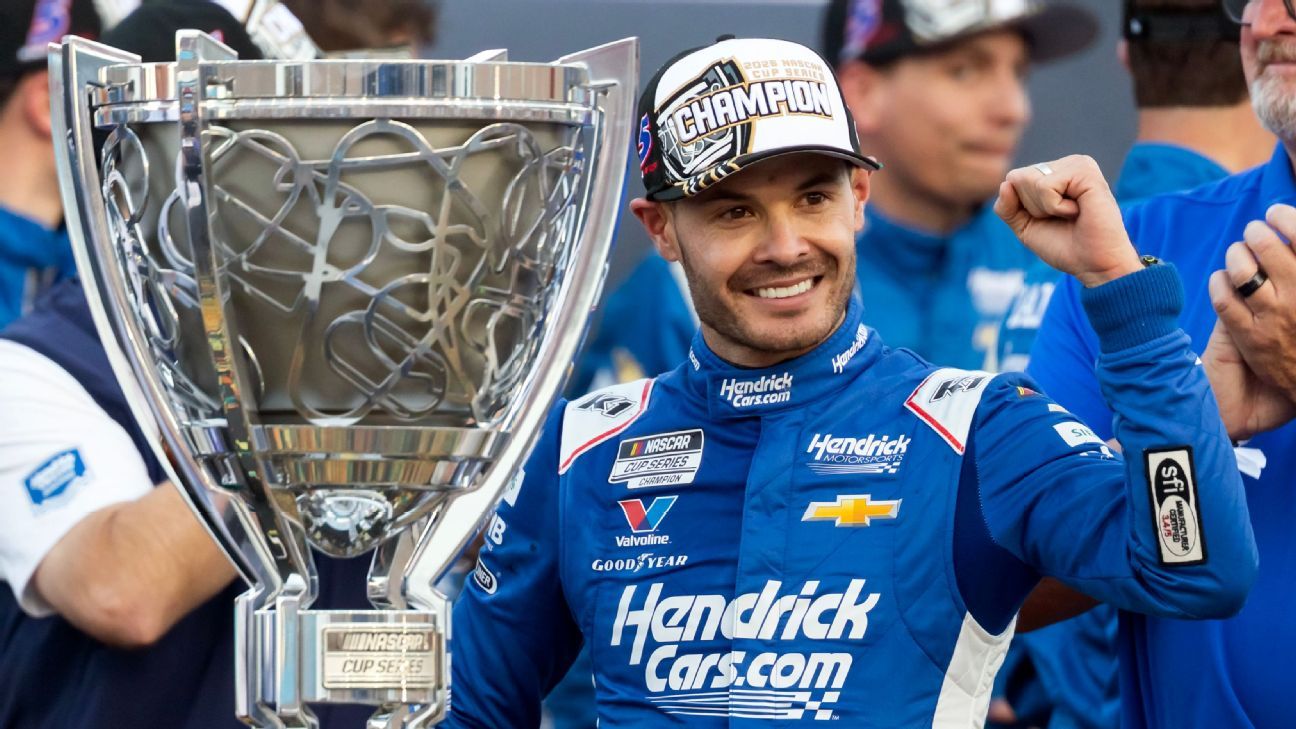
NASCAR has announced a significant overhaul of its championship format, shifting back to a system reminiscent of the pre-Playoff era. On October 23, 2023, NASCAR President Steve O’Donnell, alongside Hall of Famers Mark Martin and Dale Earnhardt Jr., revealed the changes during a press conference. The new structure will maintain a 26-race regular season followed by a ten-race postseason, but it will eliminate the win-and-in strategy and the complexity of elimination rounds.
Under the revised format, drivers will earn points based on their performance in each race, with race winners receiving 55 points instead of 40, while stage points remain in place. The champion will be determined solely by the total points accumulated throughout the season, culminating in the final race at Homestead-Miami Speedway in November. This approach brings NASCAR back to a format that was in place from 2004 to 2013, known as the Chase.
The announcement has been well received by many in the racing community. Chase Elliott, one of the drivers present at the announcement, expressed enthusiasm for the new format, stating that it allows a champion to emerge based on their overall performance throughout the year rather than the outcome of a single race. This sentiment echoes the experience of drivers like Denny Hamlin, who faced disappointment in the past when a strong season ended in a dramatic twist during the final race.
The shift away from a more complicated playoff system has been characterized as a move towards simplicity and clarity. Ryan Blaney, another driver who participated in the press conference, emphasized that the changes resonate with fans who prefer a straightforward approach to determining the champion. The new system is designed to be easily explained, avoiding the need for extensive calculations to follow the championship battle.
The decision to revert to a more traditional format is seen as a response to fan feedback. During the 2025 Daytona 500 weekend, a committee was formed to explore potential changes after concerns were raised about the disconnect between the top series and the grassroots of stock car racing. Martin, who has long advocated for a return to a simpler points system, played a crucial role in pushing for these changes. His advocacy highlighted the feelings of core fans who felt alienated by the complexities of the previous system.
O’Donnell acknowledged the importance of this shift, recalling the initial discussions where Martin’s passionate arguments set the tone for the committee’s deliberations. Although the conversation evolved over time, Martin’s insistence on returning to a simpler, more classic format kept the focus on what resonated with traditional fans of the sport.
Despite the positive reception, some voices within the community recognize that this format may not satisfy everyone. Martin himself expressed a sense of relief and happiness with the outcome, noting that while it might not be perfect, it is a significant step in the right direction. He called on fans to embrace the changes and return to the sport they love.
As NASCAR continues to evolve, this latest revision marks a pivotal moment in its history. For now, the championship will be determined by the drivers’ consistent performance across the season, rather than a high-stakes lottery at the end. This change signifies a commitment to honoring the sport’s roots while adapting to modern expectations.
In the words of Richard Petty, one of NASCAR’s legendary figures, the goal remains simple: “I just tried to win every week, and if the math worked out at the end, they gave me a big trophy.” As the new season approaches, drivers and fans alike will be watching closely to see how this return to a simpler format impacts the championship race.