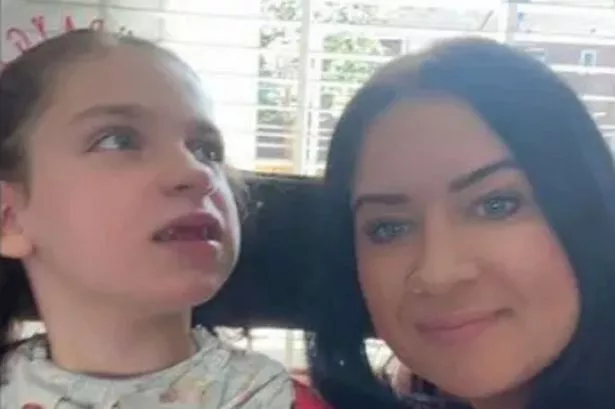
A mother and her severely disabled daughter were found dead in their home in Salford, raising concerns about mental health and social support systems. Authorities discovered the bodies of Martina Karos, 42, and her eight-year-old daughter, Eleni Edwards, on September 23, 2024, after Eleni failed to attend school. The inquest into their deaths has highlighted the struggles Ms. Karos faced in her role as a primary caregiver.
Emergency services responded to a call from concerned individuals after Eleni did not show up for school. The inquest at Bolton Coroner’s Court revealed that Ms. Karos had been experiencing loneliness and depression in the months leading up to this tragic event. Authorities confirmed that they are not seeking anyone else in connection with the deaths.
Ms. Karos’s best friend, Kirree Marsland, testified that Ms. Karos had expressed profound feelings of hopelessness, stating that her life felt “not worth living.” Marsland had previously alerted social services about her friend’s declining mental health and concerns about her wellbeing.
The court heard that Ms. Karos, originally from Lublin, Poland, had moved to England in 2003, where she worked as a translator and interpreter. She was described as “surprised and excited” when she learned she was pregnant with Eleni after being previously told she could not have children. Following a regular pregnancy, Eleni was born in June 2016 but was later diagnosed with severe disabilities that affected her ability to see, communicate, and move.
Ms. Karos’s mother, Malgorzata Karos, provided insight into her daughter’s profound love for Eleni, stating, “She was the happiest girl in the world despite her disabilities.” However, she noted a shift in her daughter’s demeanor about a year before their deaths. “Martina started saying she felt like a prisoner in her own home,” Malgorzata explained, indicating a growing sense of isolation.
The inquest highlighted the challenges Ms. Karos faced as a caregiver, which left her unable to work and socially isolated. Despite receiving daily support, she expressed discomfort with the frequent changes in caregivers, leading to further emotional distress. Malgorzata revealed that her daughter had not been taking prescribed medication before the incident.
Marsland described Ms. Karos as a vibrant individual who became increasingly withdrawn over time. She mentioned that Eleni’s growing size made caregiving physically demanding, which added to Ms. Karos’s emotional struggles. “She just kind of lost herself,” Marsland stated, expressing concern for her friend’s mental health.
In December 2023, as Ms. Karos’s mental state deteriorated, Marsland reached out to social services, fearing for her friend’s wellbeing. Although a child protection plan was initiated by Salford City Council, Marsland noted that Ms. Karos felt unsupported and viewed the intervention as punitive rather than helpful.
Efforts to provide respite care for Eleni did not always align with Ms. Karos’s needs, further complicating her social interactions. Marsland recounted that despite the love Ms. Karos had for her daughter, her mental health had rapidly declined, leading to this tragic outcome.
The inquest has been adjourned, with further hearings scheduled to explore the circumstances surrounding the deaths and the support systems that were in place. The case underscores the importance of addressing mental health and support for families dealing with disabilities, as well as the need for effective communication between caregivers and social services.