The Conservative Party is navigating a critical juncture as it prepares for three significant challenges leading up to the May 2026 local elections. These events could determine the party’s leadership and its future viability. Internal sentiments suggest that failure to address these challenges may lead to substantial losses, potentially relegating the party to historical insignificance.
The first major test is the local elections scheduled for May 2026. Current projections indicate that the Conservative Party is set to face severe setbacks, with predictions of significant losses. According to various party sources, the Liberal Democrats, under the leadership of Ed Davey, are expected to capture a substantial share of votes in middle England. Furthermore, the emerging Reform Party threatens to divide traditional Conservative support, particularly in historically loyal areas.
One Conservative MP, expressing concern over the outlook, described the anticipated results as a potential “wipeout” in their own constituency, a former bastion of Conservative strength. This sentiment is echoed by the central party office, which acknowledges that seats in many regions may shift to Labour, as they capitalize on a divided conservative electorate. The implications of these local elections are profound, as Conservative councillors play a crucial role in mobilizing support during general elections. A substantial loss of councillors could weaken the party’s grassroots operations, further complicating their electoral strategy.
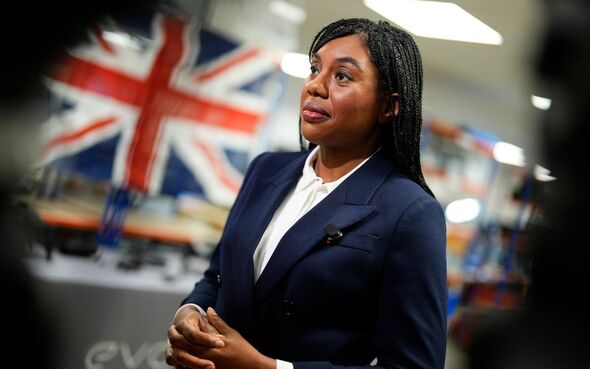
As the local elections loom, a second challenge emerges: speculation surrounding the future of party leader Kemi Badenoch. Tensions among MPs have been rising, particularly with the upcoming 2025 party conference on the horizon. Some members appear eager to reconsider their leadership options if the local elections do not yield favorable results. However, historical precedence warns against such drastic measures. The party’s recent experiences with leadership changes, including those involving Boris Johnson, Liz Truss, and Rishi Sunak, indicate that voters are disenchanted with perceived instability and leadership conflicts.
Despite the challenges, Badenoch has begun to articulate a clear and coherent conservative vision centered on principles such as a limited state and free markets. This ideological stance sets the Conservatives apart from their competitors, particularly as the Labour Party has adopted a more expansive, high-tax approach. The Liberal Democrats have struggled to assert a distinctive policy agenda, while the Reform Party remains focused on attracting protest votes without a comprehensive policy framework. Badenoch’s leadership may not be flawless, but her commitment to core conservative values could be vital for the party’s long-term success.
The third and perhaps most perilous test for the Conservatives involves discussions of a potential alliance with the Reform Party. This issue has become a divisive topic among Conservative MPs, with opinions sharply divided. Some argue that collaboration may be necessary if the May elections proceed as predicted, while others caution that such an alliance would be detrimental to the party’s identity.
The Reform Party has made no secret of its ambition to replace the Conservatives as the primary representative of right-leaning voters. Any pact forged under these circumstances would likely place the Conservatives in a subordinate role, risking their identity as a distinct political force. One MP articulated this concern succinctly, stating that entering into an agreement with Reform would effectively “kill the Conservative Party.”
Looking ahead, the path for the Conservatives is increasingly clear, albeit fraught with challenges. The party must weather the upcoming electoral storm and remain steadfast in supporting Kemi Badenoch. It is essential to articulate a robust conservative vision that appeals to voters without diluting core principles. The next general election is still several years away, providing an opportunity for the party to regroup and rebuild, provided it avoids self-destructive tendencies.
The Conservative Party stands before three pivotal tests. The immediate challenge lies not merely in passing these assessments, but rather in resisting the inclination to fail them through internal strife or hasty decisions.