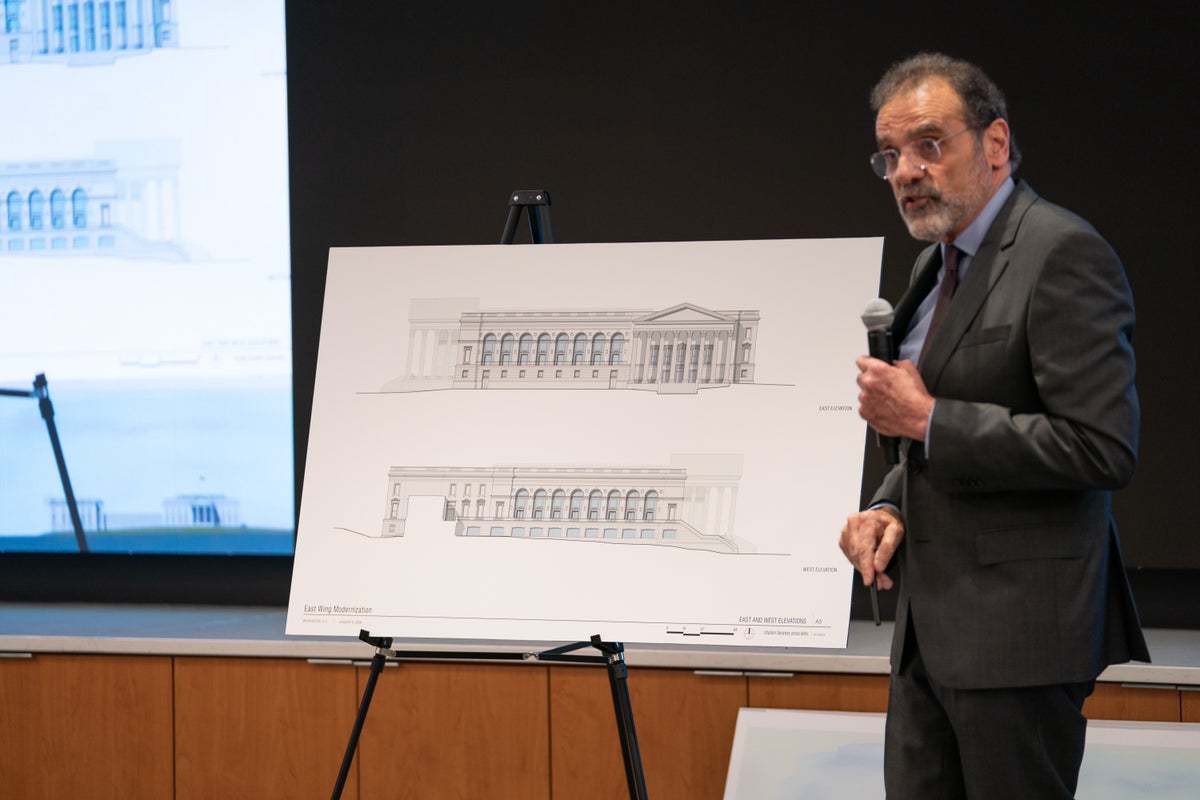
Donald Trump’s proposed ballroom addition, estimated at $400 million, will reach the same height as the original White House, according to architect Shalom Baranes. During a presentation to the National Capital Planning Commission on Thursday, Baranes discussed plans for the 1,000-person ballroom, which will feature ceilings approximately 40 feet high. This meeting marked the first opportunity for the public to review the intricate details of the project.
Baranes stated, “The heights will match exactly,” emphasizing the scale of the ballroom, which will cover roughly 22,000 square feet. The addition is part of a larger East Wing complex that will include offices for the First Lady, a reconstructed White House movie theater, a commercial kitchen, streamlined entrances, and a two-story colonnade leading back to the main building. Baranes indicated that the design aims to alleviate “ongoing operational stress” on the White House grounds.
Concerns were raised during the meeting regarding the potential impact of the ballroom’s height on the historic building. Commission member and D.C. Council Chairman Phil Mendelson questioned whether the height could be reduced, expressing his worries that the new structure could overshadow the original architecture. Baranes responded that altering the height is “possible.”
The commission is scheduled to vote on the project on March 5, 2024. As discussions progress, there are also considerations for a “modest, one-story addition” to the West Wing colonnade to restore symmetry to the overall White House design.
The ballroom project has attracted controversy, particularly regarding its financial implications. The estimated cost has doubled from earlier projections to $400 million. The National Trust for Historic Preservation filed a lawsuit last year, claiming the Trump administration began construction before officially submitting the necessary plans to the planning commission or Congress, which must approve projects on federal park land in Washington, D.C. The trust accused the administration of “breaking the rules first and asking for permission later.”
In December, a judge declined to halt construction, allowing work to continue. The Trump administration has engaged with planning commission and Commission of Fine Arts staff, asserting that these meetings fulfill planning requirements. The Commission of Fine Arts will meet on January 15, 2024, ahead of a scheduled vote on the ballroom project on February 19, 2024.
Critics have raised concerns about potential conflicts of interest, alleging that the ballroom project could facilitate influence-peddling within the administration. Major donors to the project include large corporations with government contracts or business interests before the federal government, such as Amazon, Google, and Microsoft.
Additionally, there are unresolved questions regarding whether the administration managed the removal or release of the carcinogenic compound asbestos during the East Wing’s abrupt demolition in October 2023. Administration officials are seeking expedited approval for the ballroom project to commence construction in April 2024.
As the debate continues, the implications of this ambitious addition extend beyond architectural aesthetics, raising questions about governance, transparency, and the preservation of historical integrity in the nation’s capital.