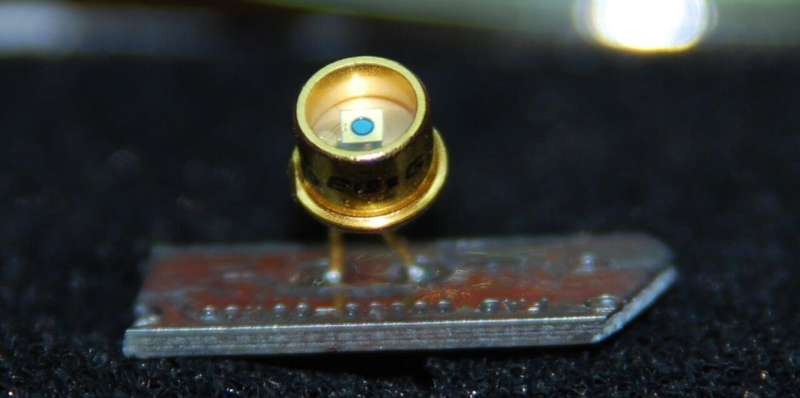
A team of researchers at Ludwig Maximilian University (LMU) in Germany has developed a novel approach utilizing quantum-enhanced interferometry to detect minute shifts and tilts in laser beams. This breakthrough allows for unprecedented sensitivity in measuring small movements, which could have significant implications for various fields, including precision measurement and quantum computing.
The research team employed a technique that leverages the principles of quantum mechanics to amplify the detection of laser beam variations. By manipulating the interference patterns created by overlapping light waves, the scientists were able to discern changes that would otherwise go unnoticed. This level of precision in detecting shifts as small as a few nanometers could lead to advancements in both scientific research and practical applications.
Implications for Science and Technology
The ability to detect tiny movements in laser beams holds promise for numerous scientific disciplines. For instance, in fields such as gravitational wave detection, enhanced sensitivity could improve the accuracy and reliability of measurements. The technology may also benefit atomic clocks and other high-precision instruments that rely on stable laser systems.
According to the researchers, the findings could facilitate the development of next-generation sensors with applications ranging from geophysics to biomedical imaging. The enhancement in sensitivity achieved through quantum techniques not only expands the capabilities of existing technologies but also opens the door to exploring new phenomena that were previously difficult to observe.
In their study, published in October 2023, the team outlined the experimental setup and results, showcasing the effectiveness of quantum-enhanced interferometry. Their work highlights the importance of interdisciplinary collaboration in advancing scientific understanding and fostering innovation.
Future Research Directions
Looking ahead, the researchers plan to explore further applications of their quantum-enhanced methods. Ongoing investigations will focus on integrating this technology into existing measurement frameworks and assessing its performance in real-world scenarios. They are optimistic that their work will inspire additional research in quantum sensing and related fields.
As the team continues to refine and expand upon their findings, the potential for quantum-enhanced interferometry to revolutionize precision measurement remains significant. This research not only underscores the capabilities of quantum technologies but also emphasizes the profound impact they may have on scientific exploration and technological advancement in the years to come.