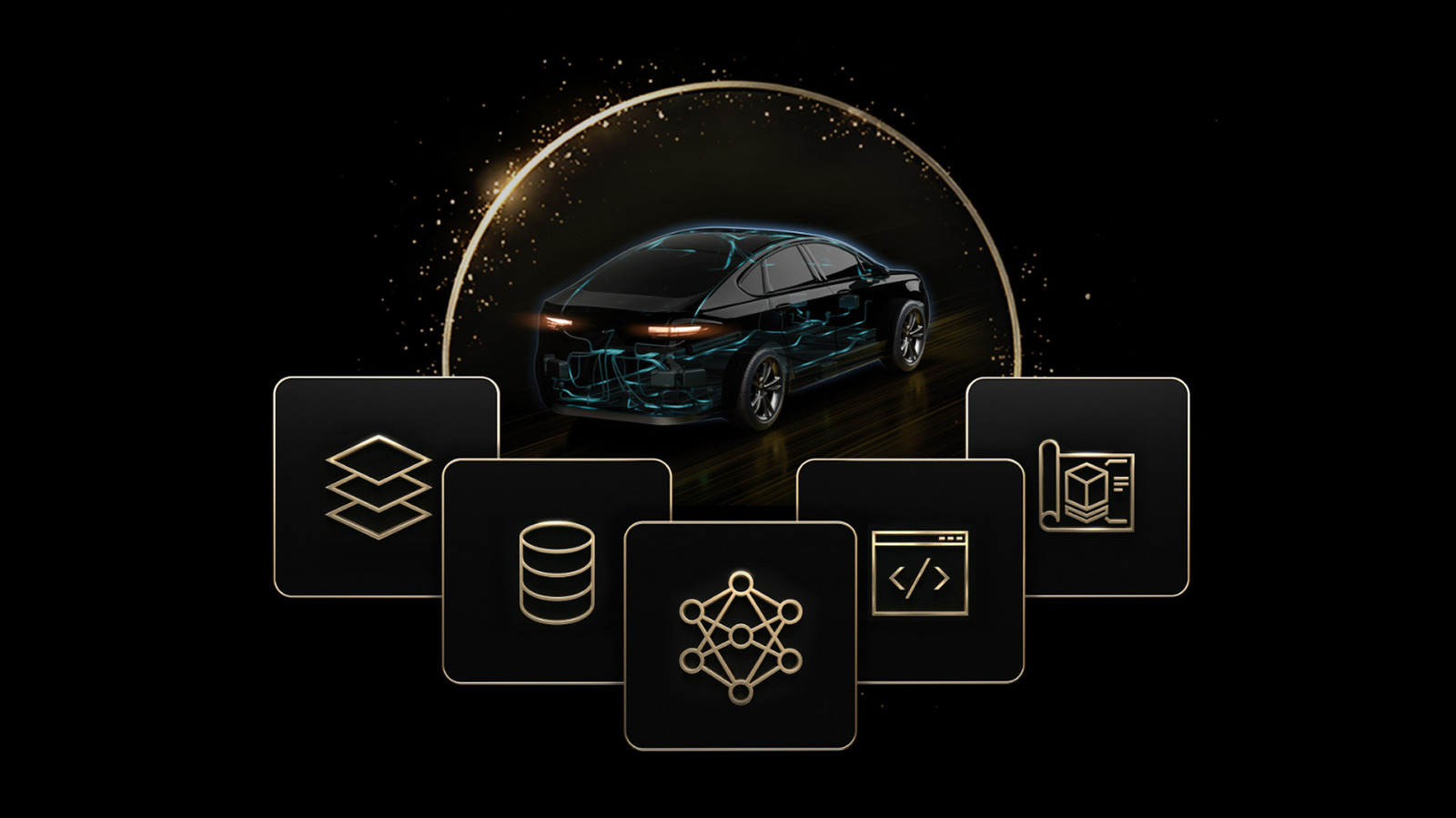
UPDATE: Nvidia has just announced groundbreaking AI technology that could revolutionize self-driving cars, bringing them a step closer to “humanlike thinking.” At CES 2026 in Las Vegas, the tech giant revealed its new platform, Alpamayo, designed to enhance autonomous vehicle navigation through advanced reasoning capabilities.
The urgency for this innovation comes as the race for self-driving supremacy heats up. Tesla’s full self-driving (FSD) V14.3 update, claimed by CEO Elon Musk to enable a conscious driving experience, is still pending release. Meanwhile, Nvidia’s Jim Fan, Director of Robotics & Distinguished Scientist, described the latest FSD V14 as the first AI to pass the Physical Turing Test.
Current self-driving systems utilize extensive datasets to train vehicles on anticipated road scenarios. However, they often falter in unfamiliar situations, leading to potentially dangerous failures. Alpamayo aims to tackle this issue by integrating vision language action (VLA) models that allow cars to reason through complex challenges, akin to the “thinking mode” of popular AI chatbots.
Nvidia’s chief, Jensen Huang, emphasized the technology’s potential, stating, “The ChatGPT moment for physical AI is here — when machines begin to understand, reason, and act in the real world.” The platform comprises three main components: Alpamayo 1, the first chain-of-thought reasoning VLA model; AlpaSim, an open-source simulation framework; and a dataset containing over 1,700 hours of autonomous driving footage.
While Nvidia is not positioning Alpamayo as direct competition to Tesla’s FSD, it offers an open ecosystem for automakers and researchers to adapt its technology. Huang explained, “Not only does it take sensor input and activate steering, brakes, and acceleration, it also reasons about what action it is about to take.”
The first vehicle to implement Alpamayo will be the 2026 Mercedes-Benz CLA, featuring enhanced level 2 (L2) autonomous driving capabilities, set to hit U.S. roads in 2026. Other industry players, including Lucid, JLR, and Uber, are also exploring the potential of Alpamayo for their self-driving initiatives.
As the landscape of autonomous driving evolves, Nvidia’s commitment to integrating human-like reasoning into vehicles could redefine safety standards and operational efficiency in self-driving technology. The implications for the industry and everyday drivers are vast, making this an urgent development to monitor closely.