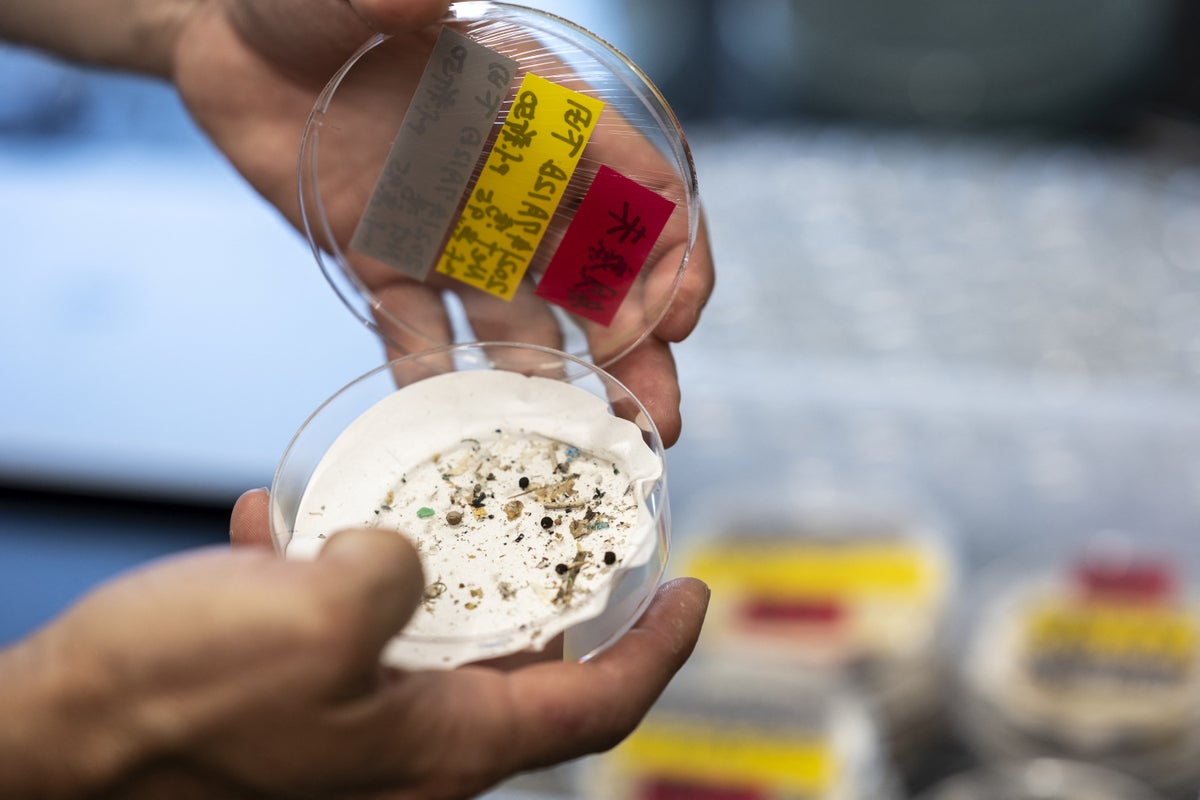
Recent research by Chinese scientists has revealed the presence of plastic particle clouds lingering in the atmosphere over two major cities, Guangzhou and Xi’an. This finding suggests that the abundance of these potentially harmful particles is far greater than previously estimated. Over the past two decades, the acknowledgment of microplastics and nanoplastics as significant pollutants has grown, with studies showing their presence in soils, living organisms, and throughout the atmosphere, including remote regions like the Arctic and Antarctic.
These tiny particles, often less than the width of a human hair, are suspected of contributing to a range of health issues, including hormonal disruptions, cancer, cardiovascular diseases, reproductive impairments, and neurological damage. Despite extensive research, many questions persist about the quantity, origin, transformation, and eventual fate of these particles in the environment. Researchers now suspect that microplastics and nanoplastics are even present in various components of the global water cycle, highlighting the widespread impact of human-made chemicals.
Innovative Detection Methods Reveal New Insights
In this latest study, scientists employed advanced techniques to measure microplastic (MP) and nanoplastic (NP) concentrations in urban air over Guangzhou and Xi’an. The results indicated that prior estimates significantly underestimated the prevalence of plastic particles in the atmosphere. These particles are sufficiently small to remain airborne for extended periods and may even play a role in cloud formation. The study suggests that plastics can return to the Earth’s surface through precipitation, often far from their original release points.
“Using an innovative method capable of detecting plastic particles as small as 200 nanometers, we quantified MPs and NPs in aerosols, dry and wet deposition, and resuspension in two Chinese megacities,” the researchers stated. They reported a variation of between two to five orders of magnitude in MP and NP fluxes across major atmospheric compartments, primarily influenced by plastic from road dust and rainfall.
The findings represent some of the most comprehensive measurements of atmospheric plastics to date, addressing a critical gap in understanding the global plastic cycle. While the study does not assert that these particles are measurably altering the global climate, it emphasizes their significant role in cloud dynamics.
Implications for Health and Environment
The researchers concluded that their work provides vital insights into the transformation and fate of microplastics and nanoplastics within urban atmospheric processes, with implications for climate, ecosystems, and human health. “These results offer an integrated assessment of MPs and NPs in urban areas and highlight their potential impact,” they noted.
As the world grapples with the growing challenge of plastic pollution, this research underscores the necessity for continued investigation into the sources and effects of microplastics. Understanding how these particles interact with the environment is crucial for developing strategies to mitigate their impact on both human health and ecological systems.