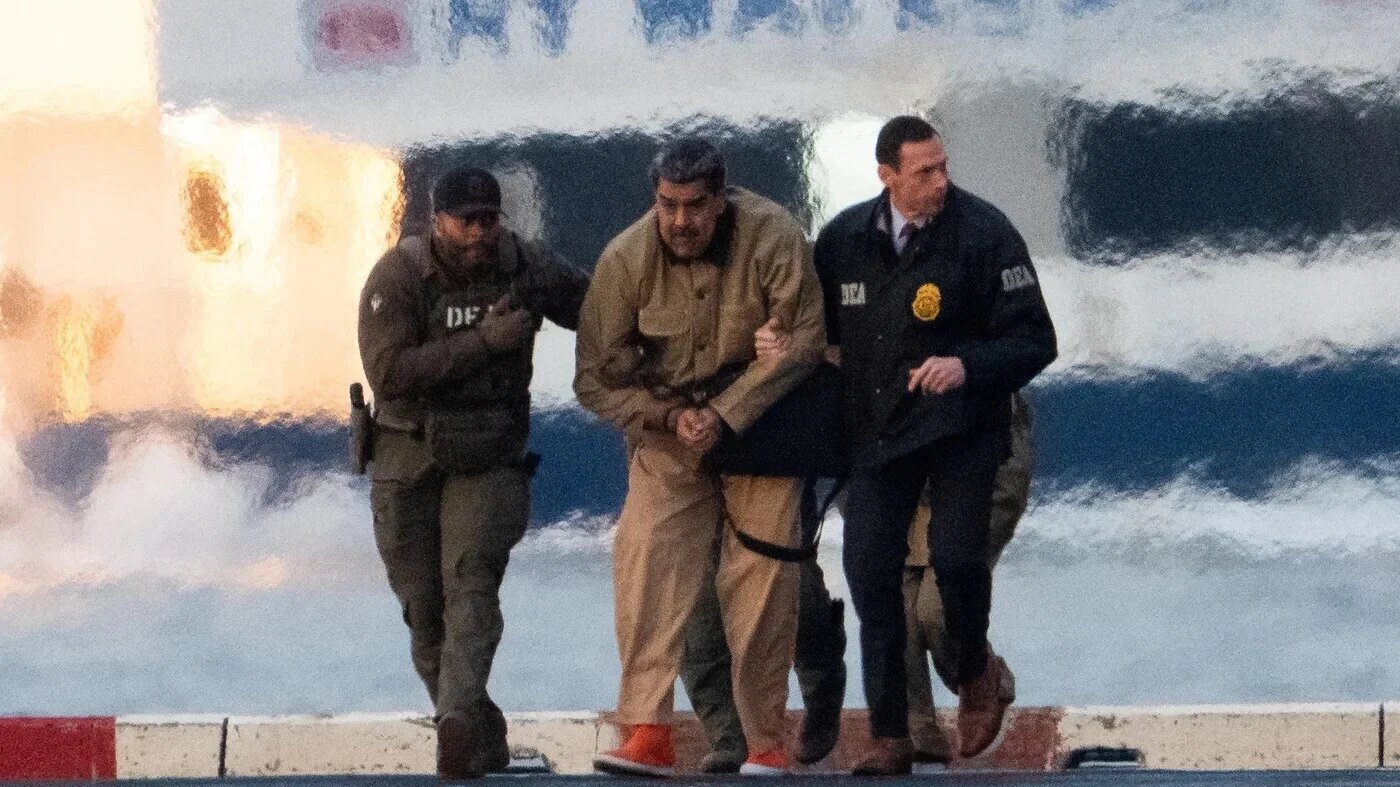
UPDATE: Major legal experts are raising alarms over the recent US attack on Venezuela, which they classify as a blatant breach of international law. This urgent situation follows President Donald Trump‘s justification of military actions aimed at capturing Venezuelan President Nicolás Maduro and his wife, Cilia Flores, who face serious drug trafficking charges in the United States.
The attack, which occurred over the weekend, has triggered significant backlash and scrutiny from legal scholars and international authorities. Experts from the United Nations and various law institutions affirm that the US actions violate both American and international legal standards. “There’s no credible basis under US law for an invasion of Venezuela,” stated Michael Dixon, a senior staff attorney at the Center for Constitutional Rights (CCR).
The scope of the operation raises critical questions. Did the Trump administration possess any legal authority to launch such an operation without congressional approval? According to Dixon, not only was Congress left uninformed about the attack, but members were also assured it would not happen. “There is no authority to do that,” he emphasized.
The legal framework surrounding military actions abroad is complex. While the US Constitution grants Congress the power to declare war, historical precedents have seen presidents engaging in military actions without explicit congressional consent. John Fidell, a senior research scholar at Yale Law School, noted, “This was an unconstitutional act under American law.” He added that drug smuggling does not equate to an invasion and lacks the necessary legal justifications for military intervention.
The attack’s implications are profound. While the administration claims it acted in self-defense, experts argue that Venezuela did not launch any armed attack on the US. The absence of congressional authorization raises serious constitutional questions, which could have lasting impacts on US foreign policy.
Legal experts are also examining the ramifications of Maduro’s potential trial in the US. According to Rachel Brunk, another legal scholar, the US courts may proceed with the trial regardless of the circumstances surrounding Maduro’s extradition. “The mere fact that he was kidnapped and illegally brought to the US will not prevent the criminal trial from going forward,” she explained.
The US and Venezuela have maintained an extradition treaty since 1922, which complicates the legality of Maduro’s capture. “It does not appear that there was consent here,” Dixon stated, emphasizing that the Venezuelan government did not approve the operation.
As the situation unfolds, the Trump administration continues to invoke the Monroe Doctrine, a historical policy asserting US influence in the Western Hemisphere. Secretary of State Marco Rubio reiterated this stance, emphasizing that the US will not allow adversaries to establish a foothold in the region. However, legal scholars argue that the Monroe Doctrine lacks legal authority and is merely a statement of policy.
The ramifications of this attack extend beyond legal disputes; they could significantly affect international relations and stability in Latin America. As tensions rise, the global community is watching closely.
Next steps remain uncertain, but experts anticipate fierce legal battles over whether Maduro will receive immunity as a head of state. “I expect that to be litigated in federal court, before trial,” Fidell remarked, highlighting the contentious nature of the upcoming proceedings.
With legal and ethical debates intensifying, the implications of this military action will likely resonate far beyond the immediate conflict, raising urgent questions about the future of US foreign policy and international law. The world waits anxiously for the next developments in this unfolding crisis.