UPDATE: US Navy pilots are now leveraging advanced technology with the implementation of Precision Landing Mode, significantly enhancing safety during carrier landings. This system, which began operation in 2021, allows pilots to reduce the number of critical adjustments needed during landing from 300 to less than 10, ensuring smoother and more controlled descents.
Authorities confirm that while autopilot technology has evolved, it does not replace the need for human expertise in military aviation. As naval operations involve unpredictable conditions, the need for skilled pilots remains paramount. The Federal Aviation Administration mandates that at least one other crew member must always be present in the cockpit, a principle that resonates within military aviation as well.
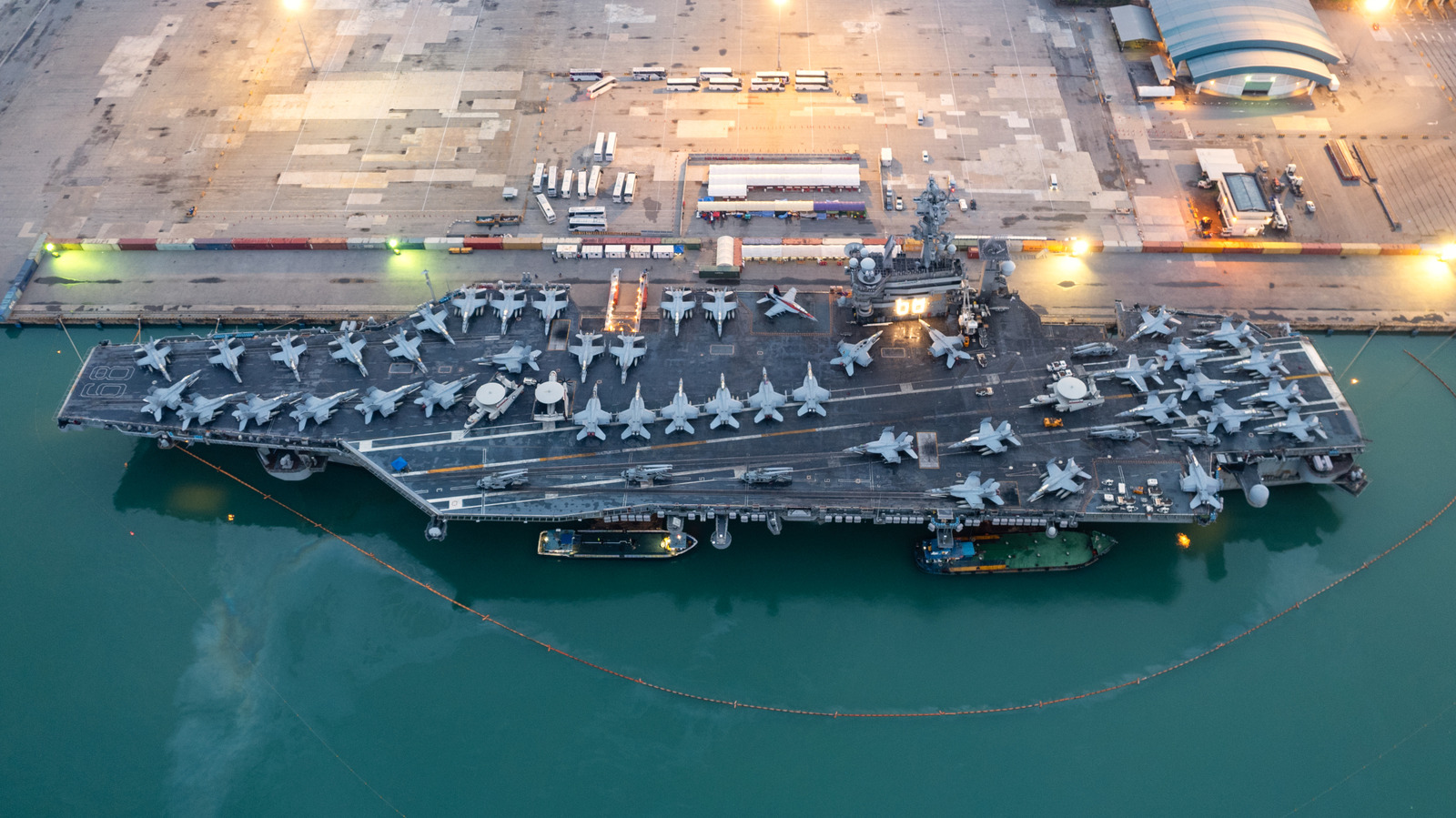
The Precision Landing Mode, formerly known as “Magic Carpet,” was developed to assist pilots in the complex task of landing on moving aircraft carriers. The system helps maintain the aircraft’s nose level, simplifying the landing process and ensuring that pilots can focus on other critical elements, such as the interaction between the tailhook and arresting wires on the carrier deck.
Capt. Dan Catlin, commanding officer of Strike Fighter Squadron, praised the system during training sessions, stating, “by far the smoothest evolution, best performance we’ve seen from our students ever.” This technology not only improves training but also enhances safety for both pilots and crew members during high-stakes landings.
In 2021, the F/A-18E-F Super Hornet and the new F-35 Lightning II began to utilize this innovative system, marking a significant advancement in naval aviation safety standards. The integration of Precision Landing Mode is especially crucial given the limited landing space on aircraft carriers and the high-risk nature of these operations.
However, experts warn against over-reliance on technology. Capt. Catlin emphasized the importance of maintaining manual landing skills, stating that pilots must still be proficient in traditional landing techniques for situations where technology may fail.
As the Navy continues to refine the Precision Landing Mode, the future of carrier landings looks safer and more efficient than ever. This development exemplifies how cutting-edge technology can enhance human capabilities while emphasizing the irreplaceable role of skilled pilots in military aviation.
With these advancements, the Navy sets a new standard for operational safety, ensuring that its pilots are equipped with the best tools to navigate the challenges of landing on aircraft carriers. As this technology evolves, it promises to redefine the landscape of naval aviation and improve the safety of missions worldwide.