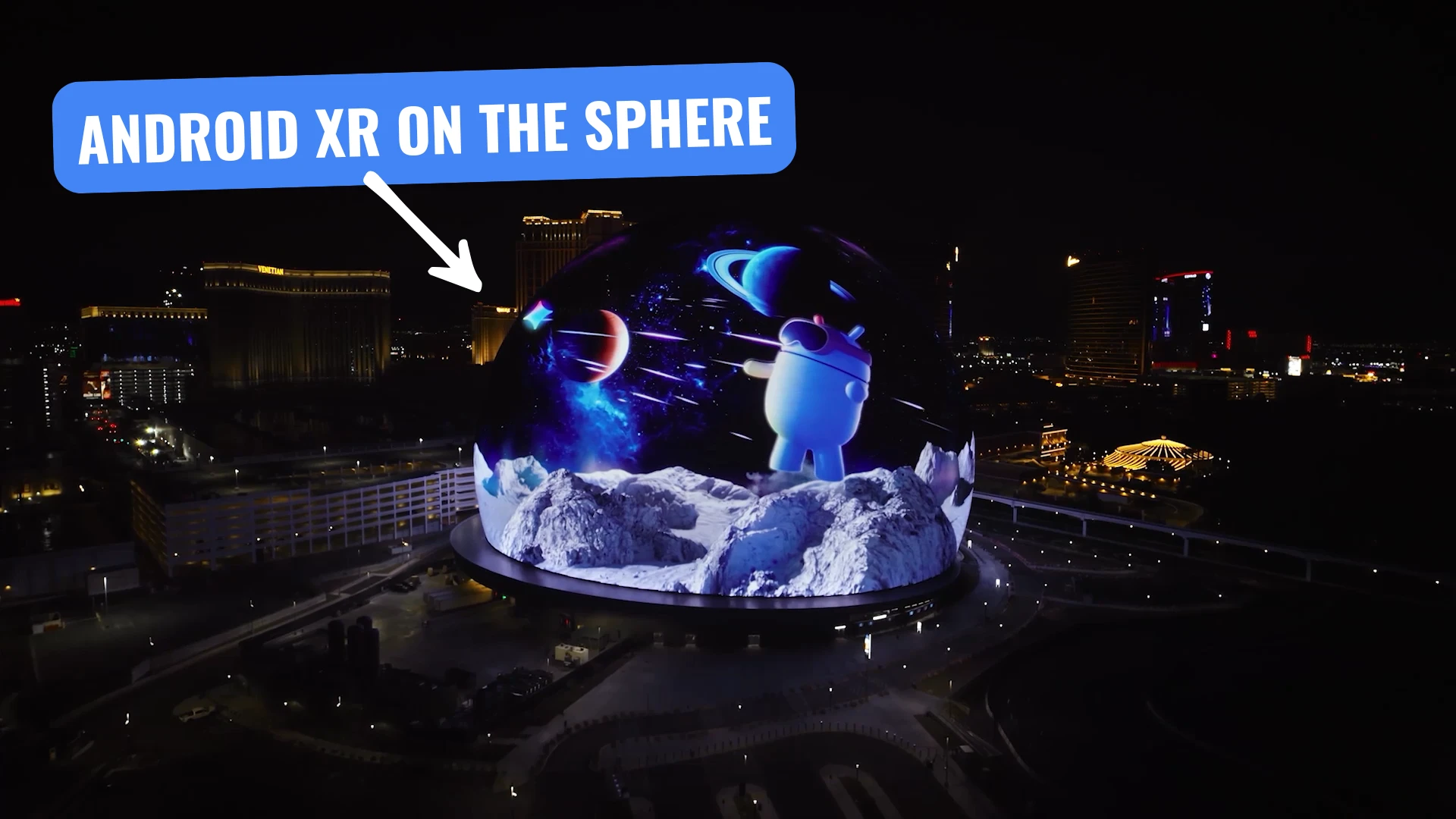
At CES 2026, Google has unveiled its new spatial computing operating system, Android XR, in a stunning showcase that has transformed the Las Vegas skyline. The event marks a significant step for Google as it transitions from software to hardware, presenting Android XR in a visually captivating manner within the Sphere, a prominent venue in the city. This bold display signals Google’s intent to establish a strong presence in the competitive market of high-end headsets, offering a more open and versatile alternative.
Android XR and the Role of Gemini
What distinguishes Android XR from other platforms is its integration with Gemini, Google’s advanced artificial intelligence system. Unlike typical mobile interface adaptations, Android XR is designed to function as an intelligent assistant. It seamlessly blends with users’ physical environments, enhancing experiences whether for work or gaming. The demonstration within the Sphere highlighted these capabilities, showcasing the iconic Android robot engaging with the system in an interactive and practical manner.
Users witnessed the Android bot navigating immersive environments and creating art in mid-air with precise spatial tracking. This hands-on experience illustrated how AI can redefine creativity and exploration in a three-dimensional context. For those familiar with Gemini on their smartphones and Chromebooks, the transition to a spatial environment appears to be a logical evolution within Google’s ecosystem.
Samsung’s Contribution and Future Prospects
The Sphere’s takeover serves not only to highlight Android XR but also to showcase hardware collaborations, particularly with Samsung. The Galaxy XR headset has set a benchmark for performance, illustrating the potential of joint hardware and software innovations. Looking ahead, the real challenge for 2026 lies in how various original equipment manufacturers (OEMs) will adopt Android XR, creating diverse form factors from tethered glasses to standalone headsets.
Google aims to position Android XR as the “Android of the XR world,” providing a powerful and adaptable platform for hardware partners. This strategy will allow manufacturers to innovate while ensuring a consistent and user-friendly experience across devices. As CES 2026 unfolds, it is becoming increasingly clear that spatial computing is not merely an experimental venture for Google; it is a foundational aspect of its roadmap for the future.
As more information surfaces from CES, the excitement surrounding Android XR continues to build. Google’s commitment to integrating advanced AI and spatial awareness reflects its ambition to shape the future of computing. This development may well redefine how users interact with technology, making it an essential topic to follow in the coming months.